
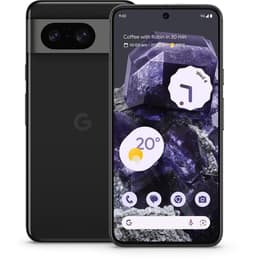


Google Pixel 7 Pro Vs Google Pixel 8a

Google Pixel 7 Pro
Google Pixel 7 Pro
Starting at

Refurbished price:201.00

Versus €640.98 new

See options
Google Pixel 8a
Google Pixel 8a
Starting at

Refurbished price:229.00

Versus €489.75 new

See options

Ratings

The Google Pixel 7 Pro, released in October 2022, and the Google Pixel 8a, launched in May 2024, represent different segments within Google's smartphone lineup. Both devices operate on the Android platform, offering a clean software experience with Google's unique features. The Pixel 7 Pro was Google's flagship offering at its release, while the Pixel 8a is positioned as a more accessible option, incorporating many of the latest software advancements.

Scores

Durability

The practical lifespan of a smartphone is significantly influenced by its software support and physical durability.

  • Software Longevity: The Pixel 7 Pro, released in October 2022, is expected to receive five years of OS and security updates. In contrast, the newer Pixel 8a, launched in May 2024, benefits from an extended commitment, offering seven years of OS and security updates, ensuring a longer period of new features and security enhancements. This difference means the Pixel 8a will remain current with Android versions for a considerably longer duration.
  • Physical Durability: The Pixel 7 Pro features a more robust build with Corning Gorilla Glass Victus on both the front and back, along with an aluminum frame, and boasts an IP68 dust and water resistance rating. The Pixel 8a utilizes Gorilla Glass 3 for its display and has an aluminum frame with a plastic back, offering IP67 dust and water resistance. Users prioritizing a device with enhanced protection against drops and submersion may find the Pixel 7 Pro's construction more reassuring.
  • Repairability: While specific repairability scores can vary, both Pixel devices are designed with components that can be replaced by authorized service providers. The Pixel 7 Pro's more premium materials might lead to higher repair costs for certain components compared to the Pixel 8a's construction.

Year of Release

2022

2024

Compatible with latest Update

Yes

Yes

OS

Android

Android

Foldable

No

No

Performance

Performance in daily use is a key differentiator, with both devices offering capable experiences but catering to different user demands.

  • Processing Power: The Pixel 7 Pro is equipped with a processor that handles demanding applications and multitasking smoothly, providing a responsive experience for most users. The Pixel 8a features a newer generation processor, which also delivers smooth performance for everyday tasks, quick app launches, and gaming without significant issues. While both are efficient, the Pixel 8a's newer chip offers improved efficiency and performance for AI-driven features.
  • Multitasking and Storage: The Pixel 7 Pro typically comes with 12GB of RAM, allowing for extensive multitasking and keeping many applications open in the background without slowdowns. The Pixel 8a generally offers 8GB of RAM, which is sufficient for most users' multitasking needs, though heavy users might notice a slight difference when switching between numerous demanding apps. Both devices offer various storage options, including 128GB and 256GB, with the Pixel 7 Pro also having a 512GB option.
  • Battery Behavior: The Pixel 7 Pro houses a 5000 mAh battery. User experiences with its battery life are mixed, with some finding it adequate for a full day, while others report it can struggle under heavy usage and may experience warming. The Pixel 8a has a 4492 mAh battery. It generally provides reliable all-day battery life for most users, sometimes even outperforming the Pixel 8 in certain tests, though charging speeds are noted as being slower compared to some competitors.

Memory (GB)

12 GB

8 GB

Screen quality

The visual experience on both devices is delivered through high-quality displays, though with distinct characteristics.

  • Display Technology and Clarity: The Pixel 7 Pro features a 6.7-inch LTPO AMOLED display with a resolution of 1440 x 3120 pixels, resulting in a very sharp and detailed image. The Pixel 8a comes with a 6.1-inch OLED display offering a 1080 x 2400 pixel resolution, which provides clear visuals for everyday viewing. The Pixel 7 Pro's higher resolution on a larger screen offers a more expansive and detailed viewing area.
  • Brightness and Refresh Rate: Both phones offer smooth scrolling and responsive interactions with a 120Hz refresh rate. The Pixel 7 Pro's display can reach a peak brightness of 1500 nits, ensuring good visibility in various lighting conditions. The Pixel 8a, however, can achieve an even higher peak brightness of 2000 nits, which can be beneficial for outdoor use in bright sunlight.
  • Viewing Experience: The Pixel 7 Pro's larger screen size and higher resolution make it well-suited for immersive media consumption and detailed work. The Pixel 8a's more compact 6.1-inch display offers a comfortable one-handed experience while still providing a vibrant OLED panel.

Resolution

1440 x 3120

1080 x 2400

Screen type

LTPO AMOLED

OLED

Audiovisual

Both Pixel devices are known for their strong camera performance, leveraging Google's computational photography, but they differ in hardware capabilities.

  • Rear Camera Systems: The Pixel 7 Pro features a versatile triple-camera setup, including a 50MP main sensor, a 12MP ultra-wide lens with autofocus for macro shots, and a 48MP telephoto lens capable of 5x optical zoom and up to 30x Super Res Zoom. The Pixel 8a has a dual-camera system with a 64MP main sensor and a 13MP ultra-wide lens. While the Pixel 8a's main sensor has a higher megapixel count, the Pixel 7 Pro offers greater flexibility with its dedicated telephoto lens.
  • Photography Performance: Both phones excel in point-and-shoot photography, producing images with balanced colors and good detail, even in challenging lighting conditions. The Pixel 7 Pro's telephoto lens provides a significant advantage for capturing distant subjects with clarity. The Pixel 8a's software processing helps it produce excellent results, particularly in low light, despite its hardware.
  • Video Recording and Audio: Both devices support 4K video recording at 30 and 60 frames per second from their rear cameras. The Pixel 7 Pro also offers 10-bit HDR video and Cinematic Blur for more professional-looking footage. The Pixel 8a's front camera can record 4K video at 30 frames per second, while the Pixel 7 Pro's front camera records at 4K@30/60fps. Both phones generally offer good microphone quality for calls and recording, and stereo speakers for media consumption.

Main camera

50 megapixels

64 megapixels

Front camera

10.8 megapixels

13 megapixels

Miscellaneous

Beyond core performance, several practical features contribute to the overall user experience of these Pixel smartphones.

  • Connectivity and Ports: Both the Pixel 7 Pro and Pixel 8a support 5G connectivity, ensuring access to fast mobile networks. They also feature modern Wi-Fi standards and Bluetooth for wireless connections. Both devices utilize a USB-C port for charging and data transfer, and neither includes a traditional 3.5mm headphone jack.
  • Biometric Security: For secure unlocking, both phones offer an under-display fingerprint sensor and face recognition. User experiences with the in-display fingerprint sensor can vary, with some Pixel 8a users reporting it to be less reliable than desired.
  • Design and Handling: The Pixel 7 Pro has dimensions of 162.9 x 76.6 x 8.9 mm and weighs 212 grams, offering a substantial feel in hand. Its larger size is beneficial for screen real estate but might be less comfortable for one-handed use. The Pixel 8a is more compact at 152.1 x 72.7 x 8.9 mm and lighter at 188 grams, making it easier to handle and carry. The Pixel 7 Pro features a polished aluminum frame and glass back, while the Pixel 8a has a matte aluminum frame and a plastic back.

Weight

212 g

188 g

Screen size (in)

6.7

6.1

Network

5G

5G

SIM card

Physical SIM + eSIM

Physical SIM + eSIM

Carrier compatibility

Unlocked

Unlocked

User feedback for the Pixel 7 Pro often highlights its exceptional camera system, particularly the versatility offered by its telephoto lens, and its smooth overall performance. Many appreciate the clean Android experience and the vibrant, high-resolution display. Criticisms sometimes point to inconsistent battery life for heavy users, occasional heating, and video quality that some find less impressive than stills.

The Pixel 8a receives praise for its impressive camera capabilities, especially for photos, and its generally smooth daily operation. Users also value its extended software support, ensuring a longer period of updates. Common concerns include slower charging speeds, some reports of the device warming up, and mixed experiences with the in-display fingerprint sensor.

Users prioritizing a premium camera experience with a dedicated telephoto lens, a larger, higher-resolution display, and a more robust build may find the Pixel 7 Pro well-suited to their needs. Its performance remains strong for most tasks, making it a capable device for those who value flagship-level features from a couple of years ago. Conversely, users who prioritize a more compact device, a longer software support timeline, and excellent point-and-shoot photography without the need for advanced zoom capabilities may prefer the Pixel 8a. It offers a strong balance of features for everyday use and benefits from the latest software advancements.

Both devices offer compelling options, and considering a quality-assured refurbished option for either can be an eco-friendly alternative to purchasing new.


See all articles

Our recent comparisons