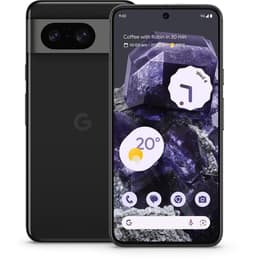
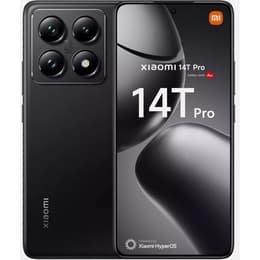


Google Pixel 8a Vs Xiaomi 14T Pro

Google Pixel 8a
Google Pixel 8a
Starting at

Refurbished price:232.00

Versus €549.00 new

See options
Xiaomi 14T Pro
Xiaomi 14T Pro
Starting at

Refurbished price:394.00

Versus €900.00 new

See options

Ratings

The Google Pixel 8A, released in May 2024, and the Xiaomi 14T Pro, launched in September 2024, are contemporary smartphones offering distinct experiences within the Android ecosystem. While both devices provide a modern Android 14 experience, they diverge significantly in their approach to display technology, camera systems, and overall performance capabilities. The Pixel 8A emphasizes a compact design and Google's integrated software features, whereas the Xiaomi 14T Pro focuses on a larger, more vibrant display and advanced camera hardware.

Scores

Durability

When considering the long-term usability of a smartphone, factors like software support, physical durability, and ease of repair are important.

  • Software Longevity: The Google Pixel 8A stands out with a commitment to seven years of operating system and security updates from its May 2024 release, ensuring it remains current until at least 2031. The Xiaomi 14T Pro, released in September 2024, runs on Android 14 with Xiaomi's HyperOS, but its long-term software update policy is not as extensively detailed as the Pixel's. [4, 21, 28, 34]
  • Physical Durability: The Pixel 8A features Corning Gorilla Glass 3 on the front and an IP67 rating for dust and water resistance, indicating protection against immersion in up to 1 meter of water for 30 minutes. The Xiaomi 14T Pro offers enhanced protection with Corning Gorilla Glass 5 on its front and an IP68 rating, allowing for immersion in up to 1.5 meters of water for the same duration, and features a glass back. [2, 7, 12, 17, 23, 27, 30, 33, 41, 42]
  • Repairability: The Pixel 8A has been noted to have a lower repairability score, partly due to the use of strong adhesives and a charging port soldered to the main board, making certain repairs more challenging. In contrast, the Xiaomi 14T Pro has received a higher repairability assessment, suggesting a more straightforward process for component replacement. [8, 14]

Year of Release

2024

2024

Compatible with latest Update

Yes

Yes

OS

Android

Android

Foldable

No

No

Performance

The performance of a smartphone is crucial for daily tasks, from casual browsing to demanding applications and gaming. Both devices offer robust performance tailored to their respective designs.

  • Processing Power: The Google Pixel 8A is powered by a current-generation processor designed by Google, which provides a smooth experience for everyday use, efficient multitasking, and powers its advanced AI features. The Xiaomi 14T Pro incorporates a high-end processor from MediaTek, known for delivering powerful performance that handles intensive gaming and demanding applications with responsiveness. [1, 18, 20, 29, 31, 38]
  • Memory and Storage: The Pixel 8A comes with 8GB of RAM and offers storage options of 128GB or 256GB, utilizing UFS 3.1 storage technology. The Xiaomi 14T Pro provides more generous configurations, starting with 12GB of RAM and offering storage up to 1TB, featuring faster UFS 4.0 storage, which can contribute to quicker app loading and data transfer speeds. [2, 6, 17, 18, 19, 24]
  • Battery Behavior: The Pixel 8A is equipped with a 4492 mAh battery, providing respectable battery life for typical daily usage. The Xiaomi 14T Pro features a larger 5000 mAh battery, often reported to last through a full day of heavy use and even up to two days with moderate usage. The Xiaomi 14T Pro also supports significantly faster wired charging at 120W and 50W wireless charging, compared to the Pixel 8A's 18W wired and 7.5W wireless charging. [2, 10, 17, 18, 19, 24, 26, 29, 31, 38]

Memory (GB)

8 GB

16 GB

Screen quality

The display is a primary interface for any smartphone, and both the Pixel 8A and Xiaomi 14T Pro offer high-quality viewing experiences with distinct characteristics.

  • Display Technology and Size: The Google Pixel 8A features a 6.1-inch OLED display, known for its deep blacks and vibrant colors, providing a compact viewing experience. The Xiaomi 14T Pro boasts a larger 6.67-inch AMOLED display, offering an expansive canvas for media consumption and multitasking. [1, 2, 5, 7, 15, 17, 19, 23, 24]
  • Resolution and Brightness: The Pixel 8A's display has a 1080x2400 (FHD+) resolution and can reach a peak brightness of 2000 nits, ensuring clarity and good visibility in various lighting conditions. The Xiaomi 14T Pro offers a sharper 2712x1220 (1.5K) resolution and an impressive peak brightness of 4000 nits, which translates to exceptionally clear and bright visuals, even in direct sunlight. [1, 2, 6, 7, 11, 13, 15, 17, 22, 23, 24]
  • Refresh Rate: The Pixel 8A features a 120Hz refresh rate, contributing to smooth scrolling and a responsive user interface. The Xiaomi 14T Pro elevates this with a 144Hz AMOLED display that also supports adaptive refresh rates (LTPO), allowing for even smoother motion and potentially better power efficiency by adjusting the refresh rate based on content. [2, 3, 6, 7, 15, 17, 20, 24, 32, 38]

Resolution

1080 x 2400

1220 x 2712

Screen type

OLED

AMOLED

Audiovisual

Both smartphones offer advanced camera systems, leveraging a combination of hardware and software to capture images and videos, though with different strengths.

  • Rear Camera Systems: The Google Pixel 8A features a dual-camera setup with a 64 MP main sensor with optical image stabilization (OIS) and a 13 MP ultrawide lens. It relies heavily on Google's computational photography for image enhancement. The Xiaomi 14T Pro, co-engineered with Leica, offers a versatile triple-camera system: a 50 MP main sensor with OIS, a 50 MP telephoto lens with 2.6x optical zoom, and a 12 MP ultrawide lens. The inclusion of a dedicated telephoto lens provides greater flexibility for zoomed shots. [1, 2, 3, 5, 7, 14, 18, 20, 22, 24, 27, 29, 30, 31, 38]
  • Photography Performance: The Pixel 8A is known for its consistent image quality in various conditions, producing natural-looking photos with good dynamic range, especially benefiting from its AI-powered features. The Xiaomi 14T Pro's Leica-tuned cameras are praised for capturing detailed and vibrant photos in daylight, with good low-light performance and excellent telephoto capabilities. Users often report pleasing color science from the Leica collaboration. [18, 20, 29, 30, 31]
  • Video and Audio: Both devices are capable of recording 4K video, with the Pixel 8A supporting 4K at 30fps. The Xiaomi 14T Pro offers more advanced video recording options, including 8K at 24/30fps and 4K at 60fps, along with features like gyro-EIS for stabilization. For audio, both phones include stereo speakers, providing an immersive experience for media consumption. [1, 2, 18, 23, 29, 38]

Main camera

64 megapixels

50 megapixels

Front camera

13 megapixels

32 megapixels

Miscellaneous

Beyond core performance, several practical features contribute to the overall user experience and daily convenience of these devices.

  • Connectivity and Ports: Both the Pixel 8A and Xiaomi 14T Pro support 5G connectivity for fast mobile data. The Pixel 8A features Wi-Fi 6E and Bluetooth 5.3, along with a USB Type-C 3.2 port. The Xiaomi 14T Pro offers newer Wi-Fi 7 and Bluetooth 5.4 standards, but its USB Type-C port is 2.0. The Xiaomi also includes an infrared (IR) blaster, allowing it to function as a universal remote control. [2, 3, 5, 6, 12, 18, 19, 23]
  • Biometrics and Sensors: Both smartphones incorporate an under-display optical fingerprint sensor for secure unlocking. They also include a standard suite of sensors such as an accelerometer, gyroscope, proximity sensor, and compass. The Pixel 8A adds a barometer, while the Xiaomi 14T Pro's IR blaster serves as an additional functional sensor. [2, 3, 6, 12, 19, 23, 33]
  • Design and Handling: The Pixel 8A has a compact form factor, measuring 152.1 x 72.7 x 8.9 mm and weighing 188g, with an aluminum frame and plastic back. The Xiaomi 14T Pro is a larger device at 160.4 x 75.1 x 8.4 mm and 209g, featuring an aluminum frame and a glass back. The Pixel 8A's more rounded corners contribute to a comfortable grip, while the Xiaomi 14T Pro's slightly larger size and glass back offer a more premium in-hand feel. [2, 3, 7, 12, 16, 19, 23, 24, 27, 37, 40, 41, 42]

Weight

188 g

209 g

Screen size (in)

6.1

6.67

Network

5G

5G

SIM card

Physical SIM + eSIM

Dual Physical SIM

Carrier compatibility

Unlocked

Unlocked

User feedback for the Google Pixel 8A often praises its clean Android experience, consistent camera performance driven by computational photography, and the exceptional seven-year software update commitment. Common criticisms sometimes point to its charging speeds and the use of a plastic back. Users appreciate its compact size and the integration of Google's AI features. [1, 4, 7, 10, 20, 21, 25, 28, 34]

The Xiaomi 14T Pro receives acclaim for its vibrant and large 144Hz display, powerful processor, and its versatile Leica-tuned triple camera system, particularly the telephoto lens. Its ultra-fast charging speeds and long battery life are also frequently highlighted as strong advantages. Some users note that while its AI features are present, they might not be as deeply integrated as on Pixel devices. [18, 26, 29, 30, 31, 38]

Users prioritizing a compact device with industry-leading software support and a focus on AI-enhanced photography will find the Google Pixel 8A well-suited to their needs. Its extended update policy makes it a compelling choice for those seeking long-term software longevity. Conversely, users who value a larger, brighter, and higher refresh rate display, superior raw camera hardware with a dedicated telephoto lens, and exceptionally fast charging will likely lean towards the Xiaomi 14T Pro. Its robust performance and premium build materials also cater to those seeking a more flagship-like experience.

For consumers looking for an eco-friendly and quality-assured alternative, considering a refurbished option for either of these devices can provide a sustainable choice without compromising on functionality.


See all articles

Our recent comparisons