

Google Pixel 6A Vs Xiaomi Redmi Note 14 4G

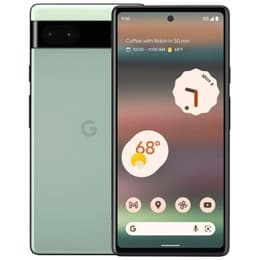
Google Pixel 6A
Google Pixel 6A
Starting at

Refurbished price:143.00

Versus €459.00 new

See options
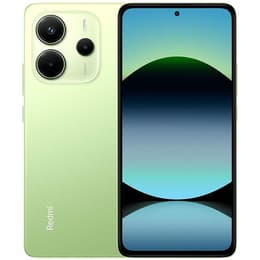
Xiaomi Redmi Note 14 4G
Starting at

Refurbished price:162.00

Versus €229.99 new

See options

Ratings

The Google Pixel 6A, released in July 2022, and the Xiaomi Redmi Note 14 4G, launched in late 2024 or early 2025, are both smartphones designed to offer a balanced user experience. While the Pixel 6A focuses on a streamlined Android experience with advanced computational photography, the Redmi Note 14 4G emphasizes a larger display and a high-megapixel camera system. Both devices run on the Android operating system, but they offer distinct approaches to software and hardware integration.

Scores

Durability

When considering the longevity of these devices, their respective release timelines and software support policies are key factors.

  • Release Timeline: The Google Pixel 6A was released in July 2022, making it an older model compared to the Xiaomi Redmi Note 14 4G, which became available in late 2024 or early 2025. This difference in launch dates inherently means the Redmi Note 14 4G benefits from a more recent hardware foundation.
  • Software Longevity: Google typically provides five years of security updates for its Pixel devices from their release date, with major Android version updates for a significant portion of that period. The Redmi Note 14 4G, being a newer device, will likely receive software and security updates for a longer duration from its launch, potentially extending its practical lifespan for users who prioritize the latest software features and security patches.
  • Durability Features: The Pixel 6A features Corning Gorilla Glass 3 for display protection and an IP67 rating for dust and water resistance. The Redmi Note 14 4G also includes Corning Gorilla Glass 5 for display protection and carries an IP64 rating for dust and splash resistance. Both offer a degree of protection against everyday elements, though the Redmi Note 14 4G's Gorilla Glass 5 is a more recent iteration.

Year of Release

2022

2025

OS

Android

Android

Foldable

No

No

Performance

The performance of these smartphones is influenced by their internal components and how they handle daily tasks and demanding applications.

  • Processor Capabilities: The Google Pixel 6A is powered by Google's Tensor chip, which is designed to optimize AI and machine learning tasks, contributing to smooth app loading and efficient multitasking. The Xiaomi Redmi Note 14 4G utilizes a current-generation MediaTek processor, which provides capable performance for general use and mobile gaming.
  • Multitasking and Responsiveness: Both devices are equipped with sufficient RAM to handle multiple applications simultaneously. The Pixel 6A typically comes with 6GB of RAM, while the Redmi Note 14 4G offers configurations with 6GB or 8GB of RAM. Users of both phones can expect a responsive experience for common tasks like web browsing, social media, and video streaming.
  • Storage Options: The Pixel 6A is available with 128GB of internal storage, without an option for expansion. The Redmi Note 14 4G offers more flexibility with 128GB or 256GB storage variants, and some models may support expandable storage via a microSDXC card.

Memory (GB)

6 GB

6 GB

Screen quality

The visual experience on these devices is shaped by their display technology, size, and refresh rate.

  • Display Technology and Size: The Google Pixel 6A features a 6.1-inch OLED display, known for its deep blacks and vibrant colors. The Xiaomi Redmi Note 14 4G offers a larger 6.67-inch AMOLED display, also providing rich colors and high contrast. The larger screen on the Redmi Note 14 4G may offer a more expansive viewing experience for media consumption.
  • Resolution and Clarity: Both phones feature Full HD+ resolutions (2400 x 1080 pixels for the Pixel 6A and 1080 x 2400 pixels for the Redmi Note 14 4G), ensuring sharp text and clear images for everyday use.
  • Refresh Rate and Brightness: The Pixel 6A has a standard 60Hz refresh rate. In contrast, the Redmi Note 14 4G boasts a 120Hz refresh rate, which contributes to smoother scrolling and a more fluid visual experience. The Redmi Note 14 4G also offers higher peak brightness, making it potentially more comfortable to view in bright outdoor conditions.

Resolution

1080 x 2400

1080x2400

Audiovisual

Both smartphones offer capable camera systems, though with different specifications and photographic strengths.

  • Main Camera System: The Google Pixel 6A features a dual-camera setup with a 12.2-megapixel main sensor and a 12-megapixel ultrawide lens. It leverages Google's computational photography for features like Magic Eraser, Real Tone, and Night Sight. The Xiaomi Redmi Note 14 4G comes with a triple camera system, often including a high-resolution 50-megapixel or 108-megapixel main sensor, an 8-megapixel ultrawide lens, and a 2-megapixel macro camera.
  • Low-Light and Everyday Photography: The Pixel 6A is recognized for its consistent image processing, delivering balanced and detailed photos in various lighting conditions, particularly excelling in low-light with Night Sight. The Redmi Note 14 4G's higher megapixel count on its main sensor can capture a significant amount of detail in well-lit environments, and its larger sensor may also contribute to good low-light performance.
  • Video Recording and Front Camera: Both devices support 4K video recording on their main cameras. For selfies and video calls, the Pixel 6A has an 8-megapixel front camera, while the Redmi Note 14 4G typically features a 20-megapixel front camera, potentially offering more detailed self-portraits.

Miscellaneous

Beyond core features, several practical elements differentiate these two smartphones.

  • Connectivity: Both devices support 4G and 5G connectivity, along with modern Wi-Fi standards and Bluetooth. The Pixel 6A supports both mmWave and Sub-6GHz 5G.
  • Ports and Biometrics: The Pixel 6A uses a USB-C port for charging and data transfer and features an in-display fingerprint sensor for security. It lacks a 3.5mm headphone jack. The Redmi Note 14 4G also uses a USB-C port, often includes a 3.5mm headphone jack, and typically features an in-display fingerprint sensor.
  • Build Materials and Dimensions: The Pixel 6A has an aluminum frame with a plastic back and Gorilla Glass 3 on the front. It weighs around 178 grams. The Redmi Note 14 4G often features a plastic or glass back with Gorilla Glass 5 on the front and weighs approximately 196.5 grams. The Redmi Note 14 4G is generally larger and slightly heavier due to its bigger screen and battery.

Weight

178 g

196 g

Screen size (in)

6.1

6.67

Network

5G

4G

SIM card

Physical SIM + eSIM

Physical SIM + eSIM

Carrier compatibility

Unlocked

Unlocked

The Google Pixel 6A and the Xiaomi Redmi Note 14 4G cater to slightly different user preferences, largely due to their release timing and design philosophies. Users often praise the Pixel 6A for its consistent camera performance, especially its computational photography features, and its clean, bloatware-free Android experience with timely updates. Some common criticisms of the Pixel 6A include its 60Hz display refresh rate and the absence of a headphone jack. The Redmi Note 14 4G, being a more recent release, is frequently lauded for its larger, smoother 120Hz AMOLED display, higher megapixel camera, and often a larger battery capacity.

Users prioritizing a compact device with a focus on camera quality and a pure Android experience may find the Google Pixel 6A well-suited to their needs. Its software longevity, while shorter than the Redmi Note 14 4G due to its earlier release, still provides a reliable experience. Conversely, users who value a larger, more fluid display, a high-resolution main camera, and potentially longer software support from its newer release date might lean towards the Xiaomi Redmi Note 14 4G. Both devices offer a solid smartphone experience, and choosing between them often comes down to these specific priorities. For those looking for an eco-friendly alternative, quality-assured refurbished options for both models can provide a sustainable choice.
See all articles

Our recent comparisons








