

Google Pixel 6A Vs Xiaomi 13T

Google Pixel 6A
Google Pixel 6A
Starting at

Refurbished price:143.00

Versus €459.00 new

See options
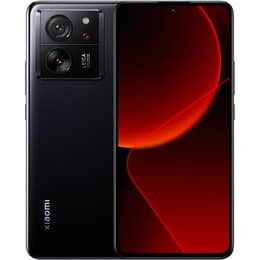
Xiaomi 13T
Xiaomi 13T
Starting at

Refurbished price:183.00

Versus €630.00 new

See options

Ratings

The Google Pixel 6a, released in July 2022, and the Xiaomi 13T, launched in September 2023, are both Android smartphones offering distinct experiences. While the Pixel 6a emphasizes a streamlined software experience and computational photography, the Xiaomi 13T focuses on a high-refresh-rate display and versatile camera hardware. Both devices run on the Android operating system, but their approaches to performance, display technology, and camera capabilities present clear differences for users to consider.

Scores

Durability

When evaluating the longevity of these devices, several factors come into play, including their release timelines, software support, and physical durability.

  • Software Support: The Google Pixel 6a is expected to receive OS updates until at least July 2025 and security updates until at least July 2027. Some discussions suggest potential extensions for OS updates to Android 17, aligning with its security patch timeline. The Xiaomi 13T, being a newer device, benefits from Xiaomi's commitment to four generations of Android OS updates and five years of security patches, extending its software relevance further into the future.
  • Physical Durability: The Pixel 6a features Corning Gorilla Glass 3 on its display and an IP67 rating for dust and water resistance, indicating protection against immersion in water up to 1 meter for 30 minutes. The Xiaomi 13T offers enhanced protection with Corning Gorilla Glass 5 on its display and an IP68 rating, allowing for submersion up to 1.5 meters for 30 minutes, and is built with a glass front, aluminum frame, and options for ceramic or silicone polymer backs.
  • Repairability: The Pixel 6a has been noted for a relatively good repairability score of 7 out of 10, with components like the battery and screen being accessible for replacement, though the USB-C port is soldered to the mainboard. Information regarding the specific repairability score for the Xiaomi 13T is not as widely available, but its construction suggests a modern smartphone repair process.

Year of Release

2022

2023

Compatible with latest Update

Yes

Yes

OS

Android

Android

Foldable

No

No

Performance

The performance of a smartphone is crucial for daily responsiveness, app handling, and overall user experience. Both devices offer capable internal components designed for smooth operation.

  • System Responsiveness: The Google Pixel 6a is powered by Google's custom-designed processor, which is optimized for artificial intelligence and machine learning tasks. This results in a consistently smooth and responsive experience for everyday use, multitasking, and navigating the user interface. Users report minimal lag even with several demanding applications open simultaneously.
  • App and Gaming Performance: The Pixel 6a handles demanding applications and most popular mobile games at decent frame rates and graphics settings, with good thermal management preventing excessive heat buildup during extended use. The Xiaomi 13T, featuring a powerful current-generation processor, delivers strong performance for gaming and other intensive tasks, ensuring a fluid experience across various applications.
  • Memory and Storage: The Pixel 6a comes with 6GB of RAM and 128GB of internal storage, which is non-expandable. The Xiaomi 13T offers more flexibility with options for 8GB or 12GB of RAM and 256GB or 512GB of non-expandable storage, providing more headroom for extensive multitasking and larger media libraries.

Memory (GB)

6 GB

8 GB

Screen quality

The display is a primary interface for smartphone interaction, and both the Pixel 6a and Xiaomi 13T offer distinct visual experiences.

  • Display Technology and Resolution: The Google Pixel 6a features a 6.1-inch OLED display with a resolution of 1080x2400 pixels, providing deep blacks and vibrant colors. The Xiaomi 13T boasts a larger 6.67-inch AMOLED display with a higher resolution of 1220x2712 pixels, offering a very high pixel density for sharp visuals.
  • Refresh Rate and Smoothness: The Pixel 6a has a standard 60Hz refresh rate, which provides a smooth experience for typical usage. In contrast, the Xiaomi 13T features a significantly higher 144Hz refresh rate, contributing to noticeably smoother scrolling and more fluid animations, particularly beneficial for gaming and fast-paced content.
  • Brightness and Visual Enhancements: Both displays support HDR content, with the Pixel 6a offering good readability in various lighting conditions. The Xiaomi 13T stands out with support for HDR10+ and Dolby Vision, alongside an impressive peak brightness of 2600 nits, ensuring excellent visibility even in bright outdoor environments and a more immersive viewing experience for compatible media.

Resolution

1080 x 2400

1220 x 2712

Screen type

OLED

AMOLED

Audiovisual

Camera capabilities are a significant differentiator, with both smartphones employing different strategies to capture images and videos.

  • Rear Camera System: The Google Pixel 6a features a dual-camera setup with a 12.2MP main sensor with optical image stabilization (OIS) and a 12MP ultrawide camera. It relies heavily on computational photography for image processing. The Xiaomi 13T offers a more versatile triple-camera system co-engineered with Leica, including a 50MP main sensor with OIS, a 50MP telephoto lens with 2x optical zoom, and a 12MP ultrawide camera.
  • Photography Performance: The Pixel 6a is known for its strong computational photography, delivering consistent and well-processed images, particularly excelling in low-light conditions and portrait mode with accurate subject detection. The Xiaomi 13T's Leica-tuned cameras produce detailed photos with vibrant or authentic color options, offering good dynamic range and impressive low-light performance with a dedicated Night mode. The dedicated telephoto lens on the Xiaomi 13T provides clear zoomed-in shots.
  • Video Recording and Front Camera: The Pixel 6a can record 4K video at up to 60 frames per second, with effective image stabilization, and has an 8MP front-facing camera. The Xiaomi 13T records 4K video at up to 30 frames per second across all focal lengths, also with good stabilization, and features a higher resolution 20MP front camera for selfies.

Main camera

12.2 megapixels

50 megapixels

Front camera

8 megapixels

20 megapixels

Miscellaneous

Beyond the core features, several practical elements contribute to the overall user experience and daily utility of these smartphones.

  • Connectivity and Ports: Both devices support 5G connectivity, Wi-Fi 6E, Bluetooth, and NFC for contactless payments. They both utilize a USB-C port for charging and data transfer, with the Pixel 6a featuring USB-C 3.1. Both also support dual SIM functionality, typically via a physical nano-SIM and an eSIM.
  • Biometric Security and Sensors: The Google Pixel 6a includes an under-display optical fingerprint sensor for secure unlocking. While not explicitly detailed in all snippets, the Xiaomi 13T is expected to offer similar modern biometric security, alongside standard sensors like proximity, accelerometer, and compass/magnetometer.
  • Design and Handling: The Pixel 6a has a more compact form factor, weighing 178g with a plastic back and an aluminum alloy frame, and an IP67 rating. The Xiaomi 13T is a larger device, weighing around 193g to 197g depending on the back material (glass, ceramic, or silicone polymer), and features an aluminum frame with an IP68 rating. The Xiaomi 13T also includes an IR blaster, a common feature in Xiaomi phones for controlling home appliances.

Weight

178 g

193 g

Screen size (in)

6.1

6.67

Network

5G

5G

SIM card

Physical SIM + eSIM

Dual Physical SIM

Carrier compatibility

Unlocked

Unlocked

Connector

USB-C

USB-C

The Google Pixel 6a and Xiaomi 13T cater to different user priorities, reflecting their respective design philosophies. Users often praise the Pixel 6a for its consistent camera performance, particularly its computational photography capabilities, and its clean Android experience with timely software updates. Some common criticisms for the Pixel 6a include its 60Hz display and relatively slower charging speeds compared to newer devices.

The Xiaomi 13T, on the other hand, frequently receives acclaim for its vibrant 144Hz AMOLED display, fast charging capabilities, and versatile Leica-tuned camera system, including a dedicated telephoto lens. User feedback sometimes points to Xiaomi's software interface being more feature-rich but potentially less streamlined than a stock Android experience.

For those who prioritize a compact device with a focus on computational photography and a pure Android experience, the Google Pixel 6a remains a compelling choice. Its extended software support, even as a quality-assured refurbished option, offers a reliable and sustainable choice for long-term use. Conversely, users seeking a larger, more immersive display with a high refresh rate, faster charging, and a more hardware-diverse camera system, including optical zoom, may find the Xiaomi 13T better suited to their needs. Both devices, especially when considering refurbished options, represent eco-friendly alternatives for consumers looking to make informed purchasing decisions.


See all articles

Our recent comparisons
