

Google Pixel 6A Vs iPhone 16 Pro Max

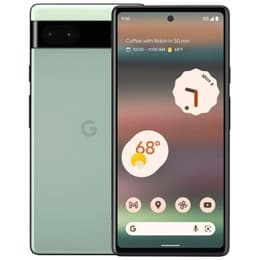
Google Pixel 6A
Google Pixel 6A
Starting at

Refurbished price:143.00

Versus €459.00 new

See options
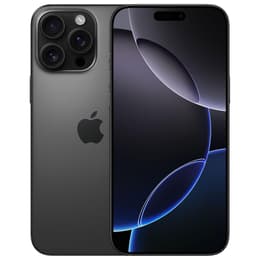
iPhone 16 Pro Max
iPhone 16 Pro Max
Starting at

Refurbished price:821.00

Versus €1,489.00 new

See options

Ratings

The Google Pixel 6A, released in 2022, is a mid-range smartphone known for its Google Tensor chip and camera capabilities. In contrast, the iPhone 16 Pro Max is an anticipated premium flagship from Apple, expected to launch in late 2026, building upon the advanced features of its predecessors. This comparison will outline the expected differences between these two devices, catering to distinct user expectations with the Pixel 6A providing a balanced experience and the iPhone 16 Pro Max aiming for top-tier performance and features. Both run on their respective operating systems, Android and iOS, offering distinct user interfaces and app ecosystems.

Scores

Durability

When considering the practical lifespan of these devices, their release timelines and software support are key factors.

  • Software Longevity: The Pixel 6A, launched in 2022, is set to receive security updates until at least July 2027 and OS updates until at least July 2025. The iPhone 16 Pro Max, anticipated for a 2026 release, is expected to offer a significantly longer software support window, typically receiving major iOS updates for six to seven years from its launch, based on Apple's historical support for its flagship devices.
  • Physical Durability: The Pixel 6A features Gorilla Glass 3 for screen protection and an IP67 rating for dust and water resistance. The iPhone 16 Pro Max is expected to feature Apple's Ceramic Shield front cover for enhanced drop protection and an IP68 rating, providing superior dust and water resistance.
  • Expected Lifespan: While both devices are designed for daily use, the iPhone 16 Pro Max is expected to offer a longer practical lifespan due to its extended software support and more robust build materials.

Year of Release

2022

2024

Compatible with latest Update

Yes

Yes

Foldable

No

No

Performance

The core processing power and memory configurations significantly impact how each device handles daily tasks and demanding applications.

  • Processor Capabilities: The Pixel 6A is powered by Google's first-generation Tensor chip, which capably handles everyday applications and multitasking. The iPhone 16 Pro Max is expected to feature Apple's latest generation A-series processor, likely an A18 Pro chip, designed to deliver substantial performance improvements for all tasks.
  • System Responsiveness: The Pixel 6A provides a smooth experience for general use, though intensive gaming or heavy video editing might show occasional slowdowns compared to higher-end devices. The iPhone 16 Pro Max is anticipated to offer exceptionally fast app loading, seamless multitasking, and a highly responsive experience even with the most graphically intensive games and professional applications.
  • Memory and Storage: The Pixel 6A comes with 6GB of RAM and 128GB of internal storage, which is sufficient for most users. The iPhone 16 Pro Max is expected to feature 8GB or more of RAM and anticipated storage options likely starting at 256GB and going up to 1TB or more.

Memory (GB)

6 GB

8 GB

Screen quality

The visual experience on a smartphone is largely defined by its display technology and specifications.

  • Display Technology: The Google Pixel 6A features a 6.1-inch OLED display with a resolution of 1080 x 2400 pixels and a standard 60Hz refresh rate. This display provides good color reproduction and deep blacks. The iPhone 16 Pro Max is anticipated to feature a larger, more advanced ProMotion OLED display, potentially around 6.9 inches, with a higher resolution.
  • Brightness and Clarity: While the Pixel 6A's display is suitable for most content, its brightness levels might be less optimal in direct sunlight compared to premium devices. The iPhone 16 Pro Max is expected to offer significantly greater peak brightness, enhancing visibility in various lighting conditions.
  • Smoothness and Size: The iPhone 16 Pro Max's anticipated adaptive refresh rate, expected to go up to 120Hz, will provide a noticeably smoother scrolling experience and more fluid animations. Its larger screen size will also offer a more immersive viewing experience for videos and productivity tasks.

Resolution

1080 x 2400

1320 x 2868

Screen type

OLED

LTPO Super Retina XDR OLED

Audiovisual

Both devices offer distinct photographic and videographic capabilities, catering to different user needs.

  • Camera System: The Pixel 6A is equipped with a dual-camera system, featuring a 12.2 MP main sensor and a 12 MP ultrawide lens, along with an 8 MP front camera. It leverages Google's computational photography for good image quality. The iPhone 16 Pro Max is expected to feature a highly advanced multi-camera system, building on its predecessors with larger sensors, improved optical zoom, and enhanced low-light capabilities across all lenses, including a rumored 48MP ultrawide camera.
  • Photography Performance: The Pixel 6A delivers decent low-light performance for its class and solid video recording for casual use, with 4K video at 30 or 60fps. The iPhone 16 Pro Max's computational photography will likely offer more sophisticated image processing, and video recording is anticipated to be industry-leading, with advanced stabilization and cinematic features.
  • Audio Experience: For audio, the Pixel 6A offers stereo speakers and a microphone system suitable for calls and basic recordings. The iPhone 16 Pro Max will likely include improved stereo speakers for a richer audio experience and a refined microphone array for clearer voice capture.

Main camera

12.2 megapixels

48 megapixels

Front camera

8 megapixels

12 megapixels

Miscellaneous

Beyond core performance, several practical elements contribute to the overall user experience of these smartphones.

  • Connectivity: The Pixel 6A supports 5G connectivity, Wi-Fi 6, and Bluetooth 5.2, providing modern wireless communication capabilities. The iPhone 16 Pro Max is expected to support the latest 5G standards, Wi-Fi 7, and an updated Bluetooth version, ensuring cutting-edge wireless performance.
  • Ports and Biometrics: The Pixel 6A features a USB-C port for charging and data transfer and an under-display fingerprint sensor for secure unlocking. The iPhone 16 Pro Max will feature a USB-C port, likely with faster data transfer speeds, and will rely on Face ID for biometric authentication.
  • Design and Handling: Weighing 178 grams, the Pixel 6A offers a comfortable in-hand feel. The iPhone 16 Pro Max's build materials are expected to be premium, possibly titanium, contributing to a robust yet potentially lighter design than previous Pro Max models, while still being a larger and heavier device than the Pixel 6A.

Weight

178 g

227 g

Screen size (in)

6.1

6.9

Network

5G

5G

SIM card

Physical SIM + eSIM

Physical SIM + eSIM

Carrier compatibility

Unlocked

Unlocked

Connector

USB-C

USB-C (USB 3)

User feedback for the Google Pixel 6A often praises its camera quality, especially its computational photography features, which deliver consistent and pleasing results for its segment. Users also appreciate its clean Android experience and the performance offered by the Tensor chip for everyday tasks. Common criticisms sometimes point to the 60Hz display as a limitation compared to devices with higher refresh rates, and some users desire faster charging speeds.

For the iPhone 16 Pro Max, while specific user feedback is not yet available, based on previous Pro Max generations and current expectations, it is anticipated to be lauded for its exceptional overall performance, advanced camera system, and extended battery life. Users typically value the seamless integration within the Apple ecosystem and the long-term software support. Potential criticisms might revolve around its larger size and weight, which some users find less comfortable for one-handed use.

Users prioritizing a strong camera experience and a pure Android interface in a more compact form factor may find the Pixel 6A well-suited to their needs. It offers a reliable smartphone experience for general use and media consumption. Conversely, users who demand the absolute latest in mobile technology, superior performance for demanding applications, an advanced camera system, and the longest possible software longevity will likely lean toward the iPhone 16 Pro Max. Its larger display and premium features cater to those seeking a top-tier device for productivity, gaming, and content creation. Both devices, whether new or as quality-assured refurbished options, offer distinct advantages depending on individual priorities.


See all articles

Our recent comparisons