

Google Pixel 6A Vs iPhone 12 mini

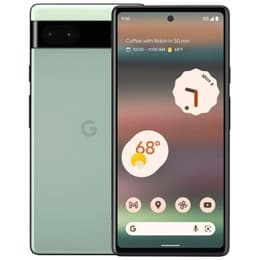
Google Pixel 6A
Google Pixel 6A
Starting at

Refurbished price:144.00

Versus €459.00 new

See options
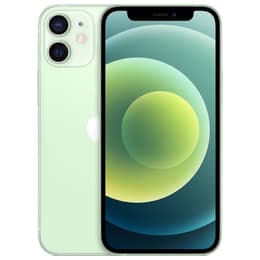
iPhone 12 mini
iPhone 12 mini
Starting at

Refurbished price:161.75

Versus €739.00 new

See options

Ratings

The Google Pixel 6A, released in July 2022, and the iPhone 12 Mini, launched in November 2020, represent distinct approaches to compact smartphone design. While the Pixel 6A operates on the Android platform and emphasizes Google's advanced computational photography and AI features, the iPhone 12 Mini runs on iOS, offering a streamlined user experience within a notably smaller form factor. Key differentiators include their operating systems, physical dimensions, and specific camera strengths.

Scores

Durability

When considering the long-term usability of these devices, their release timelines and software support policies are important factors.

  • Release Timeline: The Google Pixel 6A was released in July 2022, making it nearly two years newer than the iPhone 12 Mini, which launched in November 2020. This difference in release date can impact the duration of future software support.
  • Software Longevity: The Pixel 6A is expected to receive Android OS updates until at least July 2025 and security updates until at least July 2027, with some discussions suggesting potential for even longer OS support. The iPhone 12 Mini, running iOS, typically receives major software updates for approximately 5-6 years from its release, suggesting support could extend into late 2025 or 2026.
  • Physical Durability: The iPhone 12 Mini features a Ceramic Shield front cover, which Apple states offers improved drop performance. It also boasts an IP68 rating for water and dust resistance. The Pixel 6A has an IP67 rating for water and dust resistance and uses Gorilla Glass 3 for screen protection, with a plastic back and an aluminum frame.

Year of Release

2022

2020

Compatible with latest Update

Yes

Yes

OS

Android

iOS

Foldable

No

No

Performance

Both devices offer capable performance for their respective ecosystems, though their underlying hardware and real-world usage characteristics present some differences.

  • Processing Capabilities: The Google Pixel 6A is powered by Google's Tensor chip, the same processor found in its more premium Pixel 6 and 6 Pro models, providing robust performance for demanding applications and multitasking. The iPhone 12 Mini utilizes the A14 Bionic chip, which delivers smooth operation across iOS applications and games. Both processors were considered high-performing at their respective times of release.
  • Multitasking and Storage: The Pixel 6A comes with 6GB of RAM and 128GB of internal storage, without an option for expansion. The iPhone 12 Mini typically features 4GB of RAM and is available in 64GB, 128GB, or 256GB storage configurations. For users who frequently switch between many applications, the Pixel 6A's higher RAM might offer a slight edge in keeping more apps active in memory.
  • Battery Behavior: The Pixel 6A is equipped with a 4410 mAh battery, generally providing a full day of use for many users, with some tests showing nearly 13 hours of video streaming. The iPhone 12 Mini has a smaller 2227 mAh battery, and its battery life is frequently noted as a point where users may need to manage their usage or charge more often, especially with heavy use. Video rundown tests for the iPhone 12 Mini typically show around 10-11 hours.

Memory (GB)

6 GB

4 GB

Screen quality

The visual experience on both smartphones is delivered through high-quality displays, each with specific characteristics.

  • Display Technology and Clarity: Both the Google Pixel 6A and the iPhone 12 Mini feature OLED displays, which are known for producing deep blacks and vibrant colors. The Pixel 6A has a 6.1-inch display with a resolution of 2400 x 1080 pixels. The iPhone 12 Mini, with its more compact 5.4-inch screen, offers a resolution of 2340 x 1080 pixels, resulting in a higher pixel density (476 ppi) compared to the Pixel 6A. This higher pixel density on the iPhone 12 Mini can lead to slightly sharper text and images.
  • Refresh Rate and Smoothness: Both devices feature a standard 60Hz refresh rate. This means that content scrolling and animations will appear smooth, but neither offers the higher refresh rates found on some other smartphones that provide an even more fluid visual experience.
  • Brightness and Protection: Both displays offer good brightness levels for typical indoor and outdoor viewing. The iPhone 12 Mini's screen is protected by Ceramic Shield, designed for enhanced durability against drops. The Pixel 6A uses Corning Gorilla Glass 3 for screen protection.

Resolution

1080 x 2400

1080 x 2340

Screen type

OLED

Super Retina XDR OLED

Audiovisual

Both the Pixel 6A and iPhone 12 Mini are recognized for their camera capabilities, each excelling in different aspects of photography and videography.

  • Rear Camera Systems: The Google Pixel 6A features a dual-camera setup on the rear, consisting of a 12.2MP main sensor with optical image stabilization and a 12MP ultrawide lens with a 114° field of view. The iPhone 12 Mini also has a dual 12MP rear camera system, with a wide lens (f/1.6 with OIS) and an ultrawide lens (f/2.4 with a 120° field of view).
  • Photography Performance: The Pixel 6A leverages Google's computational photography, offering features like Magic Eraser, Real Tone for accurate skin tones, and Night Sight for low-light conditions. Users often praise its ability to produce detailed and color-accurate photos, especially of people. The iPhone 12 Mini delivers excellent photos with vibrant colors and improved low-light performance over previous models, with Night Mode available on all cameras. It does not include a telephoto lens.
  • Video Recording Quality: The Pixel 6A can record 4K video at 30 or 60 frames per second. The iPhone 12 Mini also supports 4K video recording at up to 60 frames per second and includes Dolby Vision HDR recording, which enhances video quality with improved dynamic range.

Main camera

12.2 megapixels

12 megapixels

Front camera

8 megapixels

12 megapixels

Miscellaneous

Beyond core performance and display, several practical elements contribute to the overall user experience of these devices.

  • Connectivity and Ports: Both smartphones support 5G connectivity, enabling faster mobile data speeds where available. The Pixel 6A includes Wi-Fi 6E and Bluetooth 5.2, while the iPhone 12 Mini features Wi-Fi 6 and Bluetooth 5. For physical connections, the Pixel 6A uses a USB-C port, whereas the iPhone 12 Mini uses Apple's proprietary Lightning port. Neither device includes a traditional 3.5mm headphone jack.
  • Biometric Security: The Google Pixel 6A incorporates an in-display fingerprint sensor for secure unlocking and authentication. The iPhone 12 Mini relies on Face ID, Apple's facial recognition system.
  • Design and Handling: The iPhone 12 Mini is notably compact and lightweight, measuring 131.5 x 64.2 x 7.4 mm and weighing 133g, making it one of the smallest 5G phones available at its release. The Pixel 6A is larger and heavier at 152.16 x 71.8 x 8.85 mm and 178g, though still considered a manageable size for many users. The Pixel 6A features a plastic back and an aluminum frame, while the iPhone 12 Mini has an aluminum frame and a glass back with Ceramic Shield on the front.

Weight

178 g

135 g

Screen size (in)

6.1

5.4

Network

5G

5G

SIM card

Physical SIM + eSIM

Physical SIM + eSIM

Carrier compatibility

Unlocked

Unlocked

Connector

USB-C

Lightning

The Google Pixel 6A and iPhone 12 Mini cater to users with differing priorities, offering distinct strengths within their respective ecosystems. User feedback for the Pixel 6A often highlights its strong camera performance, particularly its computational photography features like Real Tone and Magic Eraser, which are praised for producing excellent results, especially with skin tones. Its flagship-level processor also receives positive remarks for smooth performance. Some common concerns include its 60Hz display and, for some users, battery life that is good but not exceptional.

The iPhone 12 Mini is frequently lauded for its compact size and premium build, appealing to those who prefer a smaller device that is easy to handle with one hand. Its performance is consistently praised for being fast and responsive, and its camera system is noted for strong low-light capabilities and high-quality video recording with Dolby Vision HDR. However, its battery life is a frequent point of criticism, with many users finding it requires more frequent charging, and the smaller screen size may not suit all media consumption habits.

Users prioritizing advanced computational photography, a larger screen for an Android device, and potentially longer software support may find the Google Pixel 6A well-suited to their needs. Conversely, users who value a highly compact form factor, the iOS ecosystem, robust video capabilities, and a premium build will likely lean towards the iPhone 12 Mini. Both devices offer a quality experience, and choosing between them often comes down to personal preference for operating system, size, and specific feature emphasis. For those seeking a sustainable choice, both models are available as quality-assured refurbished options.

See all articles

Our recent comparisons