

Compare models
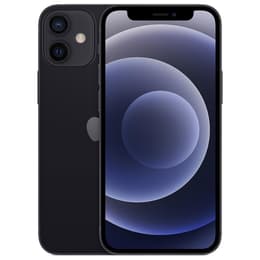
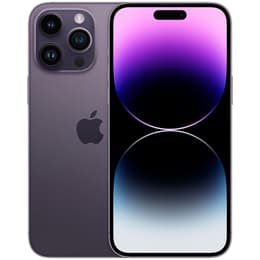
iPhone 12 mini Vs iPhone 14 Pro Max
- 1-year minimum warranty
- Free delivery on all orders
- Free 30-day returns
Differences at a glance
The iPhone 12 Mini, released in late 2020, and the iPhone 14 Pro Max, launched in late 2022, represent distinct approaches within Apple's smartphone lineup. While both devices operate on the iOS ecosystem, they cater to different user preferences, primarily differing in their physical size, display technology, and overall performance capabilities. The 12 Mini offers a compact experience, whereas the 14 Pro Max delivers a large-screen, feature-rich flagship experience.
Available Models
Colour
Storage (GB)
Scores
Durability
The practical lifespan of a smartphone is often influenced by its release timeline, software support, and physical durability. These two models, separated by two years, offer different expectations in these areas.
- Release Timeline & OS Support: The iPhone 12 Mini, released in November 2020, and the iPhone 14 Pro Max, released in September 2022, both benefit from Apple's extended software support. As of March 2026, both devices are compatible with iOS 26, indicating a strong commitment to software longevity for both models. Users can generally expect 5-6 years of major iOS updates from their respective release dates.
- Physical Durability: Both devices feature a Ceramic Shield front cover and are rated IP68 for water and dust resistance, offering protection against everyday elements. However, the iPhone 14 Pro Max incorporates a stainless steel frame compared to the 12 Mini's aluminum, potentially offering a more robust feel. The iPhone 14 Pro Max also features a design that makes its back glass easier and less expensive to replace compared to previous Pro Max models, though it remains prone to damage from drops.
- Expected Practical Lifespan: Given their respective release dates and Apple's update policies, the iPhone 14 Pro Max is likely to receive software updates for approximately two years longer than the iPhone 12 Mini, extending its functional lifespan in terms of new features and security patches.
Year of Release
2020
2022
Compatible with latest Update
Yes
Yes
OS
iOS
iOS
Foldable
No
No
Performance
Performance is a key differentiator, with the two-year gap between these models bringing notable advancements in processing power and battery efficiency.
- Processor Capabilities: The iPhone 12 Mini is equipped with a capable processor that handles everyday applications and moderate multitasking smoothly. The iPhone 14 Pro Max, featuring a newer generation processor, offers enhanced capabilities for more demanding applications, intensive gaming, and complex video editing tasks, resulting in a more responsive and fluid user experience across the board.
- Battery Behavior: The iPhone 12 Mini, due to its compact size, houses a smaller battery, which often translates to average battery life. Many users report needing to charge it by early evening with heavy use. In contrast, the iPhone 14 Pro Max is known for its exceptional battery endurance, often lasting well over a full day even with demanding usage, making it suitable for users who require extended power without frequent recharging.
- Storage and Responsiveness: Both models offer various storage configurations. The iPhone 14 Pro Max generally includes more RAM, which contributes to smoother multitasking and faster app switching, particularly when many applications are open simultaneously.
Screen quality
The visual experience varies significantly between these two devices, primarily due to differences in screen size, display technology, and advanced features.
- Display Technology and Size: Both phones feature Super Retina XDR OLED displays, offering deep blacks and vibrant colors. However, the iPhone 12 Mini has a compact 5.4-inch display, ideal for one-handed use, while the iPhone 14 Pro Max boasts a expansive 6.7-inch display, providing a much larger canvas for media consumption and productivity.
- Resolution and Brightness: The iPhone 12 Mini offers a resolution of 2340x1080 pixels at 476 ppi, with a typical brightness of 625 nits and a peak of 1200 nits for HDR content. The iPhone 14 Pro Max features a higher resolution of 2796x1290 pixels at 460 ppi, and significantly higher brightness levels, reaching 1000 nits typical, 1600 nits peak for HDR, and up to 2000 nits for outdoor visibility.
- Advanced Display Features: The iPhone 14 Pro Max introduces ProMotion technology, offering an adaptive refresh rate up to 120Hz for smoother scrolling and more fluid animations, a feature absent on the 12 Mini's standard 60Hz display. Additionally, the 14 Pro Max includes an Always-On display and the Dynamic Island, which integrates notifications and activities into a dynamic interface around the front camera cutout.
Resolution
1080 x 2340
1290 x 2796
Screen type
Super Retina XDR OLED
LTPO Super Retina XDR OLED
Audiovisual
The camera systems on these iPhones reflect the advancements made over two generations, with the 14 Pro Max offering a more versatile and capable setup.
- Rear Camera System: The iPhone 12 Mini features a dual 12-megapixel camera system, comprising a wide (f/1.6) and an ultrawide (f/2.4) lens. It delivers strong performance in good lighting and includes Night mode for improved low-light photography across all cameras. The iPhone 14 Pro Max elevates this with a triple camera system, including a 48-megapixel main sensor (f/1.78), a 12-megapixel ultrawide (f/2.2), and a 12-megapixel 3x telephoto lens (f/2.8). This allows for greater detail, improved low-light performance through technologies like Photonic Engine, and optical zoom capabilities.
- Video Recording: Both devices are capable of recording 4K video at up to 60 frames per second, with support for Dolby Vision HDR. The iPhone 14 Pro Max further enhances video capabilities with features like ProRes video recording and an advanced Cinematic mode, offering more creative control and higher quality footage.
- Front Camera: The iPhone 12 Mini has a 12-megapixel front camera. The iPhone 14 Pro Max also features a 12-megapixel front camera but adds autofocus, which can result in sharper selfies and improved video calls.
Main camera
12 megapixels
48 megapixels
Front camera
12 megapixels
12 megapixels
Miscellaneous
Beyond core features, several practical elements contribute to the overall user experience and differentiate these two iPhone models.
- Connectivity and Ports: Both the iPhone 12 Mini and iPhone 14 Pro Max support 5G connectivity and utilize the Lightning port for charging and data transfer. For users in the US, the iPhone 14 Pro Max is an eSIM-only device, while the 12 Mini supports physical SIM cards.
- Biometric Security and Sensors: Both models rely on Face ID for secure authentication. The iPhone 14 Pro Max integrates additional sensors and features, such as Emergency SOS via Satellite and Crash Detection, enhancing safety capabilities.
- Physical Characteristics: The iPhone 12 Mini is notably smaller and lighter, measuring 131.5 x 64.2 x 7.4 mm and weighing 135g, making it highly pocketable and comfortable for one-handed use. The iPhone 14 Pro Max is a significantly larger and heavier device at 160.7 x 77.6 x 7.85 mm and 240g, which provides a more expansive viewing experience but requires a two-handed approach for most interactions.
Weight
135 g
120 g
Screen size (in)
5.4
6.7
Network
5G
5G
SIM card
Physical SIM + eSIM
Physical SIM + eSIM
Carrier compatibility
Unlocked
Unlocked
Connector
Lightning
Lightning
What the community thinks
User feedback for the iPhone 12 Mini frequently praises its unique compact form factor, making it a preferred choice for those who value portability and one-handed usability. Its camera system was considered capable for its time, and its performance was generally well-regarded for everyday tasks. However, a common criticism centered on its battery life, which many users found to be insufficient for a full day of heavy use.
The iPhone 14 Pro Max, on the other hand, garners consistent praise for its exceptional battery life, powerful performance, and advanced camera system, particularly its low-light capabilities and optical zoom. Its large, bright display with ProMotion and the innovative Dynamic Island are also frequently highlighted as significant advantages. Some users, however, find its size and weight to be substantial, and the cost of repairing its back glass can be considerable.
Ultimately, the choice between these two devices depends heavily on individual priorities. Users prioritizing a highly portable, one-handed device for general use and moderate media consumption may find the iPhone 12 Mini well-suited to their needs. Conversely, users who require a large display, extended battery life, and a top-tier camera system for demanding applications, content creation, or immersive media experiences will likely lean towards the iPhone 14 Pro Max. Both models offer a quality-assured refurbished option, providing an eco-friendly alternative for consumers.