

Compare models

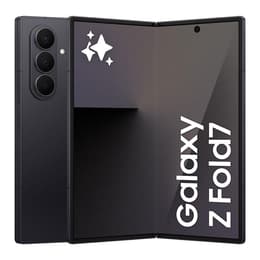
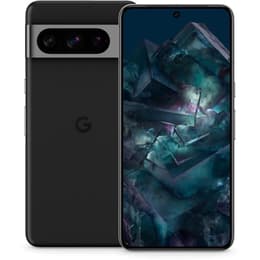
Galaxy Z Fold7 Vs Google Pixel 8 Pro

  • 1-year minimum warranty
  • Free delivery on all orders
  • Free 30-day returns
Galaxy Z Fold7
Starting at

Refurbished price:€907.00

Versus €2,236.37 new

See options
Google Pixel 8 Pro
Starting at

Refurbished price:€327.00

Versus €1,099.00 new

See options

Differences at a glance

The Samsung Galaxy Z Fold7 (2025) and the Google Pixel 8 Pro (2023) represent two very different approaches to modern flagship smartphone design. While the Galaxy Z Fold7 features an innovative book-style foldable form factor with dual screens, the Google Pixel 8 Pro adheres to a traditional slate structure centered around computational capability. Both devices run on the Android operating system, but they target distinct user preferences through their hardware architecture and physical layout.

Available Models

Colour

Storage

Scores

Durability

When evaluating the longevity and build endurance of these two devices, differences in their release timelines and mechanical designs shape their expected lifespans.

  • Software Support Window: The Google Pixel 8 Pro benefits from a commitment of seven years of comprehensive system and security updates, while the Galaxy Z Fold7 provides a similar extended multi-year update framework matching its newer launch generation.
  • Mechanical Design: The Galaxy Z Fold7 incorporates folding display technology and a complex hinge mechanism requiring careful handling, whereas the Pixel 8 Pro utilizes a conventional rigid chassis with reinforced glass protection.
  • Repairability Expectations: Conventional slab designs like the Pixel 8 Pro generally present simpler maintenance pathways compared to folding devices, which demand specialized servicing for their flexible internal screens.

Year of Release

2025

2023

Compatible with latest Update

Yes

Yes

Foldable

Yes

No

Performance

System responsiveness and daily operational capabilities vary based on the hardware configurations and internal processing architecture built into each smartphone.

  • Multitasking and App Execution: Both models handle demanding applications, heavy multitasking, and immersive gaming smoothly, though the foldable format of the Galaxy Z Fold7 is specifically optimized to run multiple side-by-side apps simultaneously.
  • Storage and Memory Configurations: The Galaxy Z Fold7 offers high-tier memory capacities paired with expansive internal storage tiers, while the Pixel 8 Pro provides streamlined configurations suited for standard professional and personal usage needs.
  • Battery Behavior: The Pixel 8 Pro relies on a conventional single-cell power reservoir to manage daily loads, whereas the Galaxy Z Fold7 distributes power across dual displays, impacting battery depletion rates differently depending on whether the inner or outer screen is active.

Screen quality

Display technology represents one of the most substantial contrasts between these two devices, dictating how visual content is consumed and interacted with.

  • Display Technology: The Galaxy Z Fold7 features a dynamic folding inner panel alongside a functional cover screen, whereas the Pixel 8 Pro employs a single rigid high-resolution OLED panel with adaptive refresh rates.
  • Brightness and Outdoor Clarity: Both devices achieve high peak brightness levels to maintain clear visibility under direct sunlight, ensuring text and images remain legible outdoors.
  • Viewing Experience: The expansive tablet-sized inner screen of the Galaxy Z Fold7 provides an immersive canvas for media consumption and document viewing, while the Pixel 8 Pro offers a traditional uninterrupted widescreen aspect ratio.

Resolution

1968x2184

1344 x 2992

Audiovisual

Photography and media recording hardware differ significantly in configuration, offering varied tools for capturing everyday moments and video content.

  • Camera Array Setup: The Galaxy Z Fold7 equips a high-resolution main sensor accompanied by ultra-wide and telephoto options, while the Pixel 8 Pro integrates a specialized triple-lens system backed by deep software processing algorithms.
  • Low-Light and Everyday Imaging: Both models deliver sharp, detailed photographs in diverse lighting conditions, with specialized modes designed to preserve clarity and color accuracy after dark.
  • Audio and Video Output: Stereo speakers on both smartphones provide balanced sound output for hands-free calls and media playback, supported by multi-microphone arrays that capture clear audio during video recording.

Miscellaneous

Practical daily features, physical dimensions, and connectivity standards determine how comfortably each device integrates into an active routine.

  • Connectivity and Ports: Both models support current-generation 5G networks, advanced Wi-Fi standards, and Bluetooth connectivity, utilizing reversible USB-C ports for charging and data transfer.
  • Security and Biometrics: The Galaxy Z Fold7 integrates a responsive fingerprint sensor into its side power button alongside facial recognition, while the Pixel 8 Pro features an under-display fingerprint reader and secure facial unlock.
  • Physical Handling: The Pixel 8 Pro presents a familiar weight and width for one-handed use, whereas the Galaxy Z Fold7 offers a remarkably thin profile when unfolded, transforming from a pocketable narrow phone into a larger handheld display.

Weight

215 g

213 g

Screen size (in)

8.0

6.7

Network

5G

5G

SIM card

Dual Physical SIM + eSIM

Physical SIM + eSIM

Carrier compatibility

Unlocked

Unlocked

What the community thinks

User feedback from online communities highlights distinct preference patterns for each device. Owners of the Google Pixel 8 Pro frequently praise its reliable all-day battery behavior, seamless computational photography tools, and straightforward everyday ergonomics. Conversely, users of the Galaxy Z Fold7 emphasize the genuine productivity benefits of the expansive inner display and the refined, slim folding chassis that fits comfortably in the hand.

Users prioritizing multitasking workspace versatility and a tablet-like viewing experience will find the Galaxy Z Fold7 well-suited to their workflow. On the other hand, users favoring a traditional smartphone structure with robust computational photography and long-term software backing may lean toward the Pixel 8 Pro. For those seeking a quality-assured refurbished option, exploring sustainably restored models provides a practical way to acquire these advanced technologies while supporting eco-friendly purchasing habits.


Our recent comparisons