
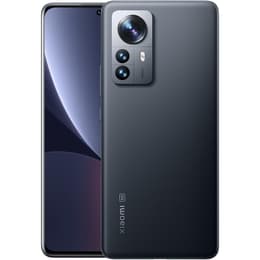


Google Pixel 7 Vs Xiaomi 12T Pro

Google Pixel 7
Google Pixel 7
Starting at

Refurbished price:160.00

Versus €756.00 new

See options
Xiaomi 12T Pro
Xiaomi 12T Pro
Starting at

Refurbished price:201.00

Versus €1,199.00 new

See options

Ratings

The Google Pixel 7 and the Xiaomi 12T Pro, both released in October 2022, are Android smartphones that offer distinct approaches to mobile technology. While the Pixel 7 focuses on a refined software experience and advanced computational photography, the Xiaomi 12T Pro emphasizes raw power, a high-resolution main camera, and rapid charging capabilities. Both devices run on the Android operating system, but they offer different user interfaces and software philosophies.

Scores

Durability

When considering the long-term usability of a smartphone, software support and physical resilience are key factors. The Pixel 7 and Xiaomi 12T Pro present different profiles in these areas.

  • Software Longevity: The Google Pixel 7 is guaranteed to receive five years of OS and security updates from its release date, meaning it will receive updates up to Android 18. This extended support ensures access to the latest features and security patches for a considerable period. In contrast, the Xiaomi 12T Pro typically receives around three years of OS updates, offering a shorter window for major Android version upgrades.
  • Physical Durability: The Google Pixel 7 features Corning Gorilla Glass Victus on its display and back, providing enhanced scratch and drop resistance, along with an IP68 rating for dust and water resistance. The Xiaomi 12T Pro uses Gorilla Glass 5 for its front display and has an IP53 rating, indicating protection against dust and light splashes, but not full water immersion.
  • Repairability: The Pixel 7 has a repairability score of approximately 6 out of 10, with screen replacements being relatively straightforward, though battery replacement can be complex due to strong adhesive and a soldered charging port. Information on the Xiaomi 12T Pro's specific repairability score is less widely available, but its construction with a glass front and back, and a plastic frame, suggests a similar level of complexity for internal repairs.

Year of Release

2022

2022

Compatible with latest Update

Yes

Yes

OS

Android

Android

Foldable

No

No

Performance

The performance of a smartphone is crucial for daily tasks, from browsing and social media to demanding applications and gaming. Both the Pixel 7 and Xiaomi 12T Pro are equipped with capable hardware, but they approach performance with different underlying architectures.

  • Processing Power: The Xiaomi 12T Pro is powered by a current-generation processor, which allows it to handle demanding applications and multitasking smoothly, making it well-suited for mobile gamers and users who frequently push their device's limits. The Google Pixel 7 features Google's own processor, designed to optimize the Android experience and enhance AI-driven features, resulting in a fluid and responsive user experience for everyday tasks and Google's computational photography.
  • Battery Performance: The Xiaomi 12T Pro houses a larger 5000 mAh battery, which, combined with its efficient processor, generally provides a full day of standard use and can extend further with moderate usage. The Pixel 7 has a 4355 mAh battery, and while it can last a full day for many users, heavy usage may require a top-up before the day ends.
  • Storage and Responsiveness: Both devices offer ample storage options, typically 128GB or 256GB, paired with 8GB or 12GB of RAM for the Xiaomi 12T Pro and 8GB for the Pixel 7. This ensures smooth multitasking and quick app loading on both phones, though the Xiaomi 12T Pro's higher RAM option could offer a slight edge for extremely heavy multitasking scenarios.

Memory (GB)

8 GB

8 GB

Screen quality

The display is a primary interface for any smartphone, and both the Pixel 7 and Xiaomi 12T Pro offer vibrant viewing experiences with some key distinctions.

  • Display Technology and Clarity: Both phones feature AMOLED displays, known for their deep blacks and vibrant colors. The Xiaomi 12T Pro boasts a 6.67-inch CrystalRes AMOLED display with a 1220x2712 (1.5K) resolution, resulting in a pixel density of 446 pixels per inch (ppi). The Google Pixel 7 has a slightly smaller 6.3-inch FHD+ OLED display with a 2400x1080 resolution and 416 ppi.
  • Refresh Rate and Smoothness: The Xiaomi 12T Pro offers a 120Hz refresh rate with AdaptiveSync, which dynamically adjusts the refresh rate to optimize power consumption while providing smooth scrolling and fluid animations. The Pixel 7 features a 90Hz refresh rate, which still provides a smooth experience, though it is not as high as some competing devices.
  • Brightness and Viewing Experience: The Pixel 7 can reach a peak brightness of 1400 nits, offering excellent visibility even in bright outdoor conditions. The Xiaomi 12T Pro has a typical brightness of 500 nits and a peak brightness of 900 nits, which is also suitable for outdoor use. Both displays support HDR10+ for enhanced dynamic range in compatible content.

Resolution

1080 x 2400

1220 x 2712

Screen type

AMOLED

AMOLED

Audiovisual

Both the Google Pixel 7 and the Xiaomi 12T Pro place a strong emphasis on their camera systems, though they achieve their photographic results through different hardware and software philosophies.

  • Main Camera Capabilities: The Xiaomi 12T Pro features a high-resolution 200MP main camera with optical image stabilization (OIS), which uses pixel binning to produce detailed 12.5MP images by default. This allows for significant cropping without major loss of detail. The Google Pixel 7 is equipped with a 50MP main camera, also with OIS, that excels in capturing detailed and color-accurate photos across various lighting conditions, leveraging Google's advanced computational photography.
  • Secondary Cameras and Versatility: The Pixel 7 includes a 12MP ultrawide camera that produces good images with minimal distortion. The Xiaomi 12T Pro also has an 8MP ultrawide camera and a 2MP macro camera, though user reviews suggest these secondary lenses are less impressive compared to the main sensor. The Pixel 7 offers a 2x optical zoom effect by cropping its high-resolution main sensor, which performs well in good lighting.
  • Low-Light and Video Performance: Both devices offer strong low-light performance, with the Pixel 7's Night Sight mode being particularly effective and fast. The Xiaomi 12T Pro also performs well in low light with its main camera. For video, the Xiaomi 12T Pro supports up to 8K recording, while the Pixel 7 offers excellent video stabilization and features like Cinematic Blur. Both have capable front-facing cameras for selfies and video calls, with the Pixel 7 featuring a 10.8MP ultrawide and the Xiaomi 12T Pro a 20MP sensor.

Main camera

50 megapixels

200 megapixels

Front camera

10.8 megapixels

20 megapixels

Miscellaneous

Beyond core specifications, several practical features contribute to the overall user experience and daily convenience of these smartphones.

  • Connectivity and Ports: Both the Pixel 7 and Xiaomi 12T Pro support 5G connectivity, ensuring fast mobile data speeds. They both feature USB-C ports for charging and data transfer, though the Xiaomi 12T Pro uses USB-C 2.0. The Pixel 7 supports wireless charging, a feature absent on the Xiaomi 12T Pro.
  • Biometrics and Audio: Both devices incorporate in-display fingerprint sensors for secure unlocking, and the Pixel 7 also offers face unlock. The Xiaomi 12T Pro stands out with stereo speakers tuned by Harman Kardon and Dolby Atmos support, providing a rich audio experience for media consumption.
  • Design and Handling: The Google Pixel 7 has dimensions of 155.6 x 73.2 x 8.7 mm and weighs 197g, making it a relatively compact and manageable device. The Xiaomi 12T Pro is slightly larger and heavier at 163.1 x 75.9 x 8.6 mm and 205g. Both phones feature modern designs with minimal bezels and punch-hole front cameras.

Weight

197 g

204 g

Screen size (in)

6.3

6.67

Network

5G

5G

SIM card

Physical SIM + eSIM

Dual Physical SIM

Carrier compatibility

Unlocked

Unlocked

The Google Pixel 7 and Xiaomi 12T Pro cater to different user priorities, each excelling in specific areas. User sentiment often praises the Pixel 7 for its exceptional camera performance, particularly its computational photography features and consistent image quality across various conditions. Its clean Android experience and extended software support are also frequently highlighted as significant advantages. Some users, however, note that its 90Hz display and battery life, while solid, might not match the highest-end competitors for power users.

The Xiaomi 12T Pro receives acclaim for its powerful processor, which delivers smooth performance for gaming and demanding applications. Its large battery and exceptionally fast 120W wired charging are also major drawcards, allowing for quick power-ups. The 200MP main camera is often praised for its detail in good lighting, though the secondary cameras sometimes receive criticism for being less capable. The lack of wireless charging and a high IP rating are also points of consideration for some users.

Users prioritizing a refined software experience, consistent camera performance with advanced AI features, and long-term software updates may find the Google Pixel 7 well-suited to their needs. Those who value raw processing power, a high-resolution main camera, a larger display with a higher refresh rate, and extremely fast charging will likely lean towards the Xiaomi 12T Pro. Both devices offer compelling features, and choosing between them depends on individual preferences for these distinct strengths. For those seeking a more sustainable choice, both models are available as quality-assured refurbished options.


See all articles

Our recent comparisons