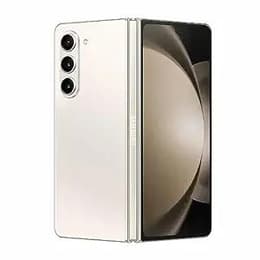
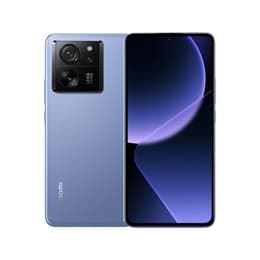


Galaxy Z Fold5 Vs Xiaomi 13T

Galaxy Z Fold5
Galaxy Z Fold5
Starting at

Refurbished price:591.00

Versus €1,899.99 new

See options
Xiaomi 13T
Xiaomi 13T
Starting at

Refurbished price:183.00

Versus €630.00 new

See options

Ratings

The Samsung Galaxy Z Fold5 (2023) and the Xiaomi 13T (2023) are contemporary smartphones, yet they cater to distinct user experiences. The Galaxy Z Fold5 stands out with its innovative foldable design, offering a large internal display for enhanced productivity and media consumption, alongside a conventional outer screen. In contrast, the Xiaomi 13T presents a more traditional smartphone form factor, focusing on a high-quality display and a capable camera system. Both devices operate on the Android platform, but their core differentiators lie in their physical design and the specific features each prioritizes.

Scores

Durability

The practical lifespan of a smartphone is influenced by its physical durability and the duration of software support it receives. These two devices, released in 2023, offer different approaches to longevity.

  • Software Support: The Samsung Galaxy Z Fold5 launched with Android 13 and is expected to receive four generations of Android OS upgrades and five years of security patches, aligning with Samsung's commitment to extended support. The Xiaomi 13T also launched with Android 13 and is promised four generations of Android OS upgrades and five years of security patches, indicating a similar commitment to long-term software relevance.
  • Physical Durability: The Galaxy Z Fold5 features a refined hinge design that allows it to fold completely flat, contributing to a more robust build compared to its predecessors. User feedback often highlights improved durability with the Fold5, with some reporting no issues with the inner screen protector after nearly a year of use. The Xiaomi 13T offers IP68 water and dust resistance, providing a good level of protection against environmental elements.
  • Expected Lifespan: Both phones are designed for several years of use, with their respective software update policies ensuring they remain functional and secure for an extended period. The unique folding mechanism of the Z Fold5 introduces a different set of durability considerations compared to the rigid design of the Xiaomi 13T.

Year of Release

2023

2023

Compatible with latest Update

Yes

Yes

OS

Android

Android

Foldable

Yes

No

Performance

Performance in modern smartphones is crucial for a smooth user experience, encompassing everything from app responsiveness to handling demanding tasks. These devices offer different levels of processing power and battery management.

  • Processing Power: The Galaxy Z Fold5 is equipped with a current-generation processor optimized for its foldable form factor, enabling smooth multitasking and efficient handling of intensive applications and gaming. Users report it to be superfast with no lag, comparable to a fluid operating system experience. The Xiaomi 13T features a capable processor built on a power-efficient manufacturing process, designed to handle various tasks from browsing to gaming without noticeable lag.
  • Multitasking and Responsiveness: The Galaxy Z Fold5's large internal display is particularly well-suited for multitasking, allowing users to run multiple applications simultaneously with ease. The Xiaomi 13T, while not offering the same screen real estate, provides a responsive experience for everyday use and app switching.
  • Battery Behavior: The Galaxy Z Fold5 has a 4400mAh battery, which, combined with an efficient processor, delivers decent battery life for a foldable device, often lasting a full day of moderate use. Some users even report getting close to two days of operation with lighter usage and optimized settings. The Xiaomi 13T features a larger 5000mAh battery, aiming for all-day use even with moderate to heavy activity. However, some tests indicate that while it provides a full day of mixed usage, heavy users might need to charge it by evening.

Memory (GB)

12 GB

8 GB

Screen quality

The display is a primary interface for smartphone interaction, and both devices offer high-quality viewing experiences, though with distinct characteristics.

  • Display Technology and Size: The Galaxy Z Fold5 features two Dynamic AMOLED 2X displays: a 7.6-inch main foldable screen and a 6.2-inch cover screen. The main screen offers a tablet-like experience when unfolded, while the cover screen provides a more traditional smartphone feel for one-handed use. The Xiaomi 13T sports a single 6.67-inch AMOLED display.
  • Resolution and Clarity: The Z Fold5's main display has a resolution of 2176 x 1812 pixels, and the cover display has 2316 x 904 pixels, both offering sharp visuals. The Xiaomi 13T features a 1.5K (2712 x 1220) resolution, providing clear and vibrant visuals.
  • Brightness and Refresh Rate: Both screens on the Z Fold5 support a 120Hz adaptive refresh rate, ensuring smooth scrolling and responsiveness. The main display can reach a peak brightness of 1750 nits, making it suitable for outdoor visibility. The Xiaomi 13T's display boasts a 144Hz refresh rate for very fluid motion and a peak brightness of 2600 nits, offering excellent visibility even in bright conditions.

Resolution

1812 x 2176

1220 x 2712

Screen type

Foldable Dynamic AMOLED 2X

AMOLED

Audiovisual

Camera capabilities are a significant factor for many users, and both the Galaxy Z Fold5 and Xiaomi 13T offer versatile camera systems, each with its own strengths.

  • Rear Camera System: The Galaxy Z Fold5 features a triple-camera setup on the rear: a 50MP main sensor, a 12MP ultra-wide camera, and a 10MP telephoto lens with 3x optical zoom. This system is noted for good color reproduction, detail, and dynamic range in good lighting, with decent low-light performance on the main camera. The Xiaomi 13T also comes with a triple rear camera setup, including a 50MP main camera, a 50MP telephoto lens with 2x optical zoom, and a 12MP ultra-wide-angle camera. Its cameras are co-engineered with Leica, offering distinct color profiles and strong performance in various conditions, including low light.
  • Front Camera System: The Z Fold5 has two front-facing cameras: a 10MP camera on the cover screen and a 4MP under-display camera on the main screen. The cover screen camera is generally preferred for selfies, while the under-display camera is primarily suited for video calls due to its lower quality. The Xiaomi 13T features a 20MP front camera, which captures good details and accurate skin tones, performing consistently even in challenging lighting.
  • Video Recording: The Galaxy Z Fold5 can record video up to 8K resolution at 30fps with its rear cameras, and 4K at 60fps. Video quality is generally good with effective stabilization. The Xiaomi 13T supports 4K video recording at 30fps across all focal lengths, with good detail, sharpness, and color reproduction, and electronic image stabilization is available.
  • Audio Experience: Both devices offer stereo speakers for media consumption. The Z Fold5's speaker placement has been noted by some users as potentially awkward. The Xiaomi 13T provides good Dolby Atmos speakers.

Main camera

50 megapixels

50 megapixels

Front camera

4 megapixels

20 megapixels

Miscellaneous

Beyond core performance and display, several practical elements contribute to the overall user experience and device utility.

  • Connectivity: Both smartphones support modern connectivity standards, including 5G, Wi-Fi 6 (802.11ax) or Wi-Fi 7, and Bluetooth 5.2 or newer, ensuring fast and reliable wireless connections. The Xiaomi 13T also includes an IR Blaster.
  • Port Types: The Galaxy Z Fold5 uses a USB-C port for charging and data transfer. The Xiaomi 13T also features a USB-C port. Neither device includes a traditional headphone jack.
  • Biometric Security: The Galaxy Z Fold5 incorporates a side-mounted fingerprint sensor. The Xiaomi 13T features an in-screen fingerprint sensor for secure unlocking. Both also offer AI face unlock.
  • Weight and Dimensions: The Galaxy Z Fold5, being a foldable, has distinct dimensions when folded and unfolded. Folded, it measures 154.9 x 67.1 x 13.4 mm and weighs 253 grams. Unfolded, it is 154.9 x 130.1 x 6.1 mm. Its lighter and slimmer build compared to previous generations makes it feel more manageable. The Xiaomi 13T has dimensions of 162.2 x 75.7 x 8.49 mm (glass back) or 8.62 mm (PU back) and weighs around 193-200 grams, offering a more conventional smartphone feel.
  • Build Materials: The Z Fold5 features upgraded Gorilla Glass for enhanced durability. The Xiaomi 13T is available with either a glass back or an eco-leather back option, providing different tactile experiences.

Weight

253 g

193 g

Screen size (in)

7.6

6.67

Network

5G

5G

SIM card

Dual Physical SIM + eSIM

Dual Physical SIM

Carrier compatibility

Unlocked

Unlocked

The Samsung Galaxy Z Fold5 and the Xiaomi 13T, both released in 2023, offer compelling smartphone experiences tailored to different user preferences. The Galaxy Z Fold5 is frequently praised by users for its innovative foldable design, which provides a large tablet-like screen for enhanced productivity and media consumption, making it a strong contender for those who value screen real estate and multitasking capabilities. Users appreciate its improved durability over previous Fold models and the fluid performance for heavy usage. However, some criticisms include the narrowness of the cover screen for typing and the camera quality, which, while good, may not always match the performance of other top-tier non-foldable flagships. The under-display camera is also noted as being primarily suitable for video calls rather than high-quality photos.

The Xiaomi 13T, on the other hand, receives positive feedback for its high-quality AMOLED display with a fast refresh rate and impressive brightness, along with its capable camera system co-engineered with Leica, which delivers vibrant and detailed photos. Its strong battery life is also a common praise point, providing reliable all-day power for most users. Some users, however, might find the battery life to be average under very heavy usage scenarios.

Users prioritizing a versatile device that transforms from a compact smartphone to a large-screen tablet for productivity and immersive media will find the Galaxy Z Fold5 well-suited to their needs. Its unique form factor and robust multitasking features are key differentiators. Conversely, users who prefer a traditional smartphone design with a focus on a vibrant display, a strong camera system for everyday photography, and reliable battery performance may lean towards the Xiaomi 13T. Both devices represent solid choices in their respective categories, and for those considering an eco-friendly alternative, a quality-assured refurbished option for either model can provide a sustainable choice.


See all articles

Our recent comparisons