

Galaxy S24 FE Vs Xiaomi Redmi Note 13

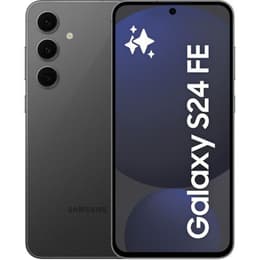
Galaxy S24 FE
Galaxy S24 FE
Starting at

Refurbished price:329.00

Versus €991.15 new

See options
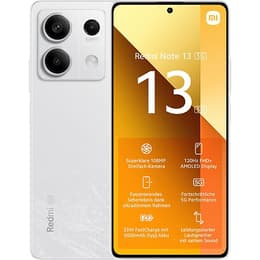
Xiaomi Redmi Note 13
Starting at

Refurbished price:137.00

Versus €340.00 new

See options

Ratings

The Samsung Galaxy S24 FE, released in October 2024, and the Xiaomi Redmi Note 13, launched in January 2024, are both Android smartphones designed to offer a comprehensive mobile experience. While the Galaxy S24 FE positions itself with a focus on extended software support and a more robust build, the Redmi Note 13 emphasizes a high-resolution main camera and expandable storage. Both devices operate on the Android platform, but they differ in their approach to hardware and long-term software commitment.

Scores

Durability

When considering the long-term usability of these devices, their release timelines and software support policies are key factors.

  • Release and Software Commitment: The Samsung Galaxy S24 FE, launched in October 2024, benefits from Samsung's commitment to providing seven generations of Android operating system upgrades and seven years of security updates, extending its software longevity significantly. [2, 5, 39, 42] In contrast, the Xiaomi Redmi Note 13, released in January 2024, typically receives two to three major OS updates and four years of security updates. [8, 16, 20, 23, 36]
  • Physical Durability: The Galaxy S24 FE features Corning Gorilla Glass Victus+ on the front and a glass back, coupled with an IP68 rating for substantial dust and water resistance, indicating a higher level of protection against environmental elements. [1, 21, 35, 44] The Redmi Note 13 comes with Corning Gorilla Glass 3 or 5 on the front and a plastic back, offering IP54 dust and splash resistance. [4, 6, 10, 31, 32, 43]
  • Expected Practical Lifespan: Users prioritizing extended software support and a higher degree of physical resilience against daily wear and tear may find the Galaxy S24 FE to be a more suitable option for a longer practical lifespan. The Redmi Note 13, while durable for its class, offers a more standard update cycle and protection level.

Year of Release

2024

2024

OS

Android

Android

Foldable

No

No

Performance

The performance of a smartphone is crucial for daily tasks, from app usage to multitasking and gaming.

  • Processing Power: The Samsung Galaxy S24 FE is equipped with a current-generation processor, the Exynos 2400e, which is designed to handle demanding applications and multitasking smoothly, providing a responsive user experience. [1, 7, 18, 24, 26, 34] The Xiaomi Redmi Note 13 utilizes a Snapdragon 685 or MediaTek Dimensity 6080 processor, which delivers stable performance for everyday use and general mobile tasks. [6, 10, 11, 13, 14, 37, 46]
  • Multitasking and Storage: Both devices offer various RAM configurations, with the Galaxy S24 FE typically featuring 8GB of RAM, contributing to efficient multitasking. [1, 2, 3, 21] The Redmi Note 13 offers 6GB or 8GB of RAM, and notably includes expandable storage up to 1TB, providing flexibility for users who require significant space for media and applications. [6, 10, 11, 37, 40, 46] The Galaxy S24 FE does not support expandable storage. [21, 34]
  • Real-world Responsiveness: User feedback for the Galaxy S24 FE indicates that its processor handles both light and heavy tasks with ease, making it suitable for users who engage in mobile gaming or frequently use resource-intensive applications. [7, 18, 24] The Redmi Note 13 provides a smooth experience for typical smartphone activities, with its processor ensuring consistent performance for browsing, social media, and moderate gaming. [11, 13]

Memory (GB)

8 GB

8 GB

Screen quality

The display is a primary interface for smartphone interaction, influencing viewing pleasure and usability.

  • Display Technology and Clarity: Both the Galaxy S24 FE and the Redmi Note 13 feature AMOLED display technology, known for its vibrant colors and deep black levels. [2, 4, 9, 10, 14, 21, 33, 35, 37] The Galaxy S24 FE boasts a Dynamic AMOLED 2X panel, offering a resolution of 1080x2340 pixels across its 6.7-inch screen. [2, 3, 9, 21, 22, 35] The Redmi Note 13 has a 6.67-inch AMOLED display with a resolution of 2400x1080 pixels. [4, 10, 11, 14, 33, 37]
  • Brightness and Refresh Rate: The Galaxy S24 FE offers a peak brightness of 1900 nits, ensuring good visibility even in bright outdoor conditions. [2, 9, 22, 28, 35] The Redmi Note 13 features a peak brightness of up to 1000 nits (HBM) or 1800 nits (peak), depending on the variant, which is also suitable for outdoor use. [4, 10, 11, 14] Both devices support a 120Hz refresh rate, contributing to smoother scrolling and a more fluid visual experience. [3, 4, 9, 10, 11, 14, 21, 22, 28, 35, 38, 43, 46]
  • Screen Protection: The Galaxy S24 FE is protected by Corning Gorilla Glass Victus+, offering enhanced resistance against scratches and drops. [1, 21, 35] The Redmi Note 13 uses Corning Gorilla Glass 3 or 5 for screen protection. [4, 10, 31, 32, 43]

Resolution

1080 x 2340

1080 x 2400

Screen type

Dynamic AMOLED 2X

AMOLED

Audiovisual

Camera capabilities are a significant consideration for many users, impacting the quality of photos and videos captured.

  • Rear Camera Systems: The Samsung Galaxy S24 FE features a versatile triple camera setup, including a 50MP main sensor with optical image stabilization (OIS), a 12MP ultrawide lens, and an 8MP telephoto lens with 3x optical zoom and OIS. [2, 3, 7, 9, 17, 19, 26, 27, 30, 34, 35] This configuration allows for detailed shots across various focal lengths. The Xiaomi Redmi Note 13 also has a triple rear camera system, highlighted by a 108MP main sensor, an 8MP ultrawide camera, and a 2MP macro camera. [10, 14, 31, 46]
  • Photography Performance: The Galaxy S24 FE's main camera is noted for producing vibrant colors, good detail, and strong dynamic range, performing well in various lighting conditions. [19, 27] Its dedicated telephoto lens provides clear zoomed-in images at 3x optical magnification. [19, 27] The Redmi Note 13's high-megapixel main camera is capable of capturing photos with high resolution and detail. [14]
  • Video Recording and Front Camera: The Galaxy S24 FE supports high-resolution video recording, including 8K at 30 frames per second, and features a 10MP front camera. [26, 27, 30, 44] The Redmi Note 13 offers video recording at 1080p at 30 frames per second and includes a 16MP front camera. [10, 31, 40, 46]

Miscellaneous

Beyond core features, several practical elements contribute to the overall user experience of a smartphone.

  • Connectivity and Ports: The Samsung Galaxy S24 FE supports 5G connectivity, Wi-Fi 6E, and Bluetooth 5.3, offering advanced wireless capabilities. [21, 44] It features a USB-C 3.2 port. [44] The Xiaomi Redmi Note 13 is available in both 4G and 5G variants, supports Wi-Fi (802.11a/b/g/n/ac), and Bluetooth 5.1 or 5.3. [10, 31, 46] It typically includes a USB-C port and, on most variants, a 3.5mm headphone jack. [10, 31, 40, 46]
  • Biometrics and Sensors: Both devices incorporate modern biometric security. The Galaxy S24 FE features an optical in-screen fingerprint sensor. [1, 21, 44] The Redmi Note 13 offers an in-screen fingerprint sensor on some variants, while the 5G model may have a side-mounted sensor. [10, 11, 14, 37, 46]
  • Design and Handling: The Galaxy S24 FE has dimensions of 162 x 77.3 x 8 mm and weighs 213 grams, featuring an aluminum frame and glass back. [21, 35, 45] The Redmi Note 13 measures 162.24 x 75.55 x 7.97 mm and weighs 188.5 grams, with a plastic frame and back. [6, 10, 31, 32, 46] The Galaxy S24 FE's build materials contribute to a more premium feel, while the Redmi Note 13 is lighter.

Weight

213 g

175 g

Screen size (in)

6.7

6.67

Network

5G

5G

SIM card

Dual Physical SIM

Dual Physical SIM

Carrier compatibility

Unlocked

Unlocked

Connector

USB-C

USB-C

The Samsung Galaxy S24 FE and the Xiaomi Redmi Note 13 cater to slightly different user priorities, reflecting their respective design philosophies. User feedback for the Galaxy S24 FE often praises its robust build quality, extended software support, and capable camera system, particularly the main sensor and optical zoom. [12, 18, 19, 24, 27] Some users have noted its weight and the battery life, while generally good, might not be exceptional for heavy usage. [15, 18, 24, 25]

The Redmi Note 13 is frequently lauded for its vibrant AMOLED display, large battery capacity, and the inclusion of expandable storage, which is a significant advantage for users with extensive media libraries. [10, 11, 14, 31, 37, 43] Criticisms sometimes point to the absence of 4K video recording on the base model and a less premium feel due to its plastic construction compared to higher-end devices. [31, 32, 40]

Users prioritizing long-term software updates, a more durable and premium build, and a versatile camera system with optical zoom, including 8K video capabilities, may find the Samsung Galaxy S24 FE well-suited to their needs. Its performance is also geared towards handling more demanding applications smoothly. Conversely, users who value a larger battery, the flexibility of expandable storage, a lighter design, and a high-resolution main camera for everyday photography might lean towards the Xiaomi Redmi Note 13. Both devices offer a quality-assured refurbished option, providing an eco-friendly alternative for consumers.


See all articles

Our recent comparisons