
Galaxy Z Fold5 Vs iPhone 15 Plus

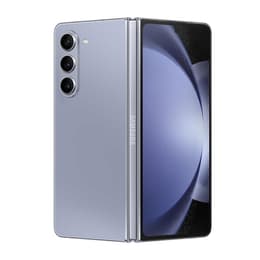
Galaxy Z Fold5
Galaxy Z Fold5
Starting at

Refurbished price:568.00

Versus €1,899.00 new

See options
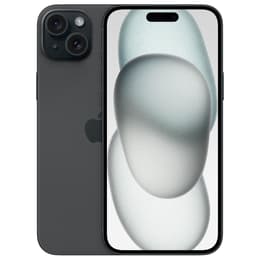
iPhone 15 Plus
iPhone 15 Plus
Starting at

Refurbished price:420.00

Versus €979.00 new

See options

Ratings

The Samsung Galaxy Z Fold5, released in August 2023, and the iPhone 15 Plus, launched in September 2023, represent distinct approaches to modern smartphone design. The Galaxy Z Fold5 offers a unique foldable form factor, transforming from a traditional smartphone into a larger tablet-like device, running on Android. In contrast, the iPhone 15 Plus maintains a conventional smartphone design, operating on Apple's iOS platform. The primary differentiators lie in their physical design, operating systems, and the user experiences they offer.

Scores

Durability

When considering the practical lifespan of these devices, several factors come into play, including their release timelines, software support, and physical durability.

  • Release Timeline and Software Support: The Galaxy Z Fold5 was released in August 2023, while the iPhone 15 Plus followed in September 2023. Both devices are relatively new, ensuring several years of software updates. Apple typically provides iOS updates for 5-6 years, suggesting the iPhone 15 Plus will receive support until at least late 2028 or 2029. Samsung generally offers 4-5 years of Android OS updates and 5 years of security updates for its flagship devices, meaning the Galaxy Z Fold5 can expect support until at least late 2027 or 2028 for major OS versions.
  • Physical Durability: The iPhone 15 Plus features a Ceramic Shield front cover and an aluminum frame, offering robust protection against drops and scratches. It also boasts an IP68 rating for dust and water resistance, capable of submersion up to 6 meters for 30 minutes. The Galaxy Z Fold5, with its foldable design, presents a different durability profile. It features an Armor Aluminum frame and Gorilla Glass Victus 2 on its cover screen and back. The foldable display itself has a shock-dispersion layer. While it has an IPX8 water resistance rating, it lacks an official dust resistance rating, which is a consideration for users in dusty environments. The redesigned Flex Hinge is tested to withstand approximately 200,000 folds, suggesting a lifespan of over five years with typical usage.
  • Expected Practical Lifespan: Both devices are built with high-quality materials and are expected to offer a practical lifespan of several years. The iPhone 15 Plus benefits from a traditional, sealed design, while the Galaxy Z Fold5's innovative folding mechanism has undergone significant engineering to enhance its longevity.

Year of Release

2023

2023

Compatible with latest Update

Yes

Yes

OS

Android

iOS

Foldable

Yes

No

Performance

The performance of both the Galaxy Z Fold5 and the iPhone 15 Plus is designed to handle demanding tasks, though their underlying architectures differ.

  • Processing Power and Responsiveness: The Galaxy Z Fold5 is equipped with a current-generation processor, enabling it to handle multiple applications simultaneously and run graphics-intensive games smoothly. Users report that every app loads quickly, and multitasking is seamless. The iPhone 15 Plus features a powerful chip that was previously used in Apple's Pro models, providing brisk performance for everyday use, demanding applications, and gaming. Both devices offer a highly responsive user experience.
  • Multitasking and RAM: The Galaxy Z Fold5 comes with 12GB of RAM, which supports its advanced multitasking capabilities, especially when utilizing its larger inner display for multiple apps. The iPhone 15 Plus includes 6GB of RAM, which, combined with iOS's efficient memory management, allows for smooth app switching and background processes.
  • Storage Options: The Galaxy Z Fold5 offers storage configurations of 256GB, 512GB, and 1TB. The iPhone 15 Plus is available with 128GB, 256GB, or 512GB of internal storage.
  • Battery Behavior: The Galaxy Z Fold5 has a 4400mAh battery. Despite its large, high-quality screens, it offers decent battery life, often lasting a full day with moderate use. The iPhone 15 Plus is equipped with a 4383mAh battery and is noted for its extended battery life, often lasting more than a day even with heavy use, and in some tests, it has shown to have one of the longest battery lives among smartphones.

Memory (GB)

12 GB

6 GB

Screen quality

The display experience on these two devices offers distinct characteristics, catering to different user preferences.

  • Display Technology and Clarity: The Galaxy Z Fold5 features two Dynamic AMOLED 2X displays. The main foldable screen is 7.6 inches with a resolution of 2176 x 1812 pixels, and the cover screen is 6.2 inches with a resolution of 904 x 2316 pixels. These OLED panels deliver deep blacks and vibrant colors. The iPhone 15 Plus sports a 6.7-inch Super Retina XDR OLED display with a resolution of 2796 x 1290 pixels, also providing excellent contrast and color accuracy.
  • Brightness and Refresh Rate: The Galaxy Z Fold5's main screen can reach a peak brightness of 1,750 nits, making it suitable for outdoor visibility. Both its main and cover displays feature an adaptive refresh rate of up to 120Hz, contributing to smooth scrolling and fluid animations. The iPhone 15 Plus offers a peak outdoor brightness of 2,000 nits and a typical maximum brightness of 1,000 nits, ensuring good visibility in various lighting conditions. However, its display has a standard 60Hz refresh rate.
  • Screen Size and Viewing Experience: The Galaxy Z Fold5's ability to unfold into a larger 7.6-inch screen provides an expansive canvas for productivity, media consumption, and gaming, offering a tablet-like experience. The iPhone 15 Plus, with its 6.7-inch display, offers a large and immersive viewing experience within a traditional smartphone form factor, ideal for users who prefer a single, sizable screen.

Resolution

1812 x 2176

1290 x 2796

Screen type

Foldable Dynamic AMOLED 2X

Super Retina XDR OLED

Audiovisual

Both the Galaxy Z Fold5 and the iPhone 15 Plus offer advanced camera systems, each with its own strengths for capturing photos and videos.

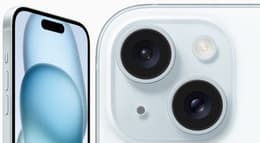
  • Rear Camera Systems: The Galaxy Z Fold5 features a triple rear camera setup: a 50MP main sensor, a 12MP ultrawide lens, and a 10MP telephoto lens with 3x optical zoom. This system is noted for good color reproduction and detail in well-lit conditions, with effective HDR. The iPhone 15 Plus comes with a dual-camera system, including a 48MP main camera with sensor-shift optical image stabilization and a 12MP ultrawide camera. It also offers a 2x telephoto option that utilizes the main sensor for optical-quality zoom.
  • Low-Light and Everyday Photography: The Galaxy Z Fold5 performs well in low-light conditions with its main camera, capturing detail and color effectively, though ultrawide shots in low light can be softer. The iPhone 15 Plus shows improvements in low-light photography over its predecessor, with its main camera capturing good detail and pleasing colors. Both devices excel in everyday photography, producing sharp and vibrant images.
  • Video Recording Quality: The Galaxy Z Fold5 can record video at up to 8K resolution at 30fps and 4K at 60fps. Its video recording quality is generally strong, with good stabilization and exposure. The iPhone 15 Plus offers excellent video quality, recording clean and crisp 4K video at up to 60fps, with strong video stabilization.
  • Front Cameras and Audio: The Galaxy Z Fold5 has a 10MP cover camera and a 4MP under-display camera on the main screen, with the latter being more suited for video calls due to its lower resolution. The iPhone 15 Plus features a 12MP TrueDepth front camera with autofocus. Both devices offer stereo speakers for media consumption.

Main camera

50 megapixels

48 megapixels

Front camera

4 megapixels

12 megapixels

Miscellaneous

Beyond core performance and display, several practical elements differentiate these two devices, impacting daily usability and connectivity.

  • Connectivity Options: Both the Galaxy Z Fold5 and the iPhone 15 Plus support 5G cellular networks, ensuring fast mobile data speeds. The Galaxy Z Fold5 includes Wi-Fi 6E, offering enhanced wireless performance, while the iPhone 15 Plus supports Wi-Fi 6. Both devices also feature Bluetooth 5.3 for efficient wireless accessory connections.
  • Port Types: A significant change for the iPhone 15 Plus is the adoption of a USB-C port, aligning it with the Galaxy Z Fold5, which also uses USB-C. This standardization simplifies charging and data transfer across devices.
  • Useful Sensors and Biometrics: The Galaxy Z Fold5 incorporates a side-mounted fingerprint sensor for secure unlocking. The iPhone 15 Plus relies on Face ID for biometric authentication. Both devices include a range of sensors such as accelerometers, gyroscopes, and barometers.
  • Weight and Dimensions: The Galaxy Z Fold5 weighs 253 grams. When folded, its dimensions are 154.9 x 67.1 x 13.4 mm, and unfolded, it measures 154.9 x 129.9 x 6.1 mm. The iPhone 15 Plus is lighter at 201 grams and has dimensions of 160.9 x 77.8 x 7.8 mm. The Z Fold5's folded thickness is notable, while the iPhone 15 Plus offers a more uniform, slimmer profile.
  • Build Materials: The Galaxy Z Fold5 features an Armor Aluminum frame and Gorilla Glass Victus 2 on its exterior. The iPhone 15 Plus has an aluminum design with a Ceramic Shield front and a color-infused glass back.

Weight

253 g

201 g

Screen size (in)

7.6

6.7

Network

5G

5G

SIM card

Physical SIM + eSIM

Physical SIM + eSIM

Carrier compatibility

Unlocked

Unlocked

Connector

USB-C

USB-C

The Samsung Galaxy Z Fold5 and iPhone 15 Plus cater to different user needs and preferences, each excelling in its own domain. User feedback often highlights the Galaxy Z Fold5's innovative foldable design as a major draw, providing a versatile large screen for productivity and media consumption. Users appreciate the ability to have a compact phone that unfolds into a tablet-like experience. However, some discussions point to the inherent trade-offs of a foldable, such as its thickness when folded and the visible crease on the inner display, though the latter has been refined. The camera system, while capable, is generally considered good for a foldable but not always on par with the absolute top-tier traditional flagships.

For the iPhone 15 Plus, common praise revolves around its exceptional battery life, often cited as one of the best among current smartphones, and its large, vibrant display. Users also value the consistent performance, the robust iOS ecosystem, and the significant camera improvements, particularly the 48MP main sensor. Criticisms sometimes include the 60Hz refresh rate, which some users find less fluid compared to higher refresh rate displays on other devices, and the absence of a dedicated telephoto lens, which limits optical zoom capabilities.

Users prioritizing a large, adaptable screen for multitasking, reading, or entertainment in a compact form factor may find the Galaxy Z Fold5 well-suited to their needs. Its unique design offers a distinct user experience that blends smartphone portability with tablet functionality. Conversely, users who value extended battery life, a consistently smooth software experience, and a high-quality camera system within a traditional, durable smartphone design will likely lean towards the iPhone 15 Plus. Both devices represent premium options in the market, and for those looking for an eco-friendly alternative, quality-assured refurbished options for both models are available, offering a sustainable choice without compromising on performance or features.

See all articles

Our recent comparisons