

Compare models
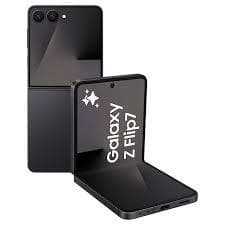
Galaxy Z Flip7 Vs Xiaomi Redmi Note 14 4G
- 1-year minimum warranty
- Free delivery on all orders
- Free 30-day returns
Differences at a glance
The Samsung Galaxy Z Flip7 (2025) and the Xiaomi Redmi Note 14 4G (2025) represent two completely distinct approaches to modern smartphone engineering. The Galaxy Z Flip7 is a compact, foldable flagship built for pocket-friendly portability and dual-screen versatility, while the Xiaomi Redmi Note 14 4G is a traditional bar-style device focused on everyday practicality. They differ significantly in form factor, operating system ecosystems, and hardware intent while targeting entirely different user lifestyles.
Available Models
Colour
Storage
Scores
Durability
Both smartphones launched in 2025, but their structural designs and software support timelines lead to different long-term practical expectations.
- Software Support: The Galaxy Z Flip7 offers multi-year flagship operating system upgrades, whereas the Xiaomi Redmi Note 14 4G typically provides support geared toward mid-range device lifecycles.
- Physical Longevity: The folding hinge mechanism on the Samsung model requires careful handling over years of frequent opening and closing, compared to the rigid, fixed structure of the Xiaomi bar phone.
- Repairability: Traditional bar-style devices like the Xiaomi model generally present simpler repair paths for components like batteries, whereas foldable displays demand specialized servicing.
Year of Release
2025
2025
OS
Android
Android
Foldable
Yes
No
Performance
Performance capabilities reflect the distinct market categories of these two devices, balancing multitasking headroom against everyday efficiency.
- Everyday Speed: The Galaxy Z Flip7 handles demanding applications, heavy multitasking, and modern mobile gaming smoothly, whereas the Xiaomi Redmi Note 14 4G focuses on stable execution of daily communication and social media apps.
- Memory and Storage: Samsung supplies high-tier internal storage configurations paired with generous RAM, while Xiaomi offers flexible storage capacities often paired with expandable memory card slots.
- Battery Endurance: Daily battery behavior varies, with the Xiaomi model leveraging a larger cell capacity for extended single-charge endurance during standard use, while the folding Samsung device balances dual screens against power-efficient processing.
Screen quality
Display technology is a major differentiator, contrasting a flexible folding panel with a traditional expansive glass screen.
- Display Technology: The Galaxy Z Flip7 features a foldable main screen paired with a functional outer cover display for quick notifications, while the Xiaomi Redmi Note 14 4G uses a vibrant, fixed flat panel.
- Brightness and Clarity: Both devices deliver high peak brightness levels and smooth refresh rates, ensuring clear outdoor visibility and fluid scrolling during web browsing.
- Viewing Experience: The Xiaomi option provides an uninterrupted widescreen canvas for media consumption, whereas the Samsung alternative folds in half to fit compactly into tight spaces.
Resolution
1080x2520
1080x2400
Audiovisual
Optics and media playback capabilities cater to different creative habits and entertainment preferences.
- Camera Systems: The Galaxy Z Flip7 utilizes versatile rear sensors that double as a self-recording stand when partially folded, while the Xiaomi Redmi Note 14 4G relies on a high-resolution main sensor for crisp everyday snapshots.
- Video and Audio: Samsung provides advanced stabilization features for video recording, and both models include capable speaker setups for hands-free calls and casual video watching.
- Low-Light Performance: Image processing software on both phones manages dim lighting environments adequately, though flagship sensor hardware gives the Samsung model an edge in fine detail retention.
Miscellaneous
Physical dimensions, connectivity standards, and daily handling characteristics shape how each device fits into routine use.
- Build and Handling: The Galaxy Z Flip7 folds down to a square footprint that slips easily into small pockets, whereas the Xiaomi Redmi Note 14 4G has a standard larger footprint that requires two-handed reach across the screen.
- Connectivity: The Samsung model supports rapid 5G network speeds, while the Xiaomi device is restricted to 4G LTE networks.
- Security Sensors: Samsung integrates biometric face recognition alongside a side-mounted fingerprint reader, whereas Xiaomi features an optical in-display fingerprint scanner.
Weight
188 g
196 g
Screen size (in)
6.9
6.67
Network
5G
4G
SIM card
Physical SIM + eSIM
Physical SIM + eSIM
Carrier compatibility
Unlocked
Unlocked
What the community thinks
Real user discussions highlight distinct patterns of praise and common criticisms for both devices. Users frequently praise the Galaxy Z Flip7 for its innovative folding design, compact pocket footprint, and versatile cover screen that reduces the need to open the phone constantly. At the same time, some users note that the folding crease requires getting used to and that battery life requires mindful management during heavy usage days. Conversely, users appreciate the Xiaomi Redmi Note 14 4G for its reliable battery longevity, dependable everyday performance, and traditional layout, though frequent critiques mention the absence of 5G connectivity and standard plastic framing materials.
Users prioritizing pocket portability, modern foldable innovations, and advanced multitasking capabilities will find the Galaxy Z Flip7 well-suited to their needs. Meanwhile, users prioritizing straightforward daily reliability, extended battery endurance, and a traditional widescreen layout may lean toward the Xiaomi Redmi Note 14 4G. For those seeking a sustainable choice, a quality-assured refurbished option provides an eco-friendly alternative that extends device lifecycles without compromising on operational standards.