

Compare models
Galaxy A16 Vs Xiaomi Redmi Note 13 4G
- 1-year minimum warranty
- Free delivery on all orders
- Free 30-day returns
Differences at a glance
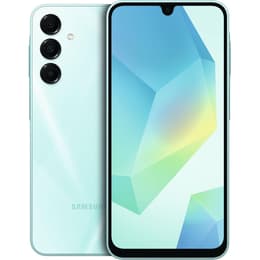
The Samsung Galaxy A16 (2024) and the Xiaomi Redmi Note 13 4G (2024) represent accessible options in the current smartphone market. While both devices cater to everyday communication and media consumption needs, they differ significantly in their software support timelines, display hardware, and overall camera configurations. Running on different software ecosystems, these smartphones offer distinct user experiences tailored to different daily routines.
Available Models
Colour
Storage
Scores
Durability
When examining longevity and durability, these two devices approach software support and hardware construction with distinct update commitments and build philosophies.
- Software longevity: The Samsung Galaxy A16 features a notably extended update policy, receiving several years of security patches and operating system upgrades, whereas the Xiaomi Redmi Note 13 4G follows a more standard support cycle that concludes sooner.
- Build and repairability: Both models utilize durable plastic frames and back panels designed to handle daily handling, with similar structural resilience and comparable ease of component replacement by professional technicians.
- Expected lifespan: Users tracking long-term reliability will find that the extended software maintenance window of the Samsung model helps it remain secure for a longer duration.
Year of Release
2024
2024
Compatible with latest Update
Yes
Yes
OS
Android
Android
Foldable
No
No
Performance
In terms of day-to-day operation, memory configurations, and battery endurance, both handsets handle standard messaging, web browsing, and social media tasks effectively while managing energy differently.
- Multitasking and storage: Both devices offer flexible storage expansion options via memory cards alongside ample internal capacity, though variations in random access memory configurations impact how many background applications remain active simultaneously.
- Battery behavior: Each phone includes a large battery capacity capable of lasting through a full day of standard use, though charging speeds differ when replenishing power from empty.
- System responsiveness: Everyday applications open smoothly on both platforms, though intensive gaming or heavy multitasking exposes minor processing differences between the two hardware setups.
Screen quality
Visual output and display responsiveness play major roles in daily interaction, with both manufacturers opting for vibrant panel technologies that enhance media viewing.
- Display technology: Both devices incorporate bright organic light-emitting diode screens that deliver deep contrast levels and rich colors, making text sharp and photos clear.
- Refresh rate and smoothness: The Xiaomi Redmi Note 13 4G features a higher refresh rate capability that results in smoother scrolling through web pages and menus compared to the standard refresh rate on the Samsung Galaxy A16.
- Outdoor visibility: High peak brightness levels on both screens ensure that content remains legible under direct sunlight or in brightly lit environments.
Resolution
1080x2340
1080 x 2400
Screen type
Super AMOLED
AMOLED
Audiovisual
Photography and multimedia output vary considerably between the two models, particularly regarding lens versatility, video recording options, and built-in audio reproduction.
- Camera systems: The Xiaomi Redmi Note 13 4G features a higher-resolution main sensor that captures sharp daylight imagery, while the Samsung Galaxy A16 relies on a simpler multi-lens layout focused on core everyday snapshots.
- Video and low-light performance: Both units handle standard indoor and outdoor video recording adequately, though users capturing scenes in dim environments will notice differences in noise reduction and detail preservation.
- Audio output: Speaker configurations differ in volume and clarity, with media playback offering distinct acoustic profiles suited for casual video watching or hands-free calls.
Front camera
13 megapixels
16 megapixels
Miscellaneous
Practical everyday features, physical dimensions, and connectivity standards shape how these devices integrate into a user's travel and daily routines.
- Connectivity and ports: Both models provide reliable wireless connectivity standards, standard charging ports, and physical headphone jacks, catering to users who prefer wired accessories.
- Biometrics and security: Each smartphone includes responsive security features, utilizing side-mounted fingerprint sensors and facial recognition for quick device unlocking.
- Physical handling: Slim profiles and lightweight construction make both options comfortable to hold during extended phone calls or one-handed messaging sessions.
Weight
200 g
189 g
Screen size (in)
6.7
6.67
Network
4G
4G
SIM card
Physical SIM
Dual Physical SIM
Carrier compatibility
Unlocked
Unlocked
Connector
USB-C
USB-C
What the community thinks
User discussions and community feedback indicate that both smartphones satisfy buyers looking for dependable communication tools without complex configurations. Common praise for the Samsung Galaxy A16 centers on its long-term software support commitment, while users frequently highlight the bright display and smooth scrolling capabilities of the Xiaomi Redmi Note 13 4G. Critics point out that charging speeds and heavy-task performance are modest on both devices, which aligns with their position in the entry-level market segment.
Users prioritizing extended software updates and long-term security will find the Samsung Galaxy A16 well-suited to their needs, while users prioritizing a smoother display refresh rate and a higher-resolution camera sensor may prefer the Xiaomi Redmi Note 13 4G. For those seeking an eco-friendly alternative, choosing a quality-assured refurbished option provides a sustainable way to acquire either device while minimizing environmental impact. Ultimately, the right choice depends on whether software longevity or display fluidity is more important for daily usage.