

Galaxy Z Fold4 Vs Xiaomi 13T

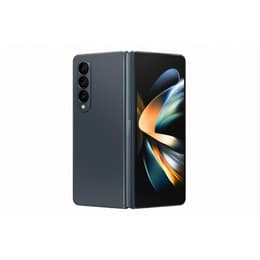
Galaxy Z Fold4
Galaxy Z Fold4
Starting at

Refurbished price:433.00

Versus €1,889.00 new

See options
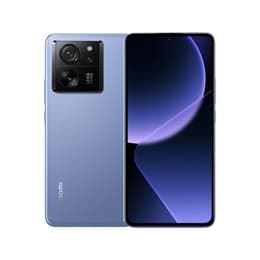
Xiaomi 13T
Xiaomi 13T
Starting at

Refurbished price:183.00

Versus €630.00 new

See options

Ratings

The Samsung Galaxy Z Fold4, released in August 2022, and the Xiaomi 13T, launched in September 2023, represent distinct approaches to modern smartphone design and functionality. The Galaxy Z Fold4 offers a unique foldable form factor, transforming from a traditional smartphone into a larger tablet-like display, while the Xiaomi 13T provides a more conventional, high-performance smartphone experience. Both devices operate on the Android platform, with each manufacturer offering their custom user interfaces and software support policies.

Scores

Durability

The expected practical lifespan of a smartphone is significantly influenced by its release timeline, software support, and physical resilience.

  • Release Timeline & OS Support: The Galaxy Z Fold4, released in August 2022, initially ran on Android 12L and is eligible for four major Android OS updates, extending its support up to Android 16, along with five years of security updates until 2027. The Xiaomi 13T, launched in September 2023, started with Android 13 and also promises four generations of Android OS upgrades, reaching Android 17, and five years of security patches. This means the Xiaomi 13T will receive software updates for a slightly longer period due to its later release.
  • Physical Durability: The Galaxy Z Fold4 features an Armor Aluminum frame and Gorilla Glass Victus+ on its cover screen and back panel, with an Ultra-Thin Glass (UTG) inner display. It boasts an IPX8 water resistance rating, indicating protection against submersion, but lacks official dust resistance. User experiences suggest the inner screen can scratch at lower Mohs levels, similar to its predecessor, while the hinge has proven robust against bending. The Xiaomi 13T offers IP68 dust and water resistance, providing comprehensive protection against both elements. Its front display is protected by Corning Gorilla Glass 5, and it features an aluminum frame.
  • Repairability: While specific repairability scores can vary, the complex foldable design of the Galaxy Z Fold4 generally implies a more intricate repair process compared to a traditional smartphone like the Xiaomi 13T.

Year of Release

2022

2023

Compatible with latest Update

Yes

Yes

OS

Android

Android

Foldable

Yes

No

Performance

Both devices are equipped with capable processors designed to handle a range of tasks, though their architectures and real-world implications differ.

  • Processor Capabilities: The Galaxy Z Fold4 is powered by a processor that ensures smooth performance for demanding applications and multitasking. This allows for efficient handling of complex operations, including intensive gaming and running multiple applications simultaneously on its larger display. The Xiaomi 13T features a processor built on a 4nm process, offering strong everyday performance without noticeable lag or slowdowns, even with social media browsing or mobile gaming.
  • Multitasking and Responsiveness: The Galaxy Z Fold4's larger internal display is particularly well-suited for advanced multitasking, allowing users to run and interact with several apps at once with fluidity. Its substantial RAM configuration further supports this, ensuring a responsive experience even under heavy load. The Xiaomi 13T, with its ample RAM options, also provides a smooth experience for switching between applications and managing multiple tasks, though its traditional form factor offers a different multitasking paradigm.
  • Storage and Battery Behavior: The Galaxy Z Fold4 offers generous internal storage options up to 1TB, but without expandable storage. Its 4400mAh battery supports 25W wired and 15W wireless charging. The Xiaomi 13T comes with 256GB of non-expandable storage and a larger 5000mAh battery, supporting 67W wired fast charging, capable of reaching a full charge in approximately 42 minutes. User reports indicate the Xiaomi 13T generally provides a full day of mixed usage, though some suggest it requires evening charging for consistent daily use.

Memory (GB)

12 GB

8 GB

Screen quality

The display experience is a primary differentiator, with the Galaxy Z Fold4 offering a unique foldable design and the Xiaomi 13T providing a high-quality traditional panel.

  • Display Technology and Size: The Galaxy Z Fold4 features two Dynamic AMOLED 2X displays: a 6.2-inch cover screen and a 7.6-inch foldable inner screen. The larger inner display provides an expansive canvas for media consumption and productivity. The Xiaomi 13T sports a single 6.67-inch AMOLED display, offering vibrant and rich colors.
  • Resolution and Clarity: The Z Fold4's main screen has a resolution of 2176 x 1812 pixels (374 ppi), while its cover screen is 2316 x 904 pixels (402 ppi). The Xiaomi 13T's display offers a resolution of 2712 x 1220 pixels, resulting in a high pixel density of 446 PPI, ensuring sharp and clear images.
  • Brightness and Refresh Rate: Both devices offer high refresh rates for smooth visuals. The Z Fold4's main screen has an adaptive refresh rate from 1Hz to 120Hz, and its cover screen from 48Hz to 120Hz. The Xiaomi 13T features an adaptive refresh rate of up to 144Hz, with a peak brightness of 2600 nits, making it comfortable for outdoor use. The Z Fold4's main screen is HDR10+ certified for enhanced brightness and contrast.

Resolution

1812 x 2176

1220 x 2712

Screen type

Foldable Dynamic AMOLED 2X

AMOLED

Audiovisual

Both smartphones offer versatile camera systems, but with different strengths and photographic philosophies.

  • Rear Camera Systems: The Galaxy Z Fold4 features a triple rear camera setup, including a 50MP main sensor with optical image stabilization (OIS), a 12MP ultrawide lens, and a 10MP telephoto lens with 3x optical zoom. This configuration is noted for producing detailed, vibrant, and well-balanced images, particularly in good lighting. The Xiaomi 13T also has a triple rear camera system, co-engineered with Leica, comprising a 50MP main camera, a 50MP telephoto lens with 2x optical zoom, and a 12MP ultrawide camera. It excels in low-light conditions and offers distinct Leica photographic styles (Authentic and Vibrant) for varied color reproduction.
  • Front Camera Performance: For selfies, the Galaxy Z Fold4 has a 10MP camera on its cover screen and a 4MP under-display camera on the main screen. The cover screen camera generally provides better quality for selfies. The Xiaomi 13T is equipped with a 20MP front-facing camera, capable of capturing good details and accurate skin tones, even in challenging lighting.
  • Video Recording Quality: The Galaxy Z Fold4 can record video up to 8K at 24 frames per second with its rear cameras and 4K at 60 frames per second with its cover screen camera. The Xiaomi 13T supports 4K video recording at 30 frames per second across all its rear lenses, with electronic image stabilization (EIS) available.
  • Audio Experience: Both devices offer a quality audio experience. The Galaxy Z Fold4 provides an immersive Dolby Atmos audio experience through its stereo speakers. The Xiaomi 13T also features dual speakers with Dolby Atmos support and Hi-Res Audio certification, enhancing media consumption.

Main camera

50 megapixels

50 megapixels

Front camera

4 megapixels

20 megapixels

Miscellaneous

Beyond core features, several practical elements contribute to the overall user experience and daily convenience of these devices.

  • Connectivity Options: Both smartphones support 5G connectivity for fast mobile data. The Galaxy Z Fold4 includes standard Wi-Fi and Bluetooth capabilities. The Xiaomi 13T offers more advanced connectivity with Wi-Fi 7 and Bluetooth 5.4, potentially providing faster and more stable wireless connections.
  • Port Types and Sensors: Both devices utilize a USB-C port for charging and data transfer. The Galaxy Z Fold4 features a side-mounted fingerprint sensor for biometric authentication. The Xiaomi 13T incorporates an in-display fingerprint sensor for quick and reliable unlocking. The Z Fold4 also supports S Pen input on its main display, offering additional functionality for note-taking and drawing.
  • Weight, Dimensions, and Build Materials: The Galaxy Z Fold4 is a heavier device at 263g, reflecting its dual-screen and folding mechanism. When folded, it measures 155.1 x 67.1 x 14.2-15.8mm, and unfolded, it is 155.1 x 130.1 x 6.3mm. Its construction includes Armor Aluminum and Gorilla Glass Victus+. The Xiaomi 13T is lighter, ranging from 193g to 197g, with dimensions of 162 x 76 x 8.5-8.6mm. It features an aluminum frame and Gorilla Glass 5 on the front.

Weight

263 g

193 g

Screen size (in)

7.6

6.67

Network

5G

5G

SIM card

Dual Physical SIM + eSIM

Dual Physical SIM

Carrier compatibility

Unlocked

Unlocked

The Samsung Galaxy Z Fold4 and the Xiaomi 13T cater to different user preferences, each excelling in distinct areas. The Galaxy Z Fold4 is frequently praised by users for its innovative foldable design, which offers a large, immersive display for productivity and media consumption, effectively combining a phone and a tablet experience. Its robust hinge and improved multitasking features are often highlighted as significant advantages. Some common criticisms, however, revolve around the perceived fragility of the inner screen and its overall weight compared to traditional smartphones.

The Xiaomi 13T, on the other hand, receives commendation for its high-quality, bright display, capable camera system co-engineered with Leica, and strong everyday performance. Users appreciate its comprehensive IP68 rating for dust and water resistance and its fast-charging capabilities. Some feedback points to its battery life being average for its class, requiring regular charging for heavy users.

Users prioritizing a versatile device that can transform from a compact phone to a large-screen tablet for enhanced productivity and immersive media will find the Galaxy Z Fold4 well-suited to their needs. Its S Pen support further appeals to those who value precise input. Conversely, individuals seeking a high-performance traditional smartphone with an excellent display, a strong camera for diverse photographic styles, and robust environmental protection will likely lean towards the Xiaomi 13T. Both devices offer extended software support, ensuring longevity.

For those considering either of these devices, exploring quality-assured refurbished options can be an eco-friendly alternative to acquiring advanced technology.


See all articles

Our recent comparisons