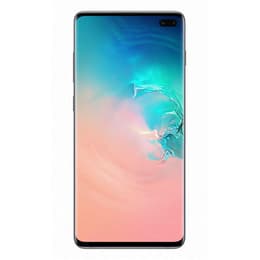



Galaxy S10+ Vs Galaxy S20

Galaxy S10+
Galaxy S10+
Starting at

Refurbished price:135.00

Versus €1,009.00 new

See options
Galaxy S20
Galaxy S20
Starting at

Refurbished price:196.00

Versus €879.00 new

See options

Ratings

The Samsung Galaxy S10 Plus, released in March 2019, and the Samsung Galaxy S20, launched in March 2020, represent successive generations within Samsung's flagship smartphone series. While both devices offer a premium Android experience, the Galaxy S20 introduces advancements in display technology, camera capabilities, and overall performance, building upon the foundation set by its predecessor. Both run on the Android operating system, offering a familiar user interface.

Scores

Durability

Evaluating the practical lifespan of these devices involves considering their release timelines, software support, and physical resilience.

  • Release Timeline: The Galaxy S10 Plus was released in March 2019, making it a year older than the Galaxy S20, which launched in March 2020. This difference in release date directly impacts the duration of official software support each device receives.
  • Software Longevity: Typically, Samsung provides several years of major Android operating system updates and extended security updates for its flagship devices. Due to its later release, the Galaxy S20 is expected to receive software support for a longer period than the Galaxy S10 Plus, offering an additional year of updates.
  • Physical Durability: Both models feature Corning Gorilla Glass 6 on the front for screen protection and an aluminum frame, contributing to their overall resilience against everyday wear and tear. Both also carry an IP68 rating for dust and water resistance, indicating protection against immersion in water up to 1.5 meters for 30 minutes.

Year of Release

2019

2020

Compatible with latest Update

No

No

OS

Android

Android

Foldable

No

No

Performance

The performance of a smartphone is crucial for daily tasks, from browsing to demanding applications. Both devices offer robust performance for their respective generations.

  • Processing Power: The Galaxy S20 features a newer generation processor compared to the Galaxy S10 Plus. This translates to more efficient handling of demanding applications, smoother multitasking, and improved responsiveness in general use for the S20. Users engaging in intensive mobile gaming or heavy video editing may notice a more fluid experience on the S20.
  • Battery Performance: The Galaxy S10 Plus is equipped with a 4100 mAh battery, while the Galaxy S20 has a 4000 mAh battery. Despite the slightly smaller capacity, the Galaxy S20's newer processor and more efficient display technology can contribute to optimized power consumption. User experiences suggest that both phones are capable of lasting through a full day of moderate use, though heavy usage may require more frequent charging.
  • Storage and RAM: Both devices offer various storage configurations, with the Galaxy S10 Plus having options up to 1TB and the Galaxy S20 typically starting at 128GB. Both also come with ample RAM, with the S20 often featuring 8GB or 12GB, and the S10 Plus offering 8GB or 12GB options, ensuring smooth multitasking.

Memory (GB)

8 GB

8 GB

Screen quality

The visual experience is a key aspect of smartphone usage, and both models deliver high-quality displays with notable differences.

  • Display Technology and Size: The Galaxy S10 Plus features a 6.4-inch Dynamic AMOLED display, offering vibrant colors and deep blacks. The Galaxy S20 comes with a slightly smaller 6.2-inch Dynamic AMOLED 2X display. The '2X' designation on the S20 indicates an advancement in display technology.
  • Resolution and Clarity: Both phones offer a Quad HD+ resolution, providing sharp and detailed visuals. The S10 Plus has a resolution of 3040 x 1440 pixels, while the S20 has 3200 x 1440 pixels. This high pixel density ensures clarity for text, images, and videos.
  • Refresh Rate: A significant difference lies in the refresh rate. The Galaxy S10 Plus features a standard 60Hz refresh rate. The Galaxy S20, however, offers a 120Hz refresh rate, which provides a noticeably smoother scrolling experience and more fluid animations, particularly beneficial for gaming and fast-paced content.

Resolution

1440 x 3040

1440 x 3200

Screen type

Dynamic AMOLED

Dynamic AMOLED 2X

Audiovisual

Both the Galaxy S10 Plus and Galaxy S20 offer versatile camera systems, but the S20 introduces notable enhancements.

  • Rear Camera System: The Galaxy S10 Plus features a triple-camera setup with a 12MP main lens, a 12MP telephoto lens, and a 16MP ultrawide lens. The Galaxy S20 also has a triple-camera system, but with a 12MP main lens, a 64MP telephoto lens, and a 12MP ultrawide lens. The S20's higher megapixel telephoto lens allows for greater detail when zooming.
  • Photography Performance: The S20's camera system generally offers improved low-light performance and enhanced detail capture, especially with its telephoto capabilities, including up to 3x hybrid optical zoom and 30x digital zoom. Both phones are capable of capturing high-quality photos in various conditions, but the S20 provides more flexibility and advanced features.
  • Video Recording and Audio: The Galaxy S10 Plus can record video up to 4K at 60 frames per second. The Galaxy S20 elevates this with the ability to record 8K video at 24 frames per second, alongside 4K at 60 frames per second. Both devices offer good microphone quality for calls and recordings, and their stereo speakers provide a decent media consumption experience.

Main camera

12 megapixels

12 megapixels

Front camera

10 megapixels

10 megapixels

Miscellaneous

Beyond core features, several practical elements differentiate these two Samsung smartphones.

  • Connectivity: A key distinction is 5G connectivity. The Galaxy S20 supports 5G networks, offering faster download and upload speeds in areas where 5G is available. The Galaxy S10 Plus is limited to 4G LTE connectivity. Both devices support Wi-Fi 6 and Bluetooth 5.0 for modern wireless connections.
  • Ports and Biometrics: The Galaxy S10 Plus includes a 3.5mm headphone jack, a feature absent on the Galaxy S20. Both utilize a USB-C port for charging and data transfer. For security, both phones feature an ultrasonic in-display fingerprint sensor.
  • Physical Characteristics: The Galaxy S10 Plus measures 157.6 x 74.1 x 7.8 mm and weighs 175 grams. The Galaxy S20 is slightly more compact and lighter, with dimensions of 151.7 x 69.1 x 7.9 mm and a weight of 163 grams. This makes the S20 potentially more comfortable for one-handed use for some users.

Weight

175 g

163 g

Width

7,41 cm

6,91 cm

Height

15.76 cm

15,17 cm

Depth

0,78 cm

0,79 cm

Screen size (in)

6.4

6.2

Network

4G

4G

SIM card

Physical SIM

Dual Physical SIM

Carrier compatibility

Unlocked

Unlocked

User feedback for the Galaxy S10 Plus often praises its comprehensive feature set, including the headphone jack and expandable storage, which were highly valued at its release. Its vibrant display and capable camera system also received positive remarks. Some common criticisms, however, revolved around its battery life for heavy users and the eventual end of major software updates.

The Galaxy S20, on the other hand, is frequently lauded for its smoother 120Hz display, enhanced camera capabilities, particularly in zoom and video recording, and the introduction of 5G connectivity. Users appreciated the improved performance and more modern design. Criticisms sometimes focused on the removal of the headphone jack and the initial battery performance compared to some competitors, though software updates often optimized this over time.

Users prioritizing a traditional smartphone experience with a headphone jack and slightly larger screen might find the Galaxy S10 Plus well-suited to their needs. Conversely, users who value a smoother display, advanced camera features, and future-proof 5G connectivity will likely lean towards the Galaxy S20. Both devices remain viable options, especially when considering a quality-assured refurbished option, which provides an eco-friendly alternative for consumers.


See all articles

Our recent comparisons