

Galaxy A13 Vs iPhone SE (2020)

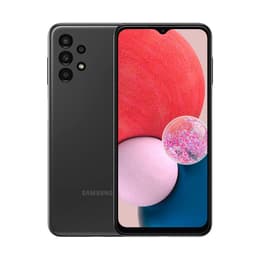
Galaxy A13
Galaxy A13
Starting at

Refurbished price:97.00

Versus €249.00 new

See options
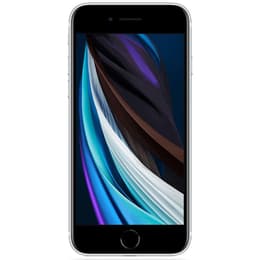
iPhone SE (2020)
iPhone SE (2020)
Starting at

Refurbished price:102.00

Versus €319.00 new

See options

Ratings

The Samsung Galaxy A13 (released in March 2022) and the iPhone SE 2020 (released in April 2020) are both smartphones designed to offer essential features for everyday use. While the Galaxy A13 operates on the Android platform, the iPhone SE 2020 runs on Apple's iOS. These devices cater to different user preferences, primarily differing in their screen size and the ecosystems they belong to.

Scores

Durability

When considering the longevity of these devices, several factors come into play, including their release timelines, software support, and physical resilience.

  • Release Timeline: The Samsung Galaxy A13 was released in March 2022, making it a newer device compared to the iPhone SE 2020, which launched in April 2020. This difference in release date can impact the duration of future software support.
  • Software Support: The Galaxy A13 typically receives two major Android OS upgrades and four years of security updates. For instance, the 4G variant launched with Android 12 and is upgradable to Android 14. The iPhone SE 2020, on the other hand, launched with iOS 13.4 and has received updates to subsequent iOS versions, including iOS 26, released in March 2026, indicating a longer software support lifespan.
  • Physical Durability: The Galaxy A13 features a plastic build with a Corning Gorilla Glass 5 front for screen protection. The iPhone SE 2020 has a glass front and back with an aluminum frame, and it boasts an IP67 rating for dust and water resistance, meaning it can withstand immersion in up to 1 meter of water for 30 minutes. The iPhone SE 2020 received a repairability score of 6 out of 10 from iFixit, noting that common components like the display and battery are relatively straightforward to replace, though the glass back is less practical to repair.

Year of Release

2022

2020

Compatible with latest Update

No

Yes

OS

Android

iOS

Foldable

No

No

Performance

The performance of a smartphone is crucial for daily tasks, app usage, and overall responsiveness.

  • Processing Capabilities: The Samsung Galaxy A13 is equipped with an octa-core processor, such as the Exynos 850 in its LTE variant, designed for efficient handling of everyday applications. The iPhone SE 2020 features a powerful A13 Bionic chip, which enables smooth operation for demanding applications and multitasking.
  • Multitasking and Storage: The Galaxy A13 offers RAM options ranging from 3GB to 6GB and internal storage from 32GB to 128GB, with expandable storage up to 1TB via a microSD card. The iPhone SE 2020 comes with 3GB of RAM and internal storage options of 64GB, 128GB, or 256GB, but it does not support expandable storage.
  • Battery Behavior: The Galaxy A13 houses a large 5000 mAh battery, providing extended usage time for many users. User reviews often highlight the Galaxy A13's strong battery life, capable of lasting through a full day of moderate to heavy use. The iPhone SE 2020 has an 1821 mAh battery, which, while optimized by its efficient processor, may require more frequent charging for heavy users.

Memory (GB)

4 GB

3 GB

Screen quality

The display is a primary interface for smartphone interaction, influencing viewing comfort and visual experience.

  • Display Technology and Size: The Samsung Galaxy A13 features a larger 6.6-inch PLS LCD screen with a resolution of 1080 x 2408 pixels, offering a spacious viewing area. The iPhone SE 2020 has a more compact 4.7-inch IPS LCD Retina HD display with a resolution of 750 x 1334 pixels.
  • Clarity and Brightness: The Galaxy A13's larger screen and higher resolution result in a pixel density of approximately 400 ppi, providing clear visuals. The iPhone SE 2020 offers a pixel density of 326 ppi, which is still considered sharp for its size, and features True Tone technology for adaptive color.
  • Refresh Rate: Both devices typically feature a standard 60Hz refresh rate, suitable for general content consumption and navigation. Some 5G variants of the Galaxy A13, however, offer a 90Hz refresh rate for smoother scrolling.

Resolution

1080 x 2408

750 x 1334

Screen type

PLS LCD

Retina IPS LCD

Audiovisual

Camera capabilities are a significant consideration for many users, impacting the quality of photos and videos captured.

  • Rear Camera System: The Samsung Galaxy A13 (4G variant) includes a versatile quad-camera setup with a 50MP main sensor, a 5MP ultra-wide lens, a 2MP macro lens, and a 2MP depth sensor. The iPhone SE 2020 features a single 12MP wide-angle rear camera with an f/1.8 aperture, optical image stabilization, and autofocus.
  • Photography Features: The Galaxy A13's multi-lens system allows for various shooting modes, including ultra-wide and macro shots. The iPhone SE 2020, despite having a single lens, benefits from the advanced computational photography of its processor, enabling features like Portrait mode with depth control and Smart HDR for improved image quality.
  • Video Recording: Both phones can record video at 1080p at 30 frames per second. The iPhone SE 2020 offers more advanced video capabilities, supporting 4K video recording at up to 60 frames per second, along with extended dynamic range and cinematic video stabilization.
  • Front Camera: The Galaxy A13 has an 8MP front camera, while the iPhone SE 2020 features a 7MP front camera, both capable of capturing selfies and supporting video calls.

Main camera

50 megapixels

12 megapixels

Front camera

8 megapixels

7 megapixels

Miscellaneous

Beyond core features, connectivity, design, and other practical elements contribute to the overall user experience.

  • Connectivity: The Samsung Galaxy A13 supports 4G LTE, with some variants offering 5G connectivity, along with Wi-Fi 5 and Bluetooth 5.0. The iPhone SE 2020 supports 4G LTE, Wi-Fi 6, and Bluetooth 5.0.
  • Ports and Biometrics: The Galaxy A13 includes a USB-C port and a 3.5mm headphone jack, featuring a side-mounted fingerprint sensor for security. The iPhone SE 2020 uses a Lightning port and does not have a headphone jack, relying on its front-mounted Touch ID fingerprint sensor integrated into the home button.
  • Design and Handling: The Galaxy A13 measures 165.1 x 76.4 x 8.8 mm and weighs 195 grams, offering a larger form factor. The iPhone SE 2020 is more compact at 138.4 x 67.3 x 7.3 mm and weighs 148 grams, making it easier for one-handed use.

Weight

195 g

148 g

Screen size (in)

6.6

4.7

Network

4G

4G

SIM card

Dual Physical SIM

Physical SIM + eSIM

Carrier compatibility

Unlocked

Unlocked

User feedback for the Samsung Galaxy A13 often praises its long battery life and large display, making it suitable for media consumption and users who prioritize extended usage without frequent charging. Some users, however, note that its performance can be less fluid when handling more demanding tasks or navigating the interface. The iPhone SE 2020 is frequently lauded for its powerful processing capabilities, offering a smooth and responsive experience for applications and games, comparable to more premium devices. Its camera is also well-regarded for its image quality in good lighting conditions and advanced video features, despite being a single-lens system. A common point of criticism for the iPhone SE 2020 is its relatively smaller battery capacity, which may lead to more frequent charging for heavy users, and its compact screen size with larger bezels, which some find less immersive for media.

For users prioritizing a large display, extensive battery life, and expandable storage within the Android ecosystem, the Samsung Galaxy A13 may be a more suitable choice. Conversely, individuals who value a compact design, robust processing power for demanding applications, advanced camera features, and the iOS ecosystem will likely find the iPhone SE 2020 better aligned with their needs. Both devices offer distinct advantages for different user profiles. For those considering either model, exploring quality-assured refurbished options can provide an eco-friendly alternative, extending the life of these devices and contributing to sustainable consumption.


See all articles

Our recent comparisons