

Compare models

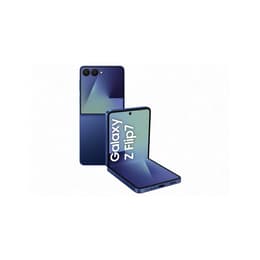
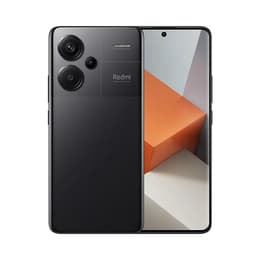
Galaxy Z Flip7 Vs Xiaomi Redmi Note 13 Pro+

  • 1-year minimum warranty
  • Free delivery on all orders
  • Free 30-day returns
Galaxy Z Flip7
Starting at

Refurbished price:€570.00

Versus €1,328.48 new

See options
Xiaomi Redmi Note 13 Pro+
Starting at

Refurbished price:€254.00

Versus €449.00 new

See options

Differences at a glance

The Samsung Galaxy Z Flip7 (2025) and the Xiaomi Redmi Note 13 Pro+ (2023) represent two distinct approaches to modern smartphone engineering. The Galaxy Z Flip7 brings an innovative foldable clamshell design and advanced mobile software to the premium tier, whereas the Xiaomi Redmi Note 13 Pro+ focuses on delivering a traditional candybar form factor with high-resolution imaging and reliable everyday utility. While both devices run on the Android operating system, they cater to fundamentally different physical preferences and system ecosystems.

Available Models

Colour

Storage (GB)

Scores

Durability

When evaluating structural longevity and software support, these two models follow different timelines based on their release years and hardware designs.

  • Release timeline and software support: The Galaxy Z Flip7 debuted in 2025 with current-generation software, ensuring a prolonged window of system updates and security patches. The Xiaomi Redmi Note 13 Pro+, released in late 2023, operates on an earlier software baseline, resulting in a shorter remaining support cycle.
  • Physical durability and engineering: The Galaxy Z Flip7 utilizes a folding mechanism that requires careful handling, though modern hinge structures offer improved resilience. The Xiaomi Redmi Note 13 Pro+ employs a traditional rigid chassis protected by durable glass panels, making it straightforward to shield against daily wear.
  • Repairability and practical lifespan: Traditional candybar frames like the Xiaomi model generally present simpler repair paths for component replacements. Opting for a quality-assured refurbished option provides a sustainable choice that extends device lifecycles while maintaining dependable everyday functionality.

Year of Release

2025

2023

Compatible with latest Update

Yes

Yes

OS

Android

Android

Foldable

Yes

No

Performance

Both smartphones offer robust configurations designed to handle modern multitasking, demanding applications, and media playback smoothly.

  • Storage and memory handling: Both devices are available with generous storage capacities starting at 256GB, pairing ample space for files with robust RAM configurations that maintain smooth app switching.
  • Everyday processing and responsiveness: Applications launch instantly and multitasking remains fluid across both models, handling intensive workloads and gaming sessions without noticeable stutter or thermal throttling.
  • Battery behavior: The Xiaomi Redmi Note 13 Pro+ features efficient power management paired with rapid charging capabilities to minimize downtime. The Galaxy Z Flip7 balances a compact folding footprint with an optimized power profile that comfortably sustains a full day of mixed usage.

Screen quality

Display technology is a major differentiator between these two devices, contrasting a flexible folding panel with a traditional high-resolution curved screen.

  • Display technology and clarity: The Galaxy Z Flip7 features a folding inner organic light-emitting diode panel that delivers deep contrast and vivid color reproduction alongside a functional outer cover screen. The Xiaomi Redmi Note 13 Pro+ utilizes a rigid organic light-emitting diode screen with a high pixel density that yields sharp text and detailed media viewing.
  • Outdoor visibility and brightness: Both screens reach high peak brightness levels, ensuring that menus, maps, and captured photos remain clearly visible even under direct sunlight.
  • Refresh rate and smoothness: Each device supports a 120Hz refresh rate, delivering fluid scrolling through web pages, smooth animations, and responsive touch interactions during daily navigation.

Resolution

1080x2520

1220 x 2712

Audiovisual

Imaging hardware varies significantly between the two models, offering distinct approaches to photography and video capture.

  • Main camera capabilities: The Xiaomi Redmi Note 13 Pro+ highlights a very high-resolution main sensor designed to capture fine details in well-lit environments. The Galaxy Z Flip7 relies on a balanced multi-lens rear array that excels at versatile everyday shooting and flexible angles enabled by its folding hinge.
  • Low-light and video performance: Both smartphones incorporate image stabilization tools to reduce blur during handheld recording and nighttime photography, producing clear videos and balanced exposure in dim settings.
  • Media consumption and audio output: Stereo speaker setups on both models deliver clear voice reproduction for calls and immersive sound output for streaming videos and casual gaming.

Front camera

10 megapixels

16 megapixels

Miscellaneous

Practical everyday features, connectivity standards, and physical dimensions shape how each device feels and operates in daily scenarios.

  • Connectivity and ports: Both models support fast 5G cellular networks, modern Wi-Fi standards, and Bluetooth pairing, relying on reversible USB-C ports for charging and wired data transfers.
  • Security and sensors: Fast biometric authentication is handled via secure face recognition and fingerprint sensors integrated directly into the displays or side power keys.
  • Physical handling: The Galaxy Z Flip7 folds down into a compact square that easily slips into small pockets, whereas the Xiaomi Redmi Note 13 Pro+ offers a conventional slim profile with a comfortable grip for two-handed media consumption.

Weight

188 g

204 g

Screen size (in)

6.9

6.67

Network

5G

5G

SIM card

Physical SIM + eSIM

Dual Physical SIM

Carrier compatibility

Unlocked

Unlocked

What the community thinks

User discussions across community forums highlight distinct preferences for each device. Owners of the Galaxy Z Flip7 frequently praise its space-saving folding design, innovative cover screen utility, and modern software ecosystem. Conversely, users of the Xiaomi Redmi Note 13 Pro+ often emphasize appreciation for its reliable traditional candybar build, fast charging speeds, and detailed high-resolution main camera.

Users prioritizing a compact, pocket-friendly form factor and contemporary software features may prefer the Galaxy Z Flip7, while users who favor a traditional rigid display, rapid charging convenience, and straightforward handling will lean toward the Xiaomi Redmi Note 13 Pro+. Exploring a quality-assured refurbished option serves as an eco-friendly alternative for consumers seeking to make a sustainable choice without compromising on operational reliability. Ultimately, the choice depends entirely on individual preferences regarding physical design and daily usage priorities.


Our recent comparisons