

Galaxy S21 5G Vs Xiaomi Redmi Note 13 Pro+

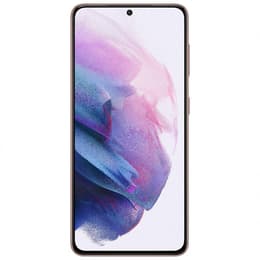
Galaxy S21 5G
Galaxy S21 5G
Starting at

Refurbished price:161.00

Versus €1,026.00 new

See options
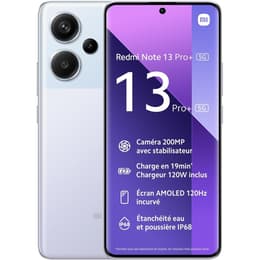
Xiaomi Redmi Note 13 Pro+
Starting at

Refurbished price:187.00

Versus €699.00 new

See options

Ratings

The Samsung Galaxy S21 5G, released in January 2021, and the Xiaomi Redmi Note 13 Pro+, launched globally in January 2024, represent different generations and approaches to smartphone design. While both operate on the Android platform, the Redmi Note 13 Pro+ offers a more recent hardware package and faster charging capabilities, whereas the Galaxy S21 provides a more compact form factor.

Scores

Durability

When considering the long-term usability of these devices, several factors come into play, including software support and physical resilience.

  • Software Longevity: The Galaxy S21 5G, having been released in early 2021, launched with Android 11 and typically receives four major OS updates and five years of security updates from Samsung. The Redmi Note 13 Pro+, released in early 2024 with Android 13, is expected to receive three major Android OS updates, bringing it up to Android 16, and four years of security updates, extending its support until January 2028.
  • Physical Durability: Both devices feature IP68 ratings for dust and water resistance, indicating protection against immersion in water. The Redmi Note 13 Pro+ utilizes Corning Gorilla Glass Victus for its display, offering enhanced scratch and drop resistance. The Galaxy S21 5G also features Gorilla Glass Victus on its front, though its back is made of plastic.
  • Repairability: The Galaxy S21 5G has been noted for a moderate repairability score, with some components being relatively easy to access, though the battery can be challenging to remove due to strong adhesive. The Redmi Note 13 Pro+ has an average repairability score, with the use of adhesive for the back cover and battery potentially complicating repairs, though pull tabs for battery removal are a positive aspect.

Year of Release

2021

2023

Compatible with latest Update

Yes

Yes

OS

Android

Android

Foldable

No

No

Performance

The performance of a smartphone is crucial for daily tasks, from navigating applications to engaging in demanding mobile games.

  • Processing Power: The Galaxy S21 5G is equipped with a processor that handles demanding applications and multitasking smoothly, providing a responsive user experience. The Redmi Note 13 Pro+ features a newer generation processor designed for high-speed output, ensuring smooth mobile gaming and efficient handling of intensive tasks.
  • Multitasking and Storage: Both devices offer ample RAM for efficient multitasking, with the Galaxy S21 5G typically featuring 8GB of RAM. The Redmi Note 13 Pro+ is available with 8GB or 12GB of RAM, with some configurations offering up to 16GB, providing extensive capacity for running multiple applications simultaneously. For internal storage, the Galaxy S21 5G comes with 128GB or 256GB options, while the Redmi Note 13 Pro+ offers 256GB or 512GB, catering to users with larger storage needs. Neither device supports expandable storage via a microSD card.
  • Battery Performance: The Galaxy S21 5G houses a 4000 mAh battery, which for heavy users may require more frequent charging. The Redmi Note 13 Pro+ comes with a larger 5000 mAh battery, generally offering longer endurance for daily use.

Memory (GB)

8 GB

8 GB

Screen quality

The display is a primary interface for smartphone interaction, and both devices offer vibrant viewing experiences with distinct characteristics.

  • Display Technology and Clarity: The Galaxy S21 5G features a 6.2-inch Dynamic AMOLED 2X display, known for its deep blacks and vibrant colors with a resolution of 1080 x 2400 pixels. The Redmi Note 13 Pro+ sports a larger 6.67-inch AMOLED display with a higher resolution of 1220 x 2712 pixels, providing a crisp and clear viewing experience.
  • Brightness and Smoothness: Both phones offer a 120Hz adaptive refresh rate for smooth scrolling and fluid animations. The Galaxy S21 5G reaches a peak brightness of 1300 nits, suitable for outdoor visibility. The Redmi Note 13 Pro+ surpasses this with an impressive peak brightness of 1800 nits, ensuring excellent visibility even under direct sunlight.
  • Design and Viewing Experience: The Redmi Note 13 Pro+ features a curved display, contributing to a more immersive viewing experience and a modern aesthetic. The Galaxy S21 5G has a flat display.

Resolution

1080 x 2400

1220 x 2712

Screen type

Dynamic AMOLED 2X

AMOLED

Audiovisual

For many users, the camera system is a key differentiator, and both smartphones offer capable setups for capturing photos and videos.

  • Rear Camera System: The Galaxy S21 5G features a versatile triple camera setup, including a 12MP wide lens with optical image stabilization (OIS), a 12MP ultrawide lens, and a 64MP telephoto lens with OIS and 3x hybrid optical zoom. The Redmi Note 13 Pro+ boasts a high-resolution 200MP main camera with OIS, an 8MP ultrawide camera, and a 2MP macro camera.
  • Photography Performance: The Galaxy S21 5G is known for its consistent image quality across its lenses, offering detailed photos and good dynamic range. The Redmi Note 13 Pro+'s 200MP sensor allows for significant detail capture and offers features like 2x/4x lossless zoom for clear close-ups. Its main camera performs well in low-light conditions, producing bright and colorful images.
  • Video Capabilities: The Galaxy S21 5G supports video recording up to 8K resolution at 24fps, and 4K at 30/60fps. The Redmi Note 13 Pro+ records video at up to 4K resolution at 30fps.
  • Front Camera: For selfies and video calls, the Galaxy S21 5G has a 10MP front camera, while the Redmi Note 13 Pro+ features a 16MP front camera.

Main camera

12 megapixels

200 megapixels

Front camera

10 megapixels

16 megapixels

Miscellaneous

Beyond the core features, several practical elements contribute to the overall user experience of a smartphone.

  • Connectivity: Both devices support 5G connectivity for faster mobile data speeds. They also include modern Wi-Fi standards (Wi-Fi 6 for both) and Bluetooth for wireless accessories (Bluetooth 5.0 for S21 5G, Bluetooth 5.3 for Redmi Note 13 Pro+).
  • Charging and Ports: The Galaxy S21 5G supports 25W wired fast charging and 15W wireless charging. The Redmi Note 13 Pro+ stands out with its 120W wired HyperCharge technology, capable of charging the device to full in approximately 19-21 minutes. Both phones utilize a USB-C port for charging and data transfer, and neither includes a traditional 3.5mm headphone jack.
  • Biometrics and Design: Both smartphones feature in-screen fingerprint sensors for secure unlocking. The Galaxy S21 5G is more compact and lighter, weighing around 169-171g with dimensions of 151.7 x 71.2 x 7.9 mm. The Redmi Note 13 Pro+ is larger and heavier at approximately 204.5g and measures 161.4 x 74.2 x 8.9 mm.

Weight

171 g

2500 g

Screen size (in)

6.2

6.67"

Network

5G

5G

SIM card

Physical SIM + eSIM

Dual Physical SIM

Carrier compatibility

Unlocked

Unlocked

Connector

USB-C

USB-C

User feedback for the Galaxy S21 5G often praises its compact size, capable camera system, and the overall polished software experience. Some common criticisms have included its battery life for heavy users and the plastic back material compared to its predecessors. The Redmi Note 13 Pro+ frequently receives acclaim for its exceptionally fast charging, vibrant and bright display, and its high-resolution main camera. User concerns sometimes revolve around the absence of a headphone jack and the potential for a less refined software experience compared to more established flagships.

Users prioritizing a more compact device with a highly refined software experience and a consistently strong camera system may find the Galaxy S21 5G well-suited to their needs. Its slightly older release means it has fewer years of software updates remaining, but it still offers a premium experience. Conversely, individuals who value cutting-edge fast charging, a larger and brighter display, and a high-megapixel main camera for detailed shots will likely lean towards the Redmi Note 13 Pro+. Its newer release date also provides a longer window for software support.

For those looking to make an informed and sustainable choice, considering a quality-assured refurbished option for either device can provide an excellent way to access these features while also contributing to a more eco-friendly approach to technology consumption.


See all articles

Our recent comparisons