

Compare models
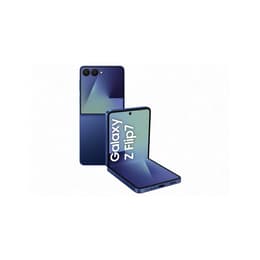
Galaxy Z Flip7 Vs iPhone 17 Pro
- 1-year minimum warranty
- Free delivery on all orders
- Free 30-day returns
Differences at a glance
The Samsung Galaxy Z Flip7 (2025) and the Apple iPhone 17 Pro (2025) represent two distinct approaches to high-end mobile engineering, contrasting a flexible clamshell form factor with a traditional slab smartphone design. While the Galaxy Z Flip7 emphasizes pocketability and a transforming display structure, the iPhone 17 Pro focuses on robust unibody construction and tightly integrated hardware capabilities. Running on Android and iOS respectively, these devices serve users seeking modern mobile technology shaped by entirely different physical designs.
Available Models
Colour
Storage (GB)
Scores
Durability
Both smartphones arrive from the 2025 product generation, yet their structural engineering and long-term durability profiles diverge significantly based on form factor.
- Software longevity: Both manufacturers provide extensive multi-year operating system upgrade paths, ensuring long-term security and feature access for daily users.
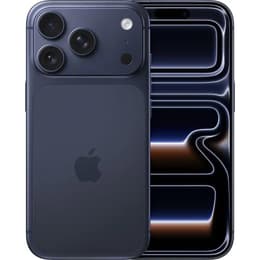
- Physical endurance: The iPhone 17 Pro utilizes a rigid aluminum unibody design with advanced glass-ceramic protection, whereas the Galaxy Z Flip7 relies on a specialized folding screen mechanism that requires careful handling over years of frequent opening and closing.
- Repair considerations: Traditional slab devices like the iPhone generally offer simpler structural maintenance compared to intricate foldable displays, making user-chosen sustainable choices like a quality-assured refurbished option an appealing route for eco-conscious buyers looking to maximize device lifespans.
Year of Release
2025
2025
Performance
Daily operation across both handsets handles demanding mobile applications, multitasking requirements, and fast-paced gaming with high efficiency and fluid system response.
- System responsiveness: Both devices feature substantial memory capacity and advanced internal architecture, ensuring apps load swiftly and background processes run without noticeable stutter.
- Battery behavior: Energy management systems in both models sustain typical daily routines under mixed usage conditions, though intensive tasks such as prolonged gaming or constant video streaming will draw down power more rapidly.
- Storage configurations: Generous base storage tiers accommodate large media libraries, offline documents, and high-resolution files without immediate need for cloud expansion.
Screen quality
Visual output differs notably due to the physical layout of each screen, though both display technologies deliver sharp details and high refresh rates.
- Display technology: The Galaxy Z Flip7 features an expansive foldable organic light-emitting diode panel complemented by a large external cover screen, while the iPhone 17 Pro provides a rigid, high-brightness flat panel with adaptive refresh technology.
- Outdoor legibility: High peak brightness levels on both screens ensure content remains clear and readable even under direct sunlight or bright ambient lighting.
- Motion smoothness: Smooth scrolling and responsive touch tracking come standard on both interfaces, benefiting web browsing, user navigation, and interactive gaming.
Audiovisual
Media creation capabilities on these smartphones cater to diverse photography styles, ranging from flexible framing angles to professional-grade video tools.
- Camera versatility: The iPhone 17 Pro equips a triple-lens system with high-resolution sensors across wide, ultra-wide, and telephoto focal lengths, whereas the Galaxy Z Flip7 uses a dual-lens rear layout that pairs with its folding design for unique angles and hands-free self-portraits.
- Low-light performance: Advanced sensor hardware and computational processing allow both devices to capture bright, detailed images in dim environments with minimal noise.
- Audio and media output: Stereo speaker setups on both models deliver clear sound reproduction for calls, video conferencing, and casual media consumption.
Miscellaneous
Practical daily usability is shaped by connectivity standards, physical dimensions, and biometric security features built into each chassis.
- Connectivity and ports: Both models support current-generation 5G networks, high-speed Wi-Fi standards, and universal USB-C physical connections for charging and data transfer.
- Biometrics and handling: The iPhone 17 Pro relies on secure facial recognition, while the Galaxy Z Flip7 integrates a fingerprint sensor alongside its face unlock feature.
- Ergonomics: The iPhone 17 Pro presents a traditional, balanced weight distribution in the hand, whereas the Galaxy Z Flip7 folds cleanly in half to occupy minimal pocket space during travel.
Screen size (in)
6.9
6.3
Network
5G
5G
SIM card
Physical SIM + eSIM
eSIM
Carrier compatibility
Unlocked
Unlocked
Connector
USB-C
USB-C
What the community thinks
User discussions across community forums frequently highlight the Galaxy Z Flip7 for its compact, pocket-friendly footprint and the practical utility of its external cover screen for quick notifications. At the same time, contributors frequently praise the iPhone 17 Pro for its durable unibody construction, comprehensive camera versatility, and reliable battery longevity during heavy workloads. Common criticisms for the foldable model often focus on the visible crease along the main display and delicate hinge maintenance, while critics of the Apple flagship point to its heavier weight profile compared to previous generations.
Users prioritizing compact pocketability, innovative form factors, and hands-free photo framing will find the Galaxy Z Flip7 well-suited to their daily routines. Conversely, users prioritizing a rigid unibody build, extended optical zoom capabilities, and traditional slab ergonomics may lean toward the iPhone 17 Pro. For consumers evaluating eco-friendly alternatives, choosing an expertly tested, quality-assured refurbished option from platforms like Back Market provides a sustainable path toward acquiring premium mobile technology without supporting unnecessary manufacturing cycles.