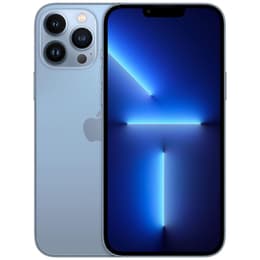


Huawei P30 Pro Vs iPhone 13 Pro Max

Huawei P30 Pro
Huawei P30 Pro
Starting at

Refurbished price:186.00

Versus €849.00 new

See options
iPhone 13 Pro Max
iPhone 13 Pro Max
Starting at

Refurbished price:369.00

Versus €1,249.00 new

See options

Ratings

The Huawei P30 Pro, an Android smartphone released in March 2019, and the iPhone 13 Pro Max, an iOS smartphone launched in September 2021, represent different generations and operating system ecosystems. While both were flagship devices at their respective launches, they offer distinct user experiences, primarily differing in their software platforms, camera philosophies, and overall performance capabilities due to their release timelines.

Scores

Durability

The practical lifespan of a smartphone is influenced by its release age, ongoing software support, and physical durability. These two devices, separated by over two years, present different expectations in these areas.

  • Release Timeline and OS Support: The Huawei P30 Pro, released in March 2019, launched with Android 9.0 Pie and received updates up to EMUI 12 (based on Android 10 for global versions). While it received HarmonyOS updates in China, global users experienced a more limited Android update cycle due to external factors. In contrast, the iPhone 13 Pro Max, released in September 2021, launched with iOS 15 and is expected to receive major iOS updates until at least 2028, with security updates potentially extending beyond that.
  • Repairability and Physical Durability: The Huawei P30 Pro features an IP68 rating for water and dust resistance, and its construction involves a glass front and back with an aluminum alloy frame. iFixit gave the P30 Pro a repairability score of 4 out of 10, noting that its heavily glued design makes repairs challenging, particularly screen replacements. The iPhone 13 Pro Max also boasts an IP68 rating and features a Ceramic Shield front cover and a stainless steel frame, contributing to its robust build. However, iFixit rated the iPhone 13 Pro (which shares similar construction) with a 5 out of 10 for repairability, indicating that while some components are modular, certain repairs, like screen replacements, can be complex and may affect functionality if not performed by authorized services.
  • Software Longevity Expectations: Users of the Huawei P30 Pro have noted its hardware longevity, with many still finding it capable for daily tasks, though the lack of recent major Android updates for global models means it may eventually face compatibility issues with newer applications. The iPhone 13 Pro Max, benefiting from Apple's longer software support, offers a more extended period of access to the latest iOS features and security patches, making it a suitable option for users prioritizing long-term software relevance.

Year of Release

2019

2021

Compatible with latest Update

No

Yes

OS

Android

iOS

Foldable

No

No

Performance

Evaluating the performance of these two smartphones involves considering their internal components and how they translate to real-world usage, from app handling to multitasking and battery endurance.

  • Storage Options and RAM: The Huawei P30 Pro was available with 8GB of RAM and storage options including 128GB, 256GB, and 512GB, with expandable storage via Huawei's Nano Memory (NM) cards. The iPhone 13 Pro Max offers 6GB of RAM and a wider range of internal storage capacities: 128GB, 256GB, 512GB, and 1TB, without expandable storage. The larger RAM in the P30 Pro for its time provided capable multitasking, while the iPhone's optimized iOS often achieves smooth performance with less RAM.
  • Processor Capabilities and Responsiveness: The Huawei P30 Pro is powered by a capable processor that, at its release, handled demanding applications and multitasking smoothly. For its generation, it delivered a responsive user experience. The iPhone 13 Pro Max features a powerful processor designed for high-performance tasks, including intensive gaming and complex video editing. This results in exceptionally fluid navigation, rapid app loading, and efficient handling of multiple applications simultaneously, maintaining strong performance even years after its release.
  • Battery Behavior: The Huawei P30 Pro is equipped with a 4200 mAh battery, which users often praised for its ability to last through a full day of moderate to heavy use. It also supported fast wired and wireless charging. The iPhone 13 Pro Max houses a 4352 mAh battery, known for providing extended battery life, often exceeding a full day even for heavy users. Users frequently highlight its impressive endurance as a key advantage.

Memory (GB)

8 GB

6 GB

Screen quality

The display is a primary interface for smartphone interaction, and both devices offer high-quality viewing experiences, though with differences in technology and features.

  • Display Technology and Clarity: Both the Huawei P30 Pro and the iPhone 13 Pro Max feature OLED displays, known for their deep blacks and vibrant colors. The P30 Pro has a 6.47-inch OLED screen with a resolution of 2340 x 1080 pixels, providing clear visuals. The iPhone 13 Pro Max features a larger 6.7-inch Super Retina XDR OLED display with a resolution of 2778 x 1284 pixels, offering a slightly higher pixel density and enhanced clarity.
  • Brightness and Refresh Rate: The P30 Pro's display offers good brightness for various lighting conditions, though its refresh rate is a standard 60Hz. The iPhone 13 Pro Max, on the other hand, features a brighter display and incorporates ProMotion technology, which provides an adaptive refresh rate ranging from 10Hz to 120Hz. This results in noticeably smoother scrolling and more fluid animations, particularly beneficial for gaming and media consumption.
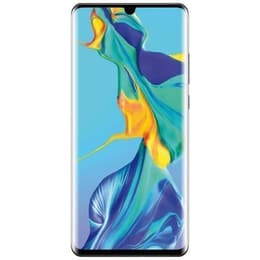
  • Screen Size and Viewing Experience: The P30 Pro's 6.47-inch curved OLED screen offers an immersive viewing experience with minimal bezels and a small dewdrop notch. The iPhone 13 Pro Max's 6.7-inch flat OLED display provides an expansive canvas for content, with a slightly smaller notch compared to its predecessors, enhancing the overall viewing area.

Resolution

1080 x 2340

1284 x 2778

Screen type

OLED

Super Retina XDR OLED

Audiovisual

Both devices were celebrated for their camera capabilities at launch, each bringing distinct strengths to mobile photography and videography.

  • Camera System Capabilities: The Huawei P30 Pro features a versatile quad-camera system on the rear, including a 40 MP wide lens, a 20 MP ultrawide lens, and an 8 MP periscope telephoto lens capable of 5x optical zoom, along with a Time-of-Flight (TOF) sensor for depth sensing. Its front camera is 32 MP. The iPhone 13 Pro Max is equipped with a triple 12 MP camera system, comprising wide, ultrawide, and telephoto lenses (3x optical zoom), complemented by a LiDAR scanner for improved depth mapping and augmented reality applications. Its front camera is 12 MP.
  • Photography Performance: The P30 Pro was renowned for its exceptional low-light performance and impressive zoom capabilities, allowing users to capture detailed images even in challenging conditions. Users praised its ability to produce vibrant and detailed photos. The iPhone 13 Pro Max excels in computational photography, delivering consistent and natural-looking images across various lighting scenarios. Its larger sensors and advanced image processing contribute to strong low-light performance and excellent detail retention.
  • Video Recording and Audio: The P30 Pro offers capable video recording, though it does not support 4K at 60fps. Its microphone quality is suitable for calls and general recording. The iPhone 13 Pro Max offers advanced video features, including Cinematic mode for shallow depth-of-field effects and ProRes video recording for professional-grade footage. Its microphones provide clear audio capture, and its stereo speakers deliver a balanced sound experience for media consumption.

Main camera

40 megapixels

12 megapixels

Front camera

32 megapixels

12 megapixels

Miscellaneous

Beyond core performance and display, several practical elements contribute to the overall user experience and daily usability of these smartphones.

  • Connectivity Options: The Huawei P30 Pro supports 4G LTE, Wi-Fi 5 (802.11ac), and Bluetooth 5.0. The iPhone 13 Pro Max offers more advanced connectivity with 5G support, Wi-Fi 6 (802.11ax), and Bluetooth 5.0, providing faster cellular data speeds and improved Wi-Fi performance.
  • Port Types and Sensors: The P30 Pro features a USB-C 3.1 port for charging and data transfer, but it lacks a traditional 3.5mm headphone jack. It includes an in-display optical fingerprint sensor and supports face unlock. The iPhone 13 Pro Max uses Apple's proprietary Lightning port and does not have a headphone jack. It relies on Face ID for secure authentication.
  • Weight, Dimensions, and Build Materials: The P30 Pro weighs 192 grams and has dimensions of 158 x 73.4 x 8.4 mm, featuring an aluminum alloy frame with a glass front and back. The iPhone 13 Pro Max is a heavier device at 240 grams, with dimensions of 160.8 x 78.1 x 7.65 mm. It features a more premium build with a stainless steel frame and a Ceramic Shield front cover, which enhances durability.

Weight

192 g

238 g

Screen size (in)

6.47

6.7

Network

4G

5G

SIM card

Dual Physical SIM

Physical SIM + eSIM

Carrier compatibility

Unlocked

Unlocked

User sentiment for the Huawei P30 Pro often highlights its exceptional camera, particularly its zoom capabilities and low-light performance, which many users still praise years after its release. Its battery life was also a frequent point of positive feedback. Criticisms often revolve around the software update situation for global users, with some expressing concern over the lack of recent Android versions and the absence of Google Mobile Services on newer Huawei devices, though the P30 Pro retains these. The curved screen, while aesthetically pleasing, was sometimes noted as making the device more susceptible to damage and harder to protect with cases.

For the iPhone 13 Pro Max, users consistently laud its outstanding battery life, often describing it as lasting well over a day even with heavy usage. The display's brightness and smoothness, thanks to the adaptive refresh rate, are also frequently praised, along with its robust performance and high-quality camera system. Common criticisms include its significant weight and large size, which some users find cumbersome, and the continued use of the Lightning port instead of USB-C.

Users prioritizing advanced camera features, particularly optical zoom and strong low-light photography, might find the Huawei P30 Pro well-suited to their needs, especially if they are comfortable with its Android 10-based software experience. Those who value extended software support, a highly fluid user interface, superior video capabilities, and exceptional battery endurance will likely lean towards the iPhone 13 Pro Max. Both devices offer distinct advantages, catering to different preferences. For consumers looking for a quality-assured refurbished option, both models are available, providing an eco-friendly alternative to purchasing new devices.


See all articles

Our recent comparisons