
iPhone

Compare models
Differences at a glance
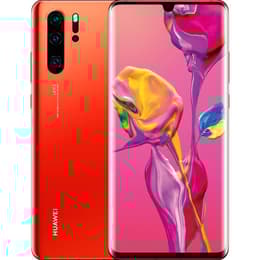
The Google Pixel 7, released in October 2022, and the Huawei P30 Pro, launched in March 2019, represent different eras in smartphone technology. While both devices offer a premium experience, the Pixel 7 focuses on advanced computational photography and a streamlined Android experience, whereas the P30 Pro was renowned for its innovative camera hardware and battery longevity at its release. Both operate on the Android platform, but their software ecosystems and update trajectories diverge significantly due to their respective launch timelines and manufacturer policies.
Colour
Storage (GB)
The expected practical lifespan of a smartphone is heavily influenced by its release date and the manufacturer's software support policy. These two devices, separated by over three years, offer distinct outlooks on longevity.
Year of Release
Compatible with latest Update
OS
Foldable
Performance in smartphones is determined by the interplay of hardware and software, influencing how smoothly applications run and how efficiently tasks are handled.
The display is a primary interface for smartphone interaction, and both devices offer high-quality viewing experiences with some notable differences.
Resolution
Screen type
Both smartphones were recognized for their camera capabilities at their respective launches, though they approach photography with different strengths and technologies.
Main camera
Front camera
Beyond core performance and display, several practical features contribute to the overall user experience and daily utility of a smartphone.
Weight
Screen size (in)
Network
SIM card
Carrier compatibility
The Google Pixel 7 and Huawei P30 Pro, while both Android smartphones, cater to different user priorities due to their generational gap and distinct design philosophies. The Pixel 7 is often praised for its exceptional camera capabilities, particularly its computational photography, which delivers consistent and high-quality images across various scenarios. Users appreciate its clean Android software experience and the assurance of long-term software updates directly from Google. However, some users have noted that its battery life, while generally adequate, may not be outstanding for heavy use, and the in-display fingerprint sensor has received mixed feedback regarding its consistency.
The Huawei P30 Pro, despite its age, is still remembered for its groundbreaking camera hardware, especially its periscope zoom lens and strong low-light performance, which were ahead of its time. Its battery life was also a significant highlight for many users. Criticisms often revolve around its limited software update future, particularly for global users, and the absence of features like 4K 60fps video recording and stereo speakers.
Users prioritizing a modern Android experience with guaranteed long-term software support, advanced computational photography, and 5G connectivity will find the Google Pixel 7 well-suited to their needs. It offers a streamlined interface and a focus on intelligent features. Conversely, users who value innovative camera hardware, particularly optical zoom capabilities, and robust battery performance, and are less concerned with the latest software updates or 5G, might still appreciate the Huawei P30 Pro. Both devices, especially when considering quality-assured refurbished options, provide a pathway to capable smartphone technology. Ultimately, the choice depends on whether a user prioritizes cutting-edge software and AI-driven features or a device celebrated for its specific hardware innovations from a previous generation.