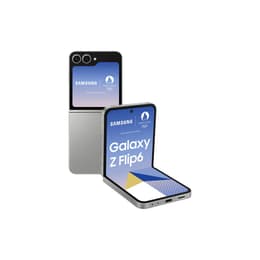
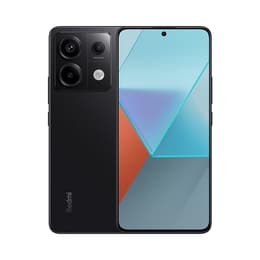


Galaxy Z Flip6 Vs Xiaomi Redmi Note 13 Pro

Galaxy Z Flip6
Galaxy Z Flip6
Starting at

Refurbished price:415.00

Versus €1,199.99 new

See options
Xiaomi Redmi Note 13 Pro
Starting at

Refurbished price:179.00

Versus €349.00 new

See options

Ratings

The Samsung Galaxy Z Flip6, released in July 2024, is a foldable smartphone that offers a compact design when closed, while the Xiaomi Redmi Note 13 Pro 5G, launched in January 2024, presents a more traditional smartphone form factor. These devices cater to different user preferences, with the Z Flip6 focusing on portability and innovative design, and the Redmi Note 13 Pro 5G emphasizing a robust display and camera system within a conventional build. Both run on the Android operating system, but with distinct user interfaces and software support policies.

Scores

Durability

When considering the long-term usability of these devices, their release timelines and software support are key factors.

  • Software Longevity: The Galaxy Z Flip6 offers an extended software support period, with Samsung promising seven years of Android OS upgrades and security updates from its July 2024 release. This commitment ensures the device remains current and secure for a significantly longer duration. In contrast, the Redmi Note 13 Pro 5G, initially running Android 13 with MIUI 14, typically receives a shorter window of major Android updates, though it may receive updates to HyperOS.
  • Physical Durability: The Galaxy Z Flip6 features an IP48 rating, indicating strong water resistance (IPX8) and moderate dust protection (IP4X), along with an improved hinge design and more durable glass layers for its foldable display. The Redmi Note 13 Pro 5G comes with an IP54 rating, providing good protection against dust and splashes. It also incorporates Corning Gorilla Glass Victus for enhanced screen durability.
  • Expected Lifespan: Users prioritizing the longest possible software and security support will find the Galaxy Z Flip6 more appealing due to its extensive update policy. The unique foldable design of the Z Flip6 also introduces specific considerations for hinge longevity, which Samsung has aimed to improve. The Redmi Note 13 Pro 5G, while offering solid physical protection, will likely see its software support conclude sooner.

Year of Release

2024

2023

Compatible with latest Update

Yes

Yes

OS

Android

Android

Foldable

Yes

No

Performance

The performance capabilities of these two smartphones differ, reflecting their respective market segments and design philosophies.

  • Processing Power: The Galaxy Z Flip6 is equipped with a current-generation flagship processor, enabling it to handle demanding applications, intensive multitasking, and graphic-heavy games with smooth responsiveness. This is complemented by a vapor chamber cooling system designed to maintain performance during extended use. The Redmi Note 13 Pro 5G utilizes an upper mid-range processor, which provides a capable experience for everyday tasks, general multitasking, and moderate gaming.
  • Memory and Storage: Both devices offer various configurations of RAM and internal storage. The Galaxy Z Flip6 is available with 8GB or 12GB of RAM and storage options of 256GB or 512GB. The Redmi Note 13 Pro 5G also comes with 8GB or 12GB of RAM, with some regions offering up to 16GB, and storage capacities ranging from 128GB to 512GB.
  • Battery Behavior: The Galaxy Z Flip6 features a 4000mAh battery, which has shown improved endurance compared to its predecessor, often lasting through a full day of typical usage. The Redmi Note 13 Pro 5G houses a larger 5100mAh battery, consistently providing over a day and often up to a day and a half of use on a single charge.

Memory (GB)

12 GB

8 GB

Screen quality

The display experience on these devices presents distinct characteristics, largely influenced by their form factors.

  • Display Technology and Clarity: The Galaxy Z Flip6 features a 6.7-inch foldable Dynamic AMOLED 2X main display, offering vibrant colors, deep blacks, and a sharp 1080 x 2640 pixel resolution. Its crease has been minimized for a more seamless viewing experience. Additionally, it has a 3.4-inch Super AMOLED cover screen for quick interactions when folded. The Redmi Note 13 Pro 5G boasts a 6.67-inch AMOLED display with a 1.5K resolution (1220 x 2712 pixels), providing excellent clarity and color reproduction.
  • Brightness and Smoothness: Both devices offer high refresh rates for smooth scrolling and animations. The Z Flip6's main display has a 120Hz refresh rate and can reach a peak brightness of 2600 nits, ensuring good visibility even in bright outdoor conditions. The Redmi Note 13 Pro 5G also features a 120Hz refresh rate and a peak brightness of 1800 nits, which is ample for most viewing environments.
  • Viewing Experience: The Z Flip6's foldable nature allows for unique viewing angles and a compact form factor, while its cover screen offers convenient access to notifications and widgets. The Redmi Note 13 Pro 5G provides a large, immersive, and flat display ideal for media consumption and productivity without the considerations of a folding screen.

Resolution

1080 x 2640

1220 x 2712

Screen type

Foldable Dynamic LTPO AMOLED 2X

AMOLED

Audiovisual

Both smartphones offer capable camera systems, though with different sensor configurations and performance characteristics.

  • Rear Camera System: The Galaxy Z Flip6 is equipped with a dual-camera setup on the rear, featuring a 50MP main sensor with optical image stabilization (OIS) and a 12MP ultrawide camera. This system is noted for capturing detailed images with good dynamic range in well-lit conditions. The Redmi Note 13 Pro 5G features a triple camera array, highlighted by a 200MP main sensor with OIS, an 8MP ultrawide, and a 2MP macro camera. Its high-resolution main sensor excels in capturing fine details.
  • Photography Performance: In daylight, both devices produce good quality photos. The Z Flip6's main camera offers accurate exposure and vibrant colors, with improvements in low-light performance over its predecessor, though it may still struggle in very challenging conditions. The Redmi Note 13 Pro 5G's 200MP sensor delivers sharp images with good color vibrancy, and its night mode helps in low-light scenarios, though some noise may be present.
  • Video and Audio: The Galaxy Z Flip6 supports 4K video recording at 60 frames per second from its main camera, with good stabilization. The Redmi Note 13 Pro 5G can record 4K video at 30 frames per second with its rear camera. For audio, the Redmi Note 13 Pro 5G includes stereo speakers with Dolby Atmos support, enhancing the media consumption experience.

Main camera

50 megapixels

200 megapixels

Front camera

10 megapixels

16 megapixels

Miscellaneous

Beyond core performance and display, several practical elements differentiate these two devices.

  • Connectivity and Ports: The Galaxy Z Flip6 supports 5G networks, Wi-Fi 6E, and Bluetooth 5.3, offering advanced wireless capabilities. It features a USB-C port for charging and data transfer. The Redmi Note 13 Pro 5G also supports 5G connectivity, along with Wi-Fi (ac standard) and Bluetooth 5.2. A notable inclusion on the Redmi Note 13 Pro 5G is a 3.5mm headphone jack, which is absent on the Z Flip6.
  • Biometric Security: Both smartphones incorporate modern biometric security features. The Galaxy Z Flip6 utilizes an in-screen fingerprint sensor and face recognition for secure unlocking. The Redmi Note 13 Pro 5G also features an in-screen fingerprint sensor and AI Face Unlock.
  • Design and Handling: The Galaxy Z Flip6, weighing 187g, offers a unique foldable design that becomes very compact when closed, making it highly portable. Its dimensions when unfolded are 165.1 x 71.9 x 6.9 mm. The Redmi Note 13 Pro 5G, also weighing 187g, has a more traditional slab design with dimensions of 161.15 x 74.24 x 7.98 mm. The Z Flip6's build materials include durable glass and an aluminum frame, while the Redmi Note 13 Pro 5G features a double-sided glass body.

Weight

187 g

187 g

Screen size (in)

6.7

6.67

Network

5G

5G

SIM card

Physical SIM + eSIM

Dual Physical SIM

Carrier compatibility

Unlocked

Unlocked

User feedback for the Samsung Galaxy Z Flip6 often praises its innovative foldable design, which offers a blend of a large screen experience with enhanced portability. Users appreciate the improved battery life compared to previous generations and the robust software support commitment from Samsung. However, some criticisms include the camera performance, which, while improved, may not match the capabilities of non-foldable flagship devices, particularly in challenging lighting. The cover screen's functionality, while useful, is sometimes noted as having limitations.

For the Xiaomi Redmi Note 13 Pro 5G, common praise points include its vibrant and bright AMOLED display, the high-resolution 200MP main camera, and its impressive battery life coupled with fast charging capabilities. Users also frequently highlight the inclusion of a 3.5mm headphone jack as a practical advantage. Criticisms sometimes revolve around the auxiliary cameras (ultrawide and macro) not always meeting the quality of the main sensor, and the software update policy being less extensive than some competitors.

Users prioritizing a compact, innovative form factor with long-term software support and a flagship-tier processor will find the Samsung Galaxy Z Flip6 well-suited to their needs. Its unique design allows for a large screen experience that folds down for easy carrying. Conversely, users who value a large, high-resolution display, a powerful main camera, extended battery life with rapid charging, and a traditional smartphone experience may lean towards the Xiaomi Redmi Note 13 Pro 5G. This device also offers the practical benefit of a headphone jack. Both devices represent compelling options in their respective categories, and considering a quality-assured refurbished option for either model can be an eco-friendly alternative.


See all articles

Our recent comparisons