

Galaxy Z Flip6 Vs Xiaomi Redmi Note 13 Pro+

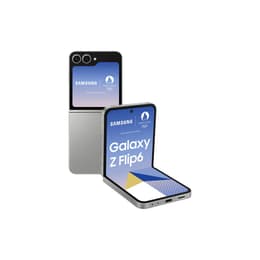
Galaxy Z Flip6
Galaxy Z Flip6
Starting at

Refurbished price:420.00

Versus €1,199.99 new

See options
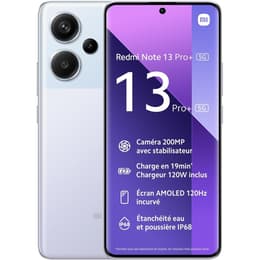
Xiaomi Redmi Note 13 Pro+
Starting at

Refurbished price:201.00

Versus €449.00 new

See options

Ratings

The Samsung Galaxy Z Flip6, released in mid-2024, and the Xiaomi Redmi Note 13 Pro+, launched in late 2023 and early 2024, represent distinct approaches to smartphone design and functionality. The Z Flip6 offers a compact, foldable clamshell form factor, while the Redmi Note 13 Pro+ provides a traditional, larger slab experience. Both devices operate on the Android platform, but they cater to different user preferences through their unique designs, performance capabilities, and camera systems.

Scores

Durability

The longevity of a smartphone is influenced by its release timeline, software support, and physical durability.

  • Release Timeline: The Galaxy Z Flip6 was officially announced in July 2024, making it a more recent device compared to the Redmi Note 13 Pro+, which saw its global release in January 2024. This difference in release dates impacts their respective software support cycles.
  • Software Support: Samsung has committed to an extensive support period for the Galaxy Z Flip6, promising seven generations of Android OS upgrades and seven years of security updates, extending its usability until approximately 2031. In contrast, the Xiaomi Redmi Note 13 Pro+ is expected to receive three major Android OS updates and four years of security updates, with support extending until 2028.
  • Physical Durability: The Galaxy Z Flip6 features a foldable design with an improved hinge and is rated IPX8 for water resistance, meaning it can withstand submersion in fresh water. Its cover screen and back panel are protected by Corning Gorilla Glass Victus 2, while the inner display uses Ultra-Thin Glass (UTG). The Redmi Note 13 Pro+ boasts an IP68 rating, offering comprehensive dust and water resistance, and its display is protected by Corning Gorilla Glass Victus.

Year of Release

2024

2023

Compatible with latest Update

Yes

Yes

OS

Android

Android

Foldable

Yes

No

Performance

Evaluating performance involves looking at how each device handles daily tasks, multitasking, and demanding applications.

  • Processing Power: The Galaxy Z Flip6 is equipped with a current-generation flagship processor, enabling it to handle intensive applications and multitasking with high responsiveness. The Redmi Note 13 Pro+ utilizes a capable mid-range processor that delivers smooth performance for everyday use and can manage more demanding tasks and gaming effectively.
  • Memory and Storage: The Galaxy Z Flip6 typically comes with 12GB of RAM and offers storage options of 256GB or 512GB, providing ample space and smooth multitasking capabilities. The Redmi Note 13 Pro+ is available with 8GB or 12GB of RAM and storage options up to 512GB, which is sufficient for most users' needs.
  • Battery Behavior: The Galaxy Z Flip6 features a 4000 mAh battery, which, combined with its efficient processor, offers improved battery life over its predecessor, often lasting a full day with moderate to heavy use. The Redmi Note 13 Pro+ includes a larger 5000 mAh battery, providing extended usage, often lasting around 1.5 days on a single charge. It also supports 120W fast charging, allowing for rapid recharges.

Memory (GB)

12 GB

12 GB

Screen quality

The display is a primary interaction point, and both devices offer distinct visual experiences.

  • Display Technology and Size: The Galaxy Z Flip6 features a 6.7-inch foldable Dynamic AMOLED 2X main display, which can be folded for portability. It also includes a 3.4-inch Super AMOLED cover screen for quick interactions. The Redmi Note 13 Pro+ offers a 6.67-inch AMOLED curved display, providing a large, immersive viewing area in a traditional form factor.
  • Resolution and Clarity: The main display of the Z Flip6 has a resolution of 1080 x 2640 pixels (FHD+), delivering clear visuals. The Redmi Note 13 Pro+ boasts a 1.5K resolution of 2712 x 1220 pixels, offering a slightly sharper viewing experience.
  • Brightness and Refresh Rate: Both devices feature a 120Hz adaptive refresh rate on their main displays, contributing to smooth scrolling and responsive interactions. The Redmi Note 13 Pro+ offers a peak brightness of 1800 nits, ensuring good visibility even in bright outdoor conditions. The Z Flip6's main display is also noted for being very bright, even outdoors.

Resolution

1080 x 2640

1220 x 2712

Screen type

Foldable Dynamic LTPO AMOLED 2X

AMOLED

Audiovisual

Camera capabilities are a significant factor for many users, and both phones offer advanced imaging systems.

  • Rear Camera System: The Galaxy Z Flip6 features a dual-camera setup with a 50MP main sensor with Optical Image Stabilization (OIS) and a 12MP ultra-wide-angle lens. The Redmi Note 13 Pro+ comes with a triple-camera system, highlighted by a 200MP main sensor with OIS, an 8MP ultra-wide lens, and a 2MP macro lens.
  • Photography Performance: The Z Flip6's improved main camera captures photos with wide dynamic range and accurate exposure in daylight, and offers good video stabilization. However, some users note inconsistencies in portrait mode, low-light noise, and occasional white balance issues. The Redmi Note 13 Pro+'s 200MP sensor, with features like 16-in-1 pixel binning and 4x lossless zoom, delivers detailed images, particularly in well-lit conditions, and performs well in video recording.
  • Selfie and Video Features: The Z Flip6 has a 10MP front camera, but its foldable design allows users to utilize the higher-quality main rear camera for selfies, with the cover screen acting as a viewfinder. The Redmi Note 13 Pro+ includes a 16MP front camera for selfies and video calls. Both devices offer good video recording capabilities, with the Z Flip6 supporting sharp 4K videos at up to 60fps.

Main camera

50 megapixels

200 megapixels

Front camera

10 megapixels

16 megapixels

Miscellaneous

Beyond core features, several practical elements contribute to the overall user experience.

  • Connectivity and Ports: Both smartphones support 5G connectivity for fast mobile data. The Galaxy Z Flip6 includes Wi-Fi 6E and Bluetooth 5.3, while the Redmi Note 13 Pro+ features Wi-Fi 6 and Bluetooth 5.3. Both devices utilize a USB-C port for charging and data transfer. The Redmi Note 13 Pro+ notably omits a 3.5mm headphone jack.
  • Biometric Security: The Galaxy Z Flip6 incorporates a side-mounted fingerprint sensor and face recognition for secure unlocking. The Redmi Note 13 Pro+ features an under-display fingerprint sensor and face unlock.
  • Design and Handling: The Galaxy Z Flip6, weighing 187g, offers a unique compact form factor when folded, making it highly portable. When unfolded, it provides a full-sized smartphone experience. The Redmi Note 13 Pro+, at 204.5g, is a traditional slab phone with a glass front and a choice of glass or vegan leather back, offering a comfortable grip with its curved display.

Weight

187 g

204 g

Screen size (in)

6.7

6.67

Network

5G

5G

SIM card

Physical SIM + eSIM

Dual Physical SIM

Carrier compatibility

Unlocked

Unlocked

The Samsung Galaxy Z Flip6 and Xiaomi Redmi Note 13 Pro+ cater to different user priorities, each excelling in distinct areas. Users often praise the Galaxy Z Flip6 for its innovative foldable design, which offers portability without compromising on screen size when unfolded. Its extended software support and flagship-tier performance are also frequently highlighted as strong advantages. However, some users express concerns about the durability inherent to foldable screens and the camera's performance in challenging lighting conditions.

The Redmi Note 13 Pro+ receives commendation for its robust build quality, including an IP68 rating and Gorilla Glass Victus, along with its impressive 200MP main camera and exceptionally fast 120W charging. Its large battery capacity is also a common point of praise. Criticisms sometimes revolve around its software update policy, which, while improved, is not as extensive as some competitors.

Users prioritizing a compact, pocketable device with long-term software support and a unique form factor may find the Galaxy Z Flip6 well-suited to their needs. Its advanced AI features and ability to use the main camera for selfies also appeal to those seeking creative flexibility. Conversely, users who value a traditional smartphone experience with a large, vibrant display, a high-resolution camera for detailed photography, and rapid charging capabilities might lean towards the Redmi Note 13 Pro+. Both devices offer quality-assured refurbished options, providing an eco-friendly alternative for consumers looking to make informed and sustainable choices.


See all articles

Our recent comparisons







