

Galaxy Z Flip6 Vs iPhone 13 Pro

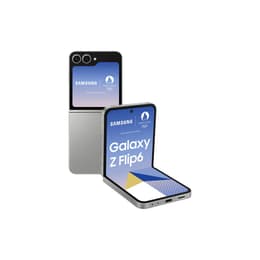
Galaxy Z Flip6
Galaxy Z Flip6
Starting at

Refurbished price:415.00

Versus €1,199.99 new

See options
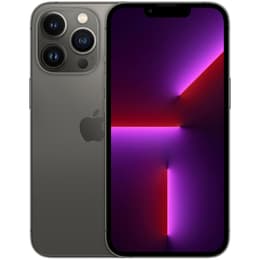
iPhone 13 Pro
iPhone 13 Pro
Starting at

Refurbished price:313.00

Versus €1,149.00 new

See options

Ratings

The Samsung Galaxy Z Flip6, released in July 2024, and the iPhone 13 Pro, launched in September 2021, represent distinct approaches to smartphone design and functionality. The Z Flip6 offers a unique foldable form factor running on Android with Samsung's One UI, while the iPhone 13 Pro is a traditional slab-style device powered by Apple's iOS. These differences in design and operating system are central to their user experience, catering to varying preferences for portability, interaction, and ecosystem integration.

Scores

Durability

When considering the long-term usability of these devices, their release timelines and software support are key factors.

  • Software Longevity: The Galaxy Z Flip6, being a 2024 release, is expected to receive seven years of major OS and security updates, offering extended software support. The iPhone 13 Pro, released in 2021, has already received iOS 16, iOS 17, and iOS 18 updates, and typically receives 5-6 years of major iOS updates from its launch.
  • Physical Durability: The iPhone 13 Pro features a Ceramic Shield front cover and an IP68 rating for water resistance, indicating good protection against dust and submersion. The Galaxy Z Flip6, while a foldable, has an enhanced Armor Aluminum frame and an IP48 rating, providing resistance to dust ingress and water splashes. Its internal screen, however, is more susceptible to scratches than the outer display.
  • Repairability: Both devices are designed with specific repair considerations. The iPhone 13 Pro's durability has been noted as robust in drop tests, though a case is still recommended for optimal protection. The Z Flip6's hinge has been improved for better shock and pressure handling, and the crease on its foldable display is less noticeable than previous models.

Year of Release

2024

2021

Compatible with latest Update

Yes

Yes

OS

Android

iOS

Foldable

Yes

No

Performance

The performance of both smartphones is tailored to their respective ecosystems, offering smooth operation for a variety of tasks.

  • Processing Power: The Galaxy Z Flip6 is equipped with a current-generation processor, which provides a significant performance boost over its predecessor and handles demanding applications and multitasking smoothly. The iPhone 13 Pro features a powerful processor with a five-core graphics processing unit, ensuring responsive performance for video applications, high-performance gaming, and camera features.
  • Multitasking and Responsiveness: With 12GB of RAM, the Galaxy Z Flip6 is well-suited for multitasking and handling AI features efficiently. The iPhone 13 Pro, with its optimized iOS, delivers a fluid user experience, even with intensive applications.
  • Battery Behavior: The Galaxy Z Flip6 includes a larger 4,000 mAh battery, which, combined with its efficient processor, can provide a full day of use for many users. The iPhone 13 Pro features a 3095 mAh battery, and its efficient processor and adaptive refresh rate display contribute to its battery longevity, with users reporting extended usage times.

Memory (GB)

12 GB

6 GB

Screen quality

The display technologies of these devices offer distinct visual experiences, influenced by their form factors and panel types.

  • Display Technology and Clarity: The Galaxy Z Flip6 features a 6.7-inch folding Dynamic AMOLED 2X main display with a 2640 x 1080 pixel resolution, offering vibrant colors and deep blacks. It also has a 3.4-inch Super AMOLED cover screen with a 720 x 748 pixel resolution. The iPhone 13 Pro boasts a 6.1-inch Super Retina XDR OLED display with a 2532 x 1170 pixel resolution at 460 pixels per inch, providing crisp image quality.
  • Brightness and Refresh Rate: The Z Flip6's main display supports a 120Hz refresh rate and can reach up to 2,600 nits peak brightness for HDR content, making it highly visible outdoors. The iPhone 13 Pro features ProMotion technology, offering an adaptive refresh rate up to 120Hz, which adjusts dynamically to content for smoother scrolling and improved battery efficiency. Its display can reach 1000 nits typical brightness and 1200 nits peak brightness for HDR.
  • Unique Display Characteristics: The Z Flip6's foldable main screen has a significantly minimized crease compared to previous models, enhancing the viewing experience. The iPhone 13 Pro's display is known for its consistent brightness and color accuracy.

Resolution

1080 x 2640

1170 x 2532

Screen type

Foldable Dynamic LTPO AMOLED 2X

Super Retina XDR OLED

Audiovisual

Both devices offer advanced camera systems, each with unique strengths for capturing photos and videos.

  • Rear Camera Systems: The Galaxy Z Flip6 features a dual-camera setup with a 50MP wide-angle lens and a 12MP ultra-wide-angle lens. The 50MP main sensor is an upgrade over its predecessor and performs well in various conditions, particularly in well-lit environments. The iPhone 13 Pro has a triple 12MP camera system, including a telephoto, wide, and ultra-wide lens, with larger sensors for improved light gathering.
  • Photography Features: The Z Flip6 includes features like FlexCam, which utilizes the cover screen for selfies and group photos, and Nightography for brighter low-light shots. The iPhone 13 Pro offers a 3x optical zoom telephoto lens, an upgraded ultra-wide lens with autofocus for macro photography, and Night Mode on all three rear cameras. It also features Cinematic Mode for video with shallow depth of field and ProRes video recording.
  • Front Camera and Video: The Z Flip6 has a 10MP selfie camera. The iPhone 13 Pro features a 12MP TrueDepth front camera with Portrait mode and Cinematic mode for video. Both devices are capable of recording 4K video at 60 frames per second.

Main camera

50 megapixels

12 megapixels

Front camera

10 megapixels

12 megapixels

Miscellaneous

Beyond their core features, both smartphones offer a range of connectivity, sensor, and design elements that influence daily use.

  • Connectivity and Ports: Both the Galaxy Z Flip6 and iPhone 13 Pro support 5G connectivity for fast mobile data. The Z Flip6 includes Wi-Fi 6E and Bluetooth 5.3, along with a USB-C port for charging and data transfer. The iPhone 13 Pro supports Wi-Fi 6 and Bluetooth 5.0, utilizing a Lightning port.
  • Biometric Authentication: The Galaxy Z Flip6 typically features a side-mounted fingerprint sensor for secure unlocking. The iPhone 13 Pro relies on Face ID, Apple's facial recognition system, for secure authentication.
  • Design and Handling: The Z Flip6's foldable design allows it to be compact when closed, measuring 85.1 x 71.9 x 14.9mm, and expanding to 165.1 x 71.9 x 6.9mm when unfolded, with a weight of 187 grams. The iPhone 13 Pro has a traditional slab design, with dimensions of 146.7 x 71.5 x 7.65mm and a weight of 204 grams, featuring a matte glass back and stainless steel frame.

Weight

187 g

203 g

Screen size (in)

6.7

6.1

Network

5G

5G

SIM card

Physical SIM + eSIM

Physical SIM + eSIM

Carrier compatibility

Unlocked

Unlocked

The Samsung Galaxy Z Flip6 and iPhone 13 Pro cater to different user priorities, largely defined by their form factors and operating systems. Users often praise the Z Flip6 for its innovative foldable design, which offers enhanced portability and a unique user experience, particularly with its versatile FlexCam features. Its extended software support and improved battery life are also frequently highlighted as positive aspects. However, some users note that the cover screen's functionality could be more expansive, and while improved, the internal screen's crease remains a characteristic of foldable technology.

The iPhone 13 Pro is consistently lauded for its robust performance, exceptional camera system with features like Cinematic Mode and ProRes video, and the smooth, integrated experience of iOS. Its ProMotion display is also a significant draw for those seeking fluid visuals. Criticisms sometimes revolve around its traditional design lacking the novelty of foldables, and its reliance on the Lightning port rather than a more universal USB-C.

Users prioritizing a compact, innovative design with a focus on unique photographic angles and the Android ecosystem will find the Galaxy Z Flip6 well-suited to their needs. Conversely, those who value a consistently powerful, traditional smartphone experience with a highly capable camera system and the Apple ecosystem will likely lean towards the iPhone 13 Pro. Both devices offer a quality-assured refurbished option, providing an eco-friendly alternative for consumers.


See all articles

Our recent comparisons