

Galaxy S9 Vs Galaxy Z Flip3 5G

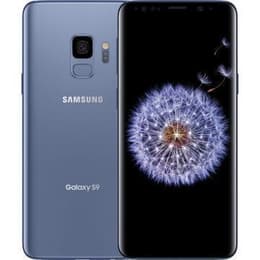
Galaxy S9
Galaxy S9
Starting at

Refurbished price:140.00

Versus €499.00 new

See options
Galaxy Z Flip3 5G
Galaxy Z Flip3 5G
Starting at

Refurbished price:320.00

Versus €1,299.00 new

See options

Ratings

The Samsung Galaxy S9, released in March 2018, represents a traditional smartphone design, while the Samsung Galaxy Z Flip3 5G, launched in August 2021, introduced a foldable form factor. Both devices operate on the Android platform, but they cater to different user experiences due to their distinct designs and technological advancements. The primary differentiators lie in their physical design, display technology, and the generational leap in internal components.

Scores

Durability

When considering the practical lifespan of these devices, their release timelines and software support policies are key factors.

  • Release Timeline and Software Support: The Galaxy S9, released in March 2018, concluded its official software updates with Android 10 and its security updates in April 2022. In contrast, the Galaxy Z Flip3 5G, launched in August 2021, received three major Android OS updates, concluding with Android 15-based One UI 7, and was promised five years of security updates, with official software support ending in September 2025. This means the Z Flip3 5G offers a longer period of official software and security support.
  • Repairability: The Galaxy S9 received a low repairability score of 4 out of 10 from iFixit, primarily due to its glass construction and strong adhesive, making repairs challenging. The Galaxy Z Flip3 5G, with its complex foldable design, is also not easily repairable, particularly its main display.
  • Expected Practical Lifespan: For users prioritizing the latest software features and security patches, the Galaxy Z Flip3 5G offers a more current experience. However, for those comfortable with older software or exploring community-supported updates, the Galaxy S9 can still function, though without official manufacturer support.

Year of Release

2018

2021

Compatible with latest Update

No

Yes

OS

Android

Android

Foldable

No

Yes

Performance

The performance of these two devices reflects the advancements in mobile technology over several years, impacting how smoothly they handle applications and multitasking.

  • Processor Capabilities: The Galaxy S9 is equipped with a processor from 2018, which capably handles everyday tasks and moderate applications. The Galaxy Z Flip3 5G features a more recent processor, providing a noticeable boost in speed and efficiency for demanding applications, complex multitasking, and modern mobile gaming.
  • RAM and Storage: The Galaxy S9 typically comes with 4GB of RAM, which is sufficient for basic multitasking. The Galaxy Z Flip3 5G includes 8GB of RAM, allowing for smoother transitions between numerous open applications and more intensive background processes. Both devices offer various internal storage options, with the S9 also supporting expandable storage via a microSD card, a feature not present in the Z Flip3 5G.
  • Battery Behavior: The Galaxy S9 has a 3000mAh battery, which user reviews often describe as providing average battery life, sometimes requiring a charge before the end of a full day of heavy use. The Galaxy Z Flip3 5G has a 3300mAh battery, but its more powerful processor and higher refresh rate display can lead to shorter battery life for heavy users, often necessitating more frequent charging.

Memory

4 GB

8 GB

Screen quality

The display experience differs significantly between these two smartphones, primarily due to the Z Flip3 5G's foldable design and newer display technology.

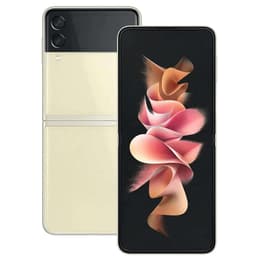
  • Display Technology and Size: The Galaxy S9 features a 5.8-inch Super AMOLED 'Infinity Display' with a curved design, offering deep blacks and vibrant colors. The Galaxy Z Flip3 5G boasts a 6.7-inch Foldable Dynamic AMOLED 2X main display, which folds in half, and a 1.9-inch Super AMOLED cover screen for quick notifications and interactions when folded.
  • Resolution and Refresh Rate: The S9 provides a high resolution of 1440x2960 pixels (QHD+), resulting in a very sharp image. The Z Flip3 5G's main display has a resolution of 1080x2640 pixels (FHD+), which is clear for most content, and features a 120Hz refresh rate for smoother scrolling and animations, a capability not present on the S9.
  • Brightness and Durability: Both displays offer good brightness, with the Z Flip3 5G capable of reaching higher peak brightness levels for better outdoor visibility. The S9's screen is protected by Gorilla Glass 5. The Z Flip3 5G's main foldable display uses Ultra Thin Glass (UTG) with a plastic protective layer, which is more susceptible to scratches than traditional smartphone glass, and a visible crease is present where the screen folds.

Resolution

1440 x 2960

1080 x 2640

Screen type

Super AMOLED

Foldable Dynamic AMOLED 2X

Audiovisual

Both devices offer capable camera systems, but the Galaxy Z Flip3 5G benefits from newer processing and a dual-camera setup, while the S9 introduced innovative variable aperture technology.

  • Rear Camera System: The Galaxy S9 features a single 12-megapixel rear camera with a unique variable aperture (f/1.5 and f/2.4), designed to adapt to different lighting conditions, excelling particularly in low-light environments. The Galaxy Z Flip3 5G comes with a dual-camera setup on the rear, consisting of a 12-megapixel wide-angle lens and a 12-megapixel ultra-wide-angle lens, offering more versatility in framing shots.
  • Photography Performance: The S9 was highly praised for its image quality upon release, especially its low-light performance and Super Slow-motion video capabilities. The Z Flip3 5G's cameras are considered competent for everyday photography, producing good results with Samsung's characteristic vibrant colors, though some user reviews note they are not on par with the highest-end flagship cameras of its time, particularly lacking a telephoto lens.
  • Front Camera and Video: Both phones include a front-facing camera for selfies and video calls (8MP on S9, 10MP on Z Flip3 5G). The Z Flip3 5G's foldable design allows for creative selfie options using its main rear cameras and cover screen as a viewfinder. Video recording quality is solid on both, with the S9 offering 4K at 60fps and advanced slow-motion.

Main camera

12 megapixels

12 megapixels

Front camera

8 megapixels

10 megapixels

Miscellaneous

Beyond core features, several practical elements differentiate the user experience and utility of the Galaxy S9 and Galaxy Z Flip3 5G.

  • Connectivity and Ports: The Galaxy S9 supports 4G LTE networks and standard Wi-Fi (802.11 a/b/g/n/ac) and Bluetooth. It also retains a 3.5mm headphone jack and uses a USB-C port for charging and data transfer. The Galaxy Z Flip3 5G offers next-generation 5G connectivity, along with newer Wi-Fi 6 and Bluetooth 5.1/5.2 standards, providing faster wireless speeds and improved efficiency. It exclusively uses a USB-C port and does not include a 3.5mm headphone jack.
  • Biometric Security and Build: The S9 features multiple biometric options, including a rear-mounted fingerprint sensor, face unlock, and an iris scanner. The Z Flip3 5G integrates its fingerprint sensor into the side power button. Both devices feature premium builds with glass and aluminum. The S9 has an IP68 rating for water and dust resistance. The Z Flip3 5G boasts an IPX8 water resistance rating, a notable achievement for a foldable device, but it does not have an official dust resistance rating.
  • Form Factor and Handling: The Galaxy S9 is a traditional slab smartphone, weighing 163g. The Galaxy Z Flip3 5G's foldable design allows it to become significantly more compact when closed, enhancing portability, though it weighs slightly more at 183g.

Weight

163 g

183 g

Width

6,87 cm

7,22 cm

Height

14,77 cm

16,6 cm

Depth

0,85 cm

0,69 cm

Screen size (in)

5.8

6.7

Network

4G

5G

SIM card

Dual Physical SIM

Physical SIM + eSIM

Carrier compatibility

Unlocked

Unlocked

Connector

USB-C + Jack 3.5mm

USB-C

The Samsung Galaxy S9 and Galaxy Z Flip3 5G offer distinct experiences shaped by their respective eras of mobile technology. User feedback for the Galaxy S9 often praised its camera capabilities, particularly its low-light performance, and its vibrant display. Common criticisms included its average battery life for heavy users. For the Galaxy Z Flip3 5G, users frequently highlight its unique foldable design, improved cover screen functionality, and water resistance as significant advantages. However, its battery life is often cited as a concern, and the visible crease on the main display is a point of discussion among users.

Users prioritizing a compact, modern device with 5G connectivity and a unique form factor will find the Galaxy Z Flip3 5G well-suited to their needs. Its newer processor and longer software support timeline also make it a more future-ready option. Conversely, individuals who prefer a traditional smartphone design, value a 3.5mm headphone jack, and are content with an older, yet still capable, camera system might consider the Galaxy S9. For those looking to make a sustainable choice, both models are available as quality-assured refurbished options, extending their lifecycle and reducing electronic waste.


See all articles

Our recent comparisons