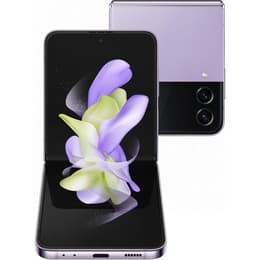
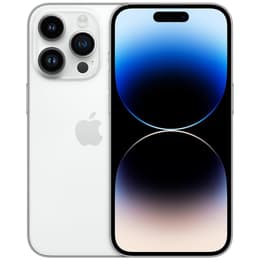

Galaxy Z Flip4 Vs iPhone 14 Pro

Galaxy Z Flip4
Galaxy Z Flip4
Starting at

Refurbished price:264.00

Versus €1,159.00 new

See options
iPhone 14 Pro
iPhone 14 Pro
Starting at

Refurbished price:424.00

Versus €1,339.00 new

See options

Ratings

The Samsung Galaxy Z Flip4 and the iPhone 14 Pro, both released in 2022, represent distinct approaches to smartphone design and functionality. The Galaxy Z Flip4 offers a unique foldable clamshell form factor running on Android, emphasizing portability and a compact design when closed. In contrast, the iPhone 14 Pro is a traditional slate smartphone operating on iOS, focusing on advanced camera capabilities, a powerful processor, and a premium user experience.

Scores

Durability

When considering the long-term usability of these devices, their release timelines and software support are key factors.

  • Release and Software Support: The Galaxy Z Flip4 was released in August 2022, while the iPhone 14 Pro followed in September 2022. Both devices have received consistent software updates since their launch. The Galaxy Z Flip4, running Android, typically receives several years of major OS updates and security patches, with Samsung generally providing five years of security updates from release. The iPhone 14 Pro, on the other hand, benefits from Apple's reputation for extended iOS support, often receiving major OS updates for five to six years, potentially extending its software longevity slightly further into the future.
  • Durability and Repairability: The iPhone 14 Pro features a Ceramic Shield front cover and a surgical-grade stainless steel frame, contributing to its robust build and IP68 water resistance. The Galaxy Z Flip4 boasts an IPX8 water resistance rating, but its foldable display, while innovative, is generally considered less durable than traditional smartphone screens and lacks dust resistance. Repairability for both devices can vary, with specialized tools and expertise often required for complex repairs, particularly for the foldable mechanism of the Z Flip4.
  • Expected Practical Lifespan: Both smartphones are built to offer several years of reliable performance. The iPhone 14 Pro's longer expected software update cycle might give it a slight edge in terms of future-proofing against software obsolescence. However, the unique folding mechanism of the Z Flip4 introduces a different set of considerations for long-term mechanical durability compared to a rigid smartphone.

Year of Release

2022

2022

Compatible with latest Update

Yes

Yes

OS

Android

iOS

Foldable

Yes

No

Performance

Both the Galaxy Z Flip4 and the iPhone 14 Pro deliver strong performance for daily tasks, though they achieve this with different underlying hardware architectures.

  • Processing Power and Responsiveness: The iPhone 14 Pro is equipped with a powerful current-generation processor that handles demanding applications, intensive gaming, and complex multitasking with notable smoothness and efficiency. Users often report a highly responsive interface and quick app loading times. The Galaxy Z Flip4 also features a high-performance processor, enabling it to manage everyday applications and multitasking effectively, providing a fluid user experience.
  • Multitasking and Storage: The Galaxy Z Flip4 typically comes with 8GB of RAM, which supports efficient multitasking across multiple applications. It offers storage options up to 512GB, providing ample space for most users, though it does not support expandable storage. The iPhone 14 Pro includes 6GB of RAM and offers a wider range of storage configurations, extending up to 1TB, catering to users with extensive storage needs for media and applications. Neither device offers a microSD card slot for storage expansion.
  • Battery Behavior: The iPhone 14 Pro generally provides a full day of use for many users, with its battery capacity and efficient hardware contributing to solid endurance. Some users, however, note that heavy usage, especially with features like the always-on display, can lead to more frequent charging. The Galaxy Z Flip4 features a larger battery capacity than its predecessor, offering improved endurance that typically lasts a full day for moderate users, though heavy usage may require a midday top-up.

Memory (GB)

8 GB

6 GB

Screen quality

The display experience on the Galaxy Z Flip4 and iPhone 14 Pro differs significantly due to their form factors and display technologies.

  • Display Technology and Clarity: The iPhone 14 Pro features a 6.1-inch Super Retina XDR OLED display, known for its deep blacks, vibrant colors, and sharp text clarity with a resolution of 2556 x 1179 pixels and approximately 460 pixels per inch. The Galaxy Z Flip4's main display is a 6.7-inch foldable AMOLED panel, offering vivid colors and good clarity at 1080 x 2640 pixels, resulting in about 426 pixels per inch. The Z Flip4 also includes a smaller external cover screen for quick information and interactions when folded.
  • Brightness and Refresh Rate: The iPhone 14 Pro's display can reach a typical brightness of 1000 nits and a peak outdoor brightness of up to 2000 nits, ensuring excellent visibility even in bright sunlight. It also features ProMotion technology, offering an adaptive refresh rate that can scale from 1Hz to 120Hz for smooth scrolling and animations while conserving battery. The Galaxy Z Flip4's main display also supports an adaptive 120Hz refresh rate, providing a fluid visual experience, and offers good brightness for various lighting conditions.
  • Viewing Experience: The iPhone 14 Pro's traditional flat display provides a consistent viewing surface, enhanced by features like the Dynamic Island for notifications and activities. The Galaxy Z Flip4 offers a unique viewing experience with its foldable screen, allowing for a compact device when closed and a larger screen when unfolded. The crease in the foldable display is present but often becomes less noticeable during active use.

Resolution

1080 x 2640

1179 x 2556

Screen type

Foldable Dynamic AMOLED 2X

LTPO Super Retina XDR OLED

Audiovisual

Both devices offer advanced camera systems, but they cater to slightly different photographic priorities and user experiences.

  • Main Camera Capabilities: The iPhone 14 Pro features a sophisticated triple-camera system, highlighted by a 48-megapixel main sensor that utilizes a quad-pixel design to capture detailed 12-megapixel photos by default, with the option for full 48-megapixel ProRAW images. It also includes a 12-megapixel ultrawide and a 12-megapixel telephoto lens with 3x optical zoom. The Galaxy Z Flip4 comes with a dual-camera setup on the rear, featuring a 12-megapixel wide-angle lens and a 12-megapixel ultrawide lens.
  • Low-Light and Video Performance: The iPhone 14 Pro excels in low-light photography, with its larger main sensor and Photonic Engine processing delivering improved detail and reduced noise. Its video recording capabilities are also strong, offering features like Cinematic mode at 4K 24fps and Action mode for stabilized footage. The Galaxy Z Flip4 shows improvements in low-light performance compared to its predecessor, capturing brighter photos in challenging conditions. It supports 4K video recording at 60 frames per second.
  • Selfie Camera and Audio: The iPhone 14 Pro includes a 12-megapixel front camera with autofocus, providing sharp selfies and improved video call quality. The Galaxy Z Flip4 has a 10-megapixel selfie camera. Both devices offer good microphone quality for calls and recording, and their stereo speakers provide a capable audio experience for media consumption.

Main camera

12 megapixels

48 megapixels

Front camera

10 megapixels

12 megapixels

Miscellaneous

Beyond core features, several practical elements differentiate the user experience of these two smartphones.

  • Connectivity and Ports: Both the Galaxy Z Flip4 and iPhone 14 Pro support 5G connectivity for fast mobile data and Wi-Fi 6 (802.11ax) for high-speed wireless internet. The iPhone 14 Pro also introduced Emergency SOS via Satellite for communication in areas without cellular service. For physical connections, the Galaxy Z Flip4 uses a USB-C port, while the iPhone 14 Pro retains Apple's proprietary Lightning port. Both support Bluetooth for wireless accessories.
  • Security and Biometrics: The iPhone 14 Pro relies on Face ID for secure facial recognition. The Galaxy Z Flip4 features a side-mounted capacitive fingerprint sensor for biometric authentication, alongside facial recognition.
  • Design and Handling: The Galaxy Z Flip4's defining characteristic is its foldable design, allowing it to become significantly more compact when closed, making it highly pocketable. When unfolded, it offers a large screen. The iPhone 14 Pro has a traditional candy bar design, featuring a stainless steel frame and a weight of 206g. Some users find its weight and the prominent camera bump noticeable.

Weight

183 g

206 g

Screen size (in)

6.7

6.1

Network

5G

5G

SIM card

Physical SIM + eSIM

Physical SIM + eSIM

Carrier compatibility

Unlocked

Unlocked

Connector

USB-C

Lightning

User feedback for the iPhone 14 Pro often highlights its exceptional camera system, particularly its low-light performance and the versatility of its 48-megapixel main sensor. The vibrant and bright display, along with the interactive Dynamic Island, are also frequently praised. Some users, however, note its weight and the size of the camera module as minor drawbacks, and while battery life is generally good, it may not be a multi-day device for heavy users.

For the Galaxy Z Flip4, users appreciate its unique foldable form factor, which offers a blend of a large screen experience with compact portability. The improved battery life over its predecessor and the ability to use the cover screen for quick tasks are also well-received. Criticisms sometimes point to the inherent fragility of foldable screens compared to traditional glass, and some users desire more functionality from the cover display.

Users prioritizing a compact, stylish device that can easily fit into smaller pockets, along with the flexibility of a foldable screen, may find the Galaxy Z Flip4 well-suited to their needs. Its distinct design offers a fresh take on smartphone interaction. Conversely, users who prioritize a consistently robust camera system, a highly optimized and powerful traditional smartphone experience, and potentially longer software support will likely lean towards the iPhone 14 Pro. Both devices offer quality-assured refurbished options, providing an eco-friendly alternative for consumers looking to make informed and sustainable choices.


See all articles

Our recent comparisons








