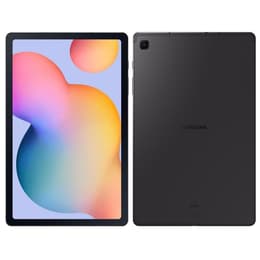
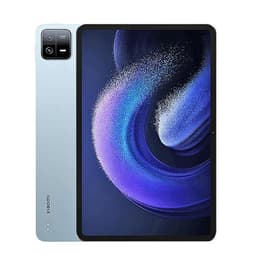


Galaxy Tab S6 Lite (10.4", 2024) Vs Xiaomi Pad 6 (11.0", 2023)

Galaxy Tab S6 Lite (10.4", 2024)
Starting at

Refurbished price:170.00

Versus €482.00 new

See options
Xiaomi Pad 6 (11.0", 2023)
Starting at

Refurbished price:235.39

Versus €699.00 new

See options

Ratings

The Samsung Galaxy Tab S6 Lite (2024) and the Xiaomi Pad 6 (2023) are two Android tablets designed to cater to different user needs, released approximately a year apart. While the Galaxy Tab S6 Lite (2024) focuses on providing a balanced experience with an included stylus, the Xiaomi Pad 6 (2023) emphasizes higher performance and a more advanced display. Both devices run on the Android operating system, offering a wide range of applications and customization options.

Scores

Durability

When considering the long-term usability of these tablets, their release timelines and software support policies are key differentiators.

  • Release and Software Support: The Samsung Galaxy Tab S6 Lite (2024) was released in March 2024, while the Xiaomi Pad 6 launched in April 2023 globally. Samsung typically offers a commitment of around four years of Android operating system updates and five years of security updates for its tablets, suggesting a longer period of official software support for the newer Tab S6 Lite (2024). In contrast, the Xiaomi Pad 6, initially expected to receive Android 15, will only be updated to HyperOS 2 based on Android 14, with security updates planned until June 2026. This difference means the Galaxy Tab S6 Lite (2024) is likely to receive major Android version updates for a longer duration.
  • Repairability and Build: Both tablets feature an aluminum frame and back, contributing to their durability. The Galaxy Tab S6 Lite (2024) maintains a similar construction to its predecessors, which have generally been considered robust for everyday use. The Xiaomi Pad 6 also boasts a slim aluminum unibody design, which users often find premium and resilient. Information on specific repairability scores is not readily available for either model, but their metallic builds suggest a reasonable level of structural integrity.
  • Practical Lifespan: The practical lifespan for both devices will largely depend on individual usage patterns and the importance placed on the latest software features. Users prioritizing the most current Android versions and security patches will find the Galaxy Tab S6 Lite (2024) offers a longer supported life. For those less concerned with the absolute latest OS version and more focused on hardware performance for a few years, the Xiaomi Pad 6 remains a capable device, though its major OS update cycle is nearing its end.

Year of Release

2024

2023

Compatible with latest Update

Yes

No

OS

Android

Android

Performance

The performance capabilities of these two tablets present a notable contrast, particularly in their processing power and multitasking efficiency.

  • Processing Power and Responsiveness: The Samsung Galaxy Tab S6 Lite (2024) is equipped with an Exynos 1280 processor, which provides adequate performance for general tasks such as web browsing, video streaming, and note-taking. Users report it handles basic tasks well, but some note occasional lag when multitasking or running more demanding applications. The Xiaomi Pad 6, powered by a Snapdragon 870 SoC, offers a significantly more robust performance profile, capable of smoothly handling demanding apps, graphic-intensive games, and efficient multitasking. This difference means the Xiaomi Pad 6 provides a more fluid and responsive experience for power users.
  • Memory and Storage: The Galaxy Tab S6 Lite (2024) typically comes with 4GB of RAM, which can be a limiting factor for extensive multitasking, leading to apps reloading when switching between them. It offers 64GB or 128GB of internal storage, expandable via microSD card up to 1TB. The Xiaomi Pad 6 is available with 6GB or 8GB of RAM, providing a more comfortable experience for running multiple applications simultaneously without significant slowdowns. Its storage options include 128GB and 256GB, which is generally sufficient for most users.
  • Battery Behavior: The Galaxy Tab S6 Lite (2024) features a 7040mAh battery, rated for up to 14 hours of video playback. The Xiaomi Pad 6 houses a larger 8840mAh battery, which users report can last for 14-16 hours of mixed use or up to 18 hours of video playback, indicating strong endurance for extended sessions. Both tablets offer reliable battery life for a full day of typical use, with the Xiaomi Pad 6 potentially offering more headroom for heavy usage.

Memory (GB)

4 GB

6 GB

Processor

Exynos 1280

Qualcomm SM8250-AC Snapdragon 870 5G

Screen quality

The visual experience on these tablets is shaped by their distinct display technologies and specifications.

  • Display Technology and Resolution: The Samsung Galaxy Tab S6 Lite (2024) features a 10.4-inch TFT LCD display with a resolution of 2000 x 1200 pixels. While this resolution provides clear visuals for general content, some users have noted that the screen clarity is not as vibrant as higher-end displays. The Xiaomi Pad 6 boasts an 11.0-inch IPS LCD display with a sharper WQHD+ resolution of 2880 x 1800 pixels and a higher pixel density of 309 PPI. This results in noticeably crisper images and more detailed text, enhancing the viewing experience for high-resolution content.
  • Brightness and Refresh Rate: The Galaxy Tab S6 Lite (2024) has a standard 60Hz refresh rate, which is typical for many tablets and provides a smooth enough experience for most everyday interactions. Its brightness levels are generally adequate for indoor use, though some users find it challenging to view in bright outdoor sunlight. The Xiaomi Pad 6 offers a significantly smoother visual experience with its 144Hz refresh rate, making scrolling and animations appear fluid. It also supports Dolby Vision, contributing to a more dynamic and vibrant visual output, and its brightness levels are generally well-suited for various lighting conditions.
  • Screen Size and Viewing Experience: With a 10.4-inch screen, the Galaxy Tab S6 Lite (2024) offers a compact and portable viewing area. The Xiaomi Pad 6 provides a slightly larger 11.0-inch display, which can enhance immersion for media consumption and provide more screen real estate for productivity tasks. The higher resolution and refresh rate of the Xiaomi Pad 6 contribute to a more premium and engaging viewing experience overall, particularly for users who prioritize media and gaming.

Resolution

1200 x 2000

1800 x 2880

Screen type

TFT LCD

IPS LCD

Pixel density

230ppp

310ppp

Audiovisual

While tablets are not typically primary photography devices, their camera systems and audio capabilities are important for video calls, document scanning, and media consumption.

  • Camera System Capabilities: The Samsung Galaxy Tab S6 Lite (2024) features an 8MP rear camera with autofocus and a 5MP front camera. These cameras are suitable for basic photography, scanning documents, and video conferencing in well-lit environments. Users generally find the camera performance to be competent for its class, but not exceptional. The Xiaomi Pad 6 comes with a 13MP rear camera with PDAF and the ability to record 4K video at 30fps, along with an 8MP front camera. This setup offers higher resolution and more advanced video recording capabilities, making it more versatile for capturing moments or participating in high-quality video calls.
  • Low-Light and Everyday Photography: Both tablets perform adequately in good lighting conditions for casual shots. In low-light scenarios, neither device is expected to excel, as is common with most tablets. The higher megapixel count and features like PDAF on the Xiaomi Pad 6's rear camera may offer slightly better detail and focus in everyday photography compared to the Galaxy Tab S6 Lite (2024).
  • Audio and Media Experience: The Galaxy Tab S6 Lite (2024) includes stereo speakers, providing a decent audio experience for casual listening and video playback. It also retains a 3.5mm headphone jack, offering flexibility for wired audio connections. The Xiaomi Pad 6 features quad speakers with Dolby Atmos support, delivering a more immersive and richer audio output, which is particularly beneficial for media consumption and gaming. The microphone quality on both devices is generally sufficient for video calls and voice recordings.

Miscellaneous

Beyond core performance and display, several practical elements contribute to the overall user experience of these tablets.

  • Connectivity Options: Both tablets support modern Wi-Fi standards for reliable internet access. The Samsung Galaxy Tab S6 Lite (2024) supports Wi-Fi 802.11 a/b/g/n/ac (dual-band) and Bluetooth 5.3. The Xiaomi Pad 6 steps up with Wi-Fi 6 (802.11ax) support, offering potentially faster and more stable wireless connections in compatible environments, and Bluetooth 5.2. Both offer Wi-Fi Direct and hotspot capabilities.
  • Port Types and Accessories: The Galaxy Tab S6 Lite (2024) features a USB Type-C 2.0 port and notably includes a 3.5mm headphone jack, which is a convenient addition for many users. A significant advantage of the Tab S6 Lite (2024) is the inclusion of the S Pen stylus in the box, enhancing its utility for note-taking and drawing. The Xiaomi Pad 6 comes with a more advanced USB Type-C 3.2 port, allowing for faster data transfer speeds and potentially external display output. While the Xiaomi Pad 6 supports a stylus and keyboard accessories, these are typically sold separately.
  • Sensors and Biometrics: Both tablets include essential sensors like accelerometers, gyroscopes, and ambient light sensors. The Galaxy Tab S6 Lite (2024) does not feature a fingerprint scanner but relies on face recognition for biometric authentication. The Xiaomi Pad 6 integrates a fingerprint scanner, often embedded in the power button, for quick and secure unlocking.
  • Build Materials and Handling: Both devices feature an aluminum back and frame, contributing to a premium feel and durability. The Galaxy Tab S6 Lite (2024) weighs around 465-467g and measures 7.0mm thick. The Xiaomi Pad 6 is slightly heavier at 490g but thinner at 6.51mm. The dimensions and weight of both tablets make them comfortable for extended handheld use, with the Xiaomi Pad 6 offering a slightly larger screen in a marginally thinner profile.

Weight

467 g

490 g

Screen size (in)

10.4

11.0

Network

Wi-Fi + 4G

Wi-Fi

Carrier compatibility

Unlocked

Without SIM Port

Connector

USB Type-C

USB Type-C

The Samsung Galaxy Tab S6 Lite (2024) and the Xiaomi Pad 6 (2023) cater to distinct user preferences within the Android tablet market. User feedback for the Galaxy Tab S6 Lite (2024) often highlights its value for basic tasks, note-taking with the included S Pen, and general content consumption. Common criticisms revolve around its 4GB RAM, which can lead to performance limitations during heavy multitasking, and a display that some users find less vibrant than alternatives. Despite these points, it is generally praised for its build quality and suitability for light use.

The Xiaomi Pad 6, on the other hand, receives significant praise for its high-resolution 144Hz display, powerful processor for its segment, and impressive battery life, making it a strong contender for media consumption, gaming, and more demanding productivity tasks. However, a frequent concern among users is Xiaomi's update policy, specifically the decision not to provide an Android 15 update, which has led to disappointment regarding its long-term software longevity. Some users also report occasional software stutters, particularly after certain updates.

Users prioritizing an integrated stylus experience for note-taking and drawing, coupled with a longer commitment to software updates, may find the Samsung Galaxy Tab S6 Lite (2024) well-suited to their needs. Its more recent release also provides a slight edge in terms of future-proofing for OS updates. Conversely, users who value a superior display for media and gaming, higher raw performance for demanding applications, and a more premium audio experience might lean towards the Xiaomi Pad 6. While its major OS update cycle is shorter, its hardware capabilities remain strong for several years of use. Both tablets offer a quality-assured refurbished option, providing an eco-friendly alternative for consumers.


See all articles

Our recent comparisons