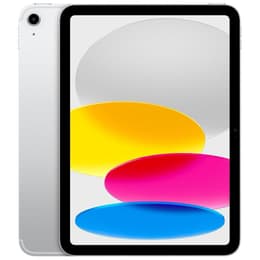

Galaxy Tab S6 Lite (10.4", 2024) Vs iPad 10 (2022, A14 series)

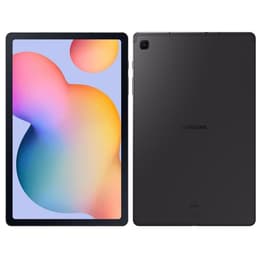
Galaxy Tab S6 Lite (10.4", 2024)
Starting at

Refurbished price:170.00

Versus €482.00 new

See options
iPad 10 (2022, A14 series)
Starting at

Refurbished price:292.00

Versus €449.00 new

See options

Ratings

The Samsung Galaxy Tab S6 Lite (2024) and the Apple iPad (10th generation, 2022) are two popular tablets designed for everyday use, offering distinct experiences within their respective ecosystems. While both devices aim to provide a versatile platform for productivity and entertainment, they differ in their core operating systems and hardware philosophies. The Galaxy Tab S6 Lite (2024) runs on Android with Samsung's One UI, emphasizing S Pen integration, whereas the iPad (2022) operates on iPadOS, known for its intuitive interface and robust app ecosystem. This comparison will explore their practical differences to help users determine which device aligns best with their needs.

Scores

Durability

When considering the long-term usability of a tablet, factors such as software support and physical resilience are important. The Galaxy Tab S6 Lite (2024) was released in March 2024, while the iPad (10th generation) launched in October 2022.

  • Software Longevity: The Galaxy Tab S6 Lite (2024) is expected to receive three major Android OS upgrades and five years of security updates, extending its software relevance for a considerable period. The iPad (2022), running iPadOS, typically benefits from 5-7 years of major software updates, offering a potentially longer period of access to the latest features and security enhancements.
  • Build Quality: Both tablets feature a metal body, contributing to a solid and durable feel. The iPad (2022) incorporates an aluminum chassis, while the Galaxy Tab S6 Lite (2024) also uses an aluminum back and frame.
  • Repairability: While specific repairability scores can vary, the iPad's unlaminated display, though potentially affecting visual quality slightly, can make screen repairs less complex and costly compared to laminated displays found in higher-end models.

Year of Release

2024

2022

Compatible with latest Update

Yes

Yes

OS

Android

iPadOS

Performance

The performance of a tablet directly impacts its responsiveness and ability to handle various applications, from casual browsing to more demanding tasks. Both devices offer capable internal components for their intended use cases.

  • Processing Power: The iPad (2022) is equipped with a powerful current-generation chip that provides smooth performance for multitasking, graphic-intensive games, and demanding applications. The Galaxy Tab S6 Lite (2024) features an octa-core processor that handles everyday tasks and moderate multitasking efficiently.
  • Multitasking and Responsiveness: Users of the iPad (2022) generally report a highly fluid experience, with applications opening quickly and seamless transitions between tasks. The Galaxy Tab S6 Lite (2024) offers a responsive experience for general use, with the ability to run multiple applications side-by-side.
  • Storage and Memory: Both tablets come with 4GB of RAM. The Galaxy Tab S6 Lite (2024) offers 64GB or 128GB of internal storage, with the added flexibility of expanding storage up to 1TB via a microSD card. The iPad (2022) is available with 64GB or 256GB of internal storage, without an option for expandable storage.
  • Battery Life: The Galaxy Tab S6 Lite (2024) houses a 7040 mAh battery, providing an estimated 14 hours of video playback, with real-world usage often ranging from 7.5 to 11 hours depending on the task. The iPad (2022) has a 28.6 Wh battery, which Apple states delivers up to 10 hours of web surfing or video playback over Wi-Fi, with some tests showing around 6-10 hours in varied usage.

Memory (GB)

4 GB

4 GB

Screen quality

The display is a primary interface for any tablet, influencing everything from reading to media consumption and creative work. Both tablets offer large screens suitable for a variety of tasks.

  • Display Technology and Size: The Galaxy Tab S6 Lite (2024) features a 10.4-inch TFT LCD display. The iPad (2022) comes with a slightly larger 10.9-inch Liquid Retina IPS LCD display.
  • Resolution and Clarity: The Galaxy Tab S6 Lite (2024) offers a resolution of 2000 x 1200 pixels, resulting in a pixel density of 224 PPI. The iPad (2022) provides a higher resolution of 2360 x 1640 pixels, with a pixel density of 264 PPI, contributing to sharper text and images.
  • Brightness and Color: The iPad (2022) boasts a typical brightness of 500 nits and supports True Tone technology for adaptive white balance. The Galaxy Tab S6 Lite (2024) offers a clear display with vibrant colors, suitable for general viewing.
  • Refresh Rate: Both tablets feature a standard 60Hz refresh rate, which is suitable for most daily tasks and media consumption.

Resolution

1200 x 2000

2360 x 1640

Screen type

TFT LCD

Liquid Retina display

Pixel density

230ppp

264ppp

Audiovisual

While tablets are not typically primary photography devices, their cameras are useful for video calls, scanning documents, and occasional photo capture. Both the Galaxy Tab S6 Lite (2024) and the iPad (2022) include capable camera systems.

  • Rear Camera: The Galaxy Tab S6 Lite (2024) is equipped with an 8-megapixel rear camera with autofocus. The iPad (2022) features a 12-megapixel wide rear camera with an f/1.8 aperture, capable of recording 4K video and supporting Smart HDR 3 for improved image quality in challenging lighting.
  • Front Camera: For video conferencing and selfies, the Galaxy Tab S6 Lite (2024) has a 5-megapixel front camera. The iPad (2022) stands out with a 12-megapixel ultra-wide front camera, uniquely positioned on the landscape edge, which is beneficial for video calls as it keeps the user centered with its Center Stage feature.
  • Video Recording: The Galaxy Tab S6 Lite (2024) supports 1080p video recording at 30 frames per second. The iPad (2022) offers more advanced video capabilities, including 4K video recording at various frame rates and slo-mo video support.
  • Audio Experience: The Galaxy Tab S6 Lite (2024) features dual speakers tuned by AKG with Dolby Atmos support, providing an immersive audio experience for media consumption. The iPad (2022) also includes stereo speakers, which are well-suited for watching movies and video calls.

Miscellaneous

Beyond core specifications, several practical features contribute to the overall user experience and connectivity of a tablet.

  • Stylus Support: The Galaxy Tab S6 Lite (2024) comes bundled with an S Pen, offering a precise and responsive tool for note-taking, drawing, and navigation. The iPad (2022) supports the first-generation Apple Pencil and the Apple Pencil (USB-C), though the first-generation model requires an adapter for charging and pairing.
  • Connectivity: The Galaxy Tab S6 Lite (2024) supports Wi-Fi 5 (802.11ac) and Bluetooth 5.3. The iPad (2022) offers more advanced Wi-Fi 6 (802.11ax) and Bluetooth 5.2, with optional 5G cellular connectivity for faster mobile data speeds.
  • Ports and Biometrics: Both tablets feature a USB-C port for charging and data transfer. The Galaxy Tab S6 Lite (2024) retains a 3.5mm headphone jack, which is absent on the iPad (2022). The iPad (2022) integrates Touch ID into its top button for secure authentication. The Galaxy Tab S6 Lite (2024) uses facial recognition for unlocking.
  • Design and Portability: Both devices have a slim profile, with the Galaxy Tab S6 Lite (2024) weighing around 465-467g and the iPad (2022) weighing 477-481g.

Weight

467 g

477 g

Screen size (in)

10.4

10.9

Network

Wi-Fi + 4G

Wi-Fi

Carrier compatibility

Unlocked

Without SIM Port

Choosing between the Samsung Galaxy Tab S6 Lite (2024) and the Apple iPad (10th generation, 2022) depends largely on individual priorities and existing technology ecosystems. Users frequently praise the Galaxy Tab S6 Lite (2024) for its included S Pen, making it a strong contender for note-taking and creative tasks without requiring an additional purchase. Its expandable storage is also a common positive, offering flexibility for those who need more space for media and documents. However, some users note that its performance, while adequate for daily use, may not match the fluidity of higher-end tablets, and the display's refresh rate is standard.

The iPad (2022) is often lauded for its robust performance, capable of handling demanding applications and offering a smooth user experience. Its camera system, particularly the landscape-oriented front camera with Center Stage, receives positive feedback for video calls. A frequent point of discussion for the iPad (2022) is its reliance on the first-generation Apple Pencil, which requires an adapter for charging, and the lack of expandable storage. The display, while vibrant, is unlaminated, which some users perceive as a minor trade-off.

Users prioritizing an integrated stylus experience for drawing and note-taking, along with the flexibility of expandable storage, may find the Galaxy Tab S6 Lite (2024) well-suited to their needs. Those who value a powerful and consistently smooth operating system, a strong app ecosystem, and enhanced video calling capabilities might lean towards the iPad (2022). Both tablets offer a reliable foundation for daily tasks, and considering a quality-assured refurbished option for either device can be an eco-friendly alternative.


See all articles

Our recent comparisons