

Compare models
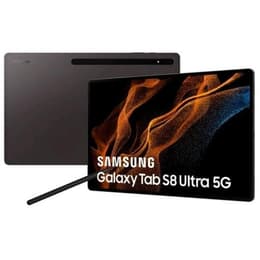
Galaxy Tab S6 Lite (10.4", 2022) Vs Galaxy Tab S8 Ultra (14.6", 2022)
- 1-year minimum warranty
- Free delivery on all orders
- Free 30-day returns
Differences at a glance
The Samsung Galaxy Tab S6 Lite (10.4", 2022) and the Samsung Galaxy Tab S8 Ultra (14.6", 2022) represent two entirely different approaches to portable computing from the same release year. While both tablets run on the Android operating system and support stylus input for note-taking and drawing, they cater to vastly different physical scales and workflow needs. The primary differentiators lie in their physical dimensions, screen real estate, and internal capability, positioning them for contrasting everyday roles.
Available Models
Colour
Storage
Scores
Durability
When examining hardware longevity and software support, both devices share a similar launch year but diverge significantly in processing overhead and hardware endurance over time.
- Software longevity: Both models receive regular operating system and security updates from Samsung, though higher-tier models typically benefit from extended system headroom to handle newer software features smoothly.
- Build and repairability: Each device features an aluminum unibody construction designed to withstand daily travel, while physical repairability remains standard for modern slimline electronics requiring professional handling.
- Expected lifespan: Users can anticipate several years of reliable service from both tablets, with the choice depending on whether demanding software updates will strain the lighter hardware over extended use.
Year of Release
2022
2022
OS
Android
Android
Performance
Processing power and multitasking capabilities create a clear dividing line between these two tablets, impacting how they handle heavy applications and everyday transitions.
- Multitasking and storage: The Galaxy Tab S8 Ultra provides vast memory configurations and expansive storage options to run multiple demanding windows simultaneously, whereas the Galaxy Tab S6 Lite focuses on streamlined single-app performance and moderate storage capacities.
- System responsiveness: Everyday tasks like web browsing, document editing, and streaming run smoothly on both devices, but heavier workflows such as high-resolution video editing or graphic design transition much faster on the higher-tier hardware.
- Battery behavior: The larger chassis of the ultra model houses a substantially bigger battery to support its extensive screen, while the compact model balances its modest power draw to maintain steady day-to-day operation.
Screen quality
Display characteristics form the most noticeable contrast during daily use, affecting everything from media consumption to split-screen productivity.
- Display technology: The Galaxy Tab S8 Ultra utilizes a massive, vibrant screen technology that delivers exceptional contrast and deep black levels, while the Galaxy Tab S6 Lite employs a standard panel that handles daily reading and casual viewing reliably.
- Viewing space and resolution: The expansive 14.6-inch canvas of the ultra model functions similarly to a desktop monitor, making it ideal for viewing multiple documents side by side, compared to the more portable 10.4-inch workspace of the lighter alternative.
- Outdoor and brightness performance: Both screens manage indoor lighting effectively, though high-end display panels typically offer better reflection handling and brightness adjustments for challenging lighting environments.
Resolution
1200x2000
1848 x 2960
Screen type
TFT LCD
Super AMOLED
Pixel density
230ppp
240ppp
Audiovisual
Media consumption, audio output, and optical capabilities vary to match the intended use cases of a portable notebook versus a desktop replacement.
- Camera systems: The Galaxy Tab S8 Ultra includes advanced front-facing ultra-wide camera setups designed for clear group video calls, whereas the Galaxy Tab S6 Lite features a single, straightforward front and rear camera arrangement for basic scanning and casual snapshots.
- Audio output: Multiple tuned speakers provide an immersive soundscape for movies and music on the larger device, while the compact model delivers clear stereo sound suited for individual listening and video calls.
- Microphone performance: Integrated multi-microphone arrays on both tablets isolate voices effectively during online meetings, ensuring clear communication regardless of the device size chosen.
Miscellaneous
Physical handling, connectivity standards, and daily portability define how easily each tablet integrates into specific user routines.
- Dimensions and weight: The Galaxy Tab S6 Lite offers a lightweight, highly portable form factor that slips easily into small bags, whereas the Galaxy Tab S8 Ultra functions as a large, stationary device best used with a dedicated stand or keyboard case.
- Accessory ecosystems: Both devices include stylus support in the box, but the larger model accommodates expansive keyboard attachments that transform it into a laptop replacement.
- Connectivity options: Modern wireless standards, including fast Wi-Fi and optional cellular network support, keep both tablets connected reliably while traveling or working remotely.
Weight
467 g
726 g
Screen size (in)
10.4
14.6
Network
Wi-Fi
Wi-Fi
Carrier compatibility
Without SIM Port
Without SIM Port
Connector
USB Type-C
USB Type-C
What the community thinks
Real-world feedback from users highlights distinct patterns of satisfaction and common considerations for both tablets. Owners of the Galaxy Tab S6 Lite frequently praise its lightweight design, excellent portability, and inclusion of a stylus for note-taking without excess bulk. At the same time, some users note that heavy multitasking can occasionally cause slower app switching. Conversely, owners of the Galaxy Tab S8 Ultra frequently highlight the expansive screen space and laptop-like productivity as major benefits, though many point out that its large footprint makes it less convenient for reading while traveling or holding for long periods.
Users prioritizing maximum portability, straightforward note-taking, and a compact reading format will find the Galaxy Tab S6 Lite well-suited to their daily routines. Meanwhile, users prioritizing expansive screen workspace, heavy multitasking, and media creation tools will lean toward the Galaxy Tab S8 Ultra. Choosing between these devices depends entirely on whether a lightweight notebook companion or a desktop-replacement screen best fits your workflow. For those exploring sustainable purchasing decisions, choosing a quality-assured refurbished option through Back Market provides an eco-friendly alternative that extends device lifecycles without compromising on performance standards.