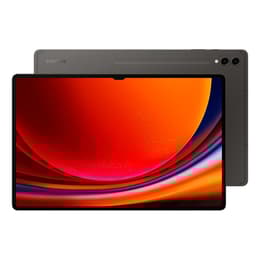


Galaxy Tab S8+ (12.4", 2022) Vs Galaxy Tab S9 Ultra (14.6", 2023)

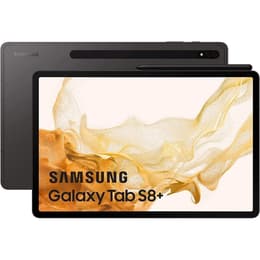
Galaxy Tab S8+ (12.4", 2022)
Starting at

Refurbished price:479.00

Versus €999.00 new

See options
Galaxy Tab S9 Ultra (14.6", 2023)
Starting at

Refurbished price:754.00

Versus €1,800.00 new

See options

Ratings

The Samsung Galaxy Tab S8 Plus, released in February 2022, and the Samsung Galaxy Tab S9 Ultra, launched in August 2023, represent two generations of Samsung's premium Android tablets. While both devices offer a robust Android experience with Samsung's One UI and come with an S Pen, they primarily differentiate themselves through screen size, processing power, and enhanced durability features in the newer model. Both aim to provide a versatile platform for productivity, creativity, and entertainment.

Scores

Durability

When considering the long-term usability of these tablets, several factors come into play, including software support and physical resilience.

  • Release Timeline: The Galaxy Tab S8 Plus was released in February 2022, while the Galaxy Tab S9 Ultra followed in August 2023. This difference means the S9 Ultra will generally receive software updates for a longer period.
  • Software Longevity: Samsung typically provides four major Android OS upgrades and five years of security updates for its flagship tablets. The Galaxy Tab S8 series is expected to receive updates until Android 16, with security support potentially ending in 2027. The Galaxy Tab S9 Ultra, being a year newer, is promised four major Android OS updates, likely extending to Android 17, and five years of security updates, offering about one additional year of official software support.
  • Physical Durability: Both tablets feature an aluminum frame and back, contributing to a premium feel and structural integrity. A notable difference is the Galaxy Tab S9 Ultra's IP68 rating for dust and water resistance, a feature not present in the Tab S8 Plus. This rating means the S9 Ultra can withstand immersion in fresh water up to 1.5 meters for up to 30 minutes. Repairability for both models involves delicate screen removal due to adhesive use, with the S9 Ultra receiving a moderate repairability score of around 6 out of 10.

Year of Release

2022

2023

Compatible with latest Update

Yes

Yes

OS

Android

Android

Performance

The performance of a tablet is crucial for handling demanding applications, multitasking, and ensuring a responsive user experience.

  • Processing Power: The Galaxy Tab S8 Plus is equipped with a processor from 2022, which delivers strong performance for most daily tasks and demanding applications. The Galaxy Tab S9 Ultra features a newer generation processor from 2023, offering enhanced CPU and GPU capabilities. This allows the S9 Ultra to handle intensive apps, complex multitasking, and graphic-heavy games with greater fluidity and less likelihood of slowdowns.
  • Multitasking and Responsiveness: The Tab S8 Plus typically comes with 8GB or 12GB of RAM, while the Tab S9 Ultra often starts with 12GB and can be configured with up to 16GB of RAM. The increased RAM in the S9 Ultra can contribute to smoother transitions between multiple open applications and more efficient handling of numerous browser tabs. Both tablets offer expandable storage via a microSD card slot, supporting up to 1TB.
  • Battery Behavior: The Galaxy Tab S8 Plus houses a 10,090 mAh battery, while the Galaxy Tab S9 Ultra has a larger 11,200 mAh battery. In video streaming tests, the S8 Plus demonstrated approximately 10 hours and 24 minutes of battery life. The S9 Ultra, despite its larger battery, showed around 9 hours and 30 minutes in similar tests, with some users reporting 9 to 12 hours of mixed use. The S8 Plus may offer slightly longer battery life in some scenarios due to its smaller display. Both support 45W fast charging, though chargers are sold separately.

Memory (GB)

8 GB

12 GB

Processor

Qualcomm SM8450 Snapdragon 8 Gen 1

Qualcomm SM8550-AC Snapdragon 8 Gen 2

Screen quality

The display is a primary interaction point for tablets, influencing everything from media consumption to productivity.

  • Display Technology and Size: Both tablets feature AMOLED display technology, known for producing deep blacks and vibrant colors. The Galaxy Tab S8 Plus has a 12.4-inch Super AMOLED display. The Galaxy Tab S9 Ultra boasts a larger 14.6-inch Dynamic AMOLED 2X display. The S9 Ultra's larger screen provides a more expansive and immersive viewing area, which can be particularly beneficial for media consumption or working with multiple windows.
  • Resolution and Clarity: The Tab S8 Plus offers a resolution of 2800 x 1752 pixels. The Tab S9 Ultra features a resolution of 2960 x 1848 pixels. Both resolutions provide sharp and clear visuals for typical viewing distances.
  • Brightness and Refresh Rate: Both tablets support a 120Hz refresh rate, ensuring smooth scrolling and fluid animations. The Galaxy Tab S9 Ultra offers a higher peak brightness of 930 nits, which significantly improves visibility and color accuracy when used outdoors or in brightly lit environments. The S8 Plus's brightness, while good, is not as high, which might make outdoor use more challenging.

Resolution

1752 x 2800

1848 x 2960

Screen type

Super AMOLED

Dynamic AMOLED 2X

Pixel density

270ppp

240ppp

Audiovisual

While tablets are not typically primary photography devices, their camera systems are important for video calls, document scanning, and occasional photo capture.

  • Rear Camera System: The Galaxy Tab S8 Plus features a dual rear camera setup with a 13-megapixel main lens and a 6-megapixel ultrawide lens. The Galaxy Tab S9 Ultra also has a dual rear camera system, comprising a 13-megapixel main lens and an 8-megapixel ultrawide lens. Both are capable of capturing decent images in good lighting conditions.
  • Front Camera System: For video conferencing and selfies, the Tab S8 Plus includes a 12-megapixel ultrawide front camera with auto-framing capabilities. The Tab S9 Ultra enhances this with a dual front camera setup, featuring two 12-megapixel lenses (one wide and one ultrawide). This dual setup on the S9 Ultra is particularly well-suited for high-quality video calls and offers more versatility for group selfies.
  • Video Recording and Audio: Both tablets support 4K video recording at 30 frames per second. The S9 Ultra's main rear camera also includes electronic stabilization for smoother video capture. For audio, both devices are equipped with quad stereo speakers tuned by AKG and support Dolby Atmos, providing a rich and immersive sound experience for media consumption. The S9 Ultra's speakers are noted for their robust output, capable of filling a small room.

Miscellaneous

Beyond core specifications, several practical features contribute to the overall user experience and device utility.

  • Connectivity: Both tablets offer robust connectivity options. The Galaxy Tab S8 Plus supports Wi-Fi 6 and Bluetooth 5.2, with optional 5G connectivity. The Galaxy Tab S9 Ultra upgrades to Wi-Fi 6E and Bluetooth 5.3, also with optional 5G, providing potentially faster and more stable wireless connections, especially with compatible Wi-Fi 6E routers.
  • Ports and Biometrics: Both devices feature a USB-C 3.2 port for charging and data transfer. For security and convenience, both tablets incorporate an in-screen fingerprint sensor. The Galaxy Tab S9 Ultra additionally offers face recognition for unlocking the device.
  • Dimensions, Weight, and Handling: The Galaxy Tab S8 Plus measures 285 x 185 x 5.7mm and weighs 567g (Wi-Fi model). The Galaxy Tab S9 Ultra is significantly larger and heavier at 326.4 x 208.6 x 5.5mm and 732g (Wi-Fi model). The S9 Ultra's larger size provides more screen real estate but can make it feel less portable and more unwieldy for handheld use, often requiring it to be propped up.
  • S Pen Integration: Both tablets come with an S Pen included in the box, offering a versatile tool for note-taking, drawing, and navigation. A notable enhancement in the S9 Ultra is that its S Pen is also IP68 rated for water and dust resistance, matching the tablet's durability.

Weight

567 g

732 g

Screen size (in)

12.4

14.6

Network

Wi-Fi

Wi-Fi

Carrier compatibility

Without SIM Port

Without SIM Port

Connector

USB Type-C

USB Type-C

User feedback for the Galaxy Tab S8 Plus often praises its balanced combination of screen size, strong performance, and included S Pen, making it a versatile device for both work and entertainment. Some common criticisms include the perception that Android tablet software can sometimes feel less optimized for larger screens and that charging speeds, while fast, could be improved given the battery size.

The Galaxy Tab S9 Ultra is frequently lauded for its expansive and vibrant display, powerful performance that handles demanding tasks with ease, and its enhanced durability with an IP68 rating. However, its considerable size can make it less comfortable to handle for extended periods, and some users note that the screen can be reflective in bright outdoor conditions.

For users prioritizing a balance between screen size and portability, who need strong performance for everyday tasks, creative work, and media consumption, the Galaxy Tab S8 Plus remains a capable choice. Its slightly more compact form factor might appeal to those who frequently use their tablet handheld or on the go.

Conversely, the Galaxy Tab S9 Ultra is well-suited for users who demand the largest possible screen for immersive media viewing, extensive multitasking, or professional creative applications where maximum screen real estate is paramount. Its cutting-edge processor and improved durability also make it a strong contender for those seeking the latest in tablet technology and resilience.

Both tablets offer a compelling Android experience, and considering a quality-assured refurbished option for either model can be a sustainable choice for consumers.


See all articles

Our recent comparisons