

Compare models
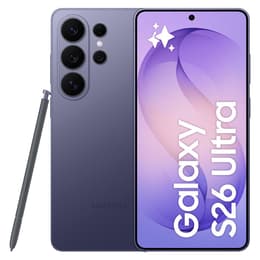
Galaxy S26 Ultra Vs Xiaomi Redmi Note 14 4G
- 1-year minimum warranty
- Free delivery on all orders
- Free 30-day returns
Differences at a glance
The Samsung Galaxy S26 Ultra (2026) and the Xiaomi Redmi Note 14 4G (2025) represent two distinct tiers within the modern smartphone landscape, catering to vastly different user priorities. While the Galaxy S26 Ultra functions as a high-end flagship equipped with advanced computing architecture and versatile capabilities, the Xiaomi Redmi Note 14 4G targets daily utility with a focus on core essentials and energy efficiency. Both devices operate on Android, though they use distinct software interfaces that shape the overall user experience.
Available Models
Colour
Storage
Scores
Durability
When examining software longevity and hardware endurance, both devices approach support timelines through different structural frameworks. The Galaxy S26 Ultra benefits from an extended multi-year software commitment, whereas the Xiaomi Redmi Note 14 4G provides standard generational updates typical of everyday-focused hardware.
- Software longevity: The Galaxy S26 Ultra provides prolonged operating system updates spanning several years, while the Xiaomi Redmi Note 14 4G covers standard security updates for its designated product cycle.
- Build endurance: The Galaxy S26 Ultra incorporates high-grade structural framing and reinforced glass protection, whereas the Xiaomi Redmi Note 14 4G utilizes standard protective layering suitable for typical handling.
- Practical lifespan: Users seeking long-term multi-year deployment will find the flagship hardware architecture maintains relevance longer under intensive workloads.
Year of Release
2026
2025
OS
Android
Android
Foldable
No
No
Performance
Processing capability and energy distribution vary significantly between the two models, directly influencing how they handle multitasking, gaming, and daily utilities. Memory configurations and thermal management also dictate long-term system stability under load.
- Multitasking and processing: The Galaxy S26 Ultra handles demanding applications, high-resolution video rendering, and heavy gaming smoothly, while the Xiaomi Redmi Note 14 4G manages daily communication, web browsing, and casual media playback reliably.
- Battery behavior: The Xiaomi Redmi Note 14 4G often delivers strong battery endurance due to its energy-efficient processor configuration, whereas the Galaxy S26 Ultra balances high-performance processing demands with a large battery capacity.
- Storage capacity: Both models offer scalable storage tiers starting from ample baseline capacities, though memory expansion options differ between the hardware designs.
Screen quality
Visual output and display responsiveness are central to daily interaction, with both manufacturers utilizing advanced panel technologies to ensure sharp text rendering and rich contrast levels.
- Display technology: Both devices feature vibrant AMOLED panels that deliver deep contrast levels and rich color reproduction for media consumption.
- Refresh rate and smoothness: High refresh rate support ensures fluid scrolling through menus and web pages on both models, contributing to responsive touch interactions.
- Outdoor visibility: High peak brightness levels on both screens allow for clear legibility under direct sunlight, though flagship panels maintain higher luminance thresholds for challenging lighting environments.
Resolution
1440 x 3120
1080x2400
Audiovisual
Imaging hardware and audio output cater to varied multimedia preferences, ranging from professional-grade photographic versatility to straightforward point-and-shoot convenience.
- Camera versatility: The Galaxy S26 Ultra incorporates a multi-lens system including dedicated telephoto optics for distant subjects, whereas the Xiaomi Redmi Note 14 4G relies on a high-resolution main sensor for everyday snapshots.
- Low-light performance: Advanced image processing on the flagship model captures greater detail in dim environments, while the mid-range alternative handles standard indoor lighting adequately.
- Media and audio: Stereo speaker configurations on both devices provide clear audio output for casual video viewing and hands-free calls.
Miscellaneous
Connectivity standards, physical dimensions, and daily ergonomics dictate how comfortably each device integrates into a traveler's or professional's daily routine.
- Connectivity and ports: The Galaxy S26 Ultra supports advanced 5G networks and modern wireless standards, while the Xiaomi Redmi Note 14 4G focuses primarily on 4G connectivity alongside legacy utility features like headphone jacks.
- Physical handling: The Galaxy S26 Ultra carries a heavier, more substantial footprint in the hand, whereas the Xiaomi Redmi Note 14 4G offers a comparatively lighter profile for extended one-handed use.
- Sustainable choices: For buyers exploring eco-friendly alternatives, choosing a quality-assured refurbished option from platforms like Back Market provides a sustainable path to acquiring high-performance technology.
Weight
214 g
196 g
Screen size (in)
6.9
6.67
Network
5G
4G
SIM card
Physical SIM + eSIM
Physical SIM + eSIM
Carrier compatibility
Unlocked
Unlocked
What the community thinks
User feedback from online communities highlights distinct preference patterns for each device. Owners of the Galaxy S26 Ultra frequently praise its robust processing power, extensive software support, and versatile camera system, though some note its heavier physical weight. Conversely, users of the Xiaomi Redmi Note 14 4G often highlight its reliable battery endurance, everyday utility, and straightforward interface as major advantages for routine tasks.
Users prioritizing advanced photography, maximum computing power, and long-term software updates will find the Galaxy S26 Ultra well-suited to their needs. Meanwhile, users prioritizing daily communication, energy efficiency, and straightforward functionality may lean toward the Xiaomi Redmi Note 14 4G. Evaluating these core operational differences ensures an informed decision that aligns with individual usage habits.