

Compare models

Galaxy A15 Vs Xiaomi 14T Pro

  • 1-year minimum warranty
  • Free delivery on all orders
  • Free 30-day returns
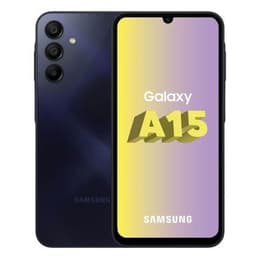
Galaxy A15
Starting at

Refurbished price:130.00

Versus €189.00 new

See options
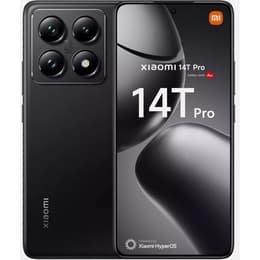
Xiaomi 14T Pro
Starting at

Refurbished price:399.00

Versus €950.00 new

See options

Differences at a glance

The Samsung Galaxy A15 and the Xiaomi 14T Pro are Android smartphones released at different points, targeting distinct user needs. The Galaxy A15, launched in late 2023 and early 2024, offers a balanced experience for everyday use, while the Xiaomi 14T Pro, introduced in September 2024, positions itself as a device with advanced capabilities and higher performance. Both devices operate on the Android platform, with the Galaxy A15 running Samsung's One UI and the Xiaomi 14T Pro featuring Xiaomi's HyperOS.

Available Models

Colour

Storage (GB)

Scores

Durability

When considering the long-term usability of a smartphone, factors like software support and physical resilience are key. These two devices offer different levels of longevity and build quality.

  • Software Support: The Samsung Galaxy A15 is expected to receive four major Android operating system upgrades and five years of security updates, extending its software relevance until approximately 2028 or 2029. The Xiaomi 14T Pro, being a more recent release with a higher-tier operating system, launched with Android 14 and has already received an update to Android 15, suggesting a robust update policy that will likely keep it current for several years.
  • Physical Durability: The Galaxy A15 features a glass front with a plastic back and frame, offering a practical build for daily handling. The Xiaomi 14T Pro, on the other hand, incorporates a metal frame and boasts an IP68 rating for dust and water resistance, indicating a higher level of protection against environmental elements.
  • Expected Lifespan: Users prioritizing extended software updates for a budget-friendly device will find the Galaxy A15's support commendable. For those seeking enhanced physical resilience and a device designed to withstand more demanding conditions, the Xiaomi 14T Pro's build and IP rating offer a longer practical lifespan in varied environments.

Year of Release

2023

2024

Compatible with latest Update

Yes

Yes

OS

Android

Android

Foldable

No

No

Performance

The performance capabilities of these two smartphones cater to different user expectations, largely influenced by their internal components and design philosophy.

  • Processing Power: The Samsung Galaxy A15 handles common applications and daily tasks smoothly, suitable for general browsing, social media, and light multitasking. While it can run popular games, it is not designed for the most graphically intensive titles or sustained heavy usage. The Xiaomi 14T Pro, equipped with a current-generation, high-performance processor, delivers a significantly more responsive experience, excelling in demanding applications, advanced multitasking, and high-fidelity mobile gaming.
  • Memory and Storage: The Galaxy A15 is available with various RAM configurations, typically up to 8GB, and storage options up to 256GB, which is sufficient for most users' app and media needs. The Xiaomi 14T Pro offers higher RAM configurations, starting at 12GB and going up to 16GB, paired with faster UFS 4.0 storage options reaching up to 1TB, providing ample headroom for power users and extensive media libraries.
  • Battery Behavior: Both devices feature a 5000 mAh battery capacity, providing a full day of typical use for many users. The Galaxy A15 supports 25W wired charging. The Xiaomi 14T Pro distinguishes itself with significantly faster 120W wired charging, capable of fully recharging the device in a short period, and also includes 50W wireless charging for added convenience.

Screen quality

The visual experience on a smartphone is largely defined by its display, and both the Galaxy A15 and Xiaomi 14T Pro offer distinct characteristics.

  • Display Technology and Clarity: The Samsung Galaxy A15 features a 6.5-inch Super AMOLED display with a Full HD+ resolution (1080 x 2340 pixels), providing clear and vibrant visuals for everyday content consumption. The Xiaomi 14T Pro boasts a larger 6.67-inch AMOLED display with a higher resolution of 2712x1220 pixels, resulting in a sharper image with finer detail.
  • Brightness and Smoothness: The Galaxy A15's display offers a peak brightness of 800 nits in High Brightness Mode (HBM) and a 90Hz refresh rate, contributing to smooth scrolling and good visibility indoors and in moderate outdoor conditions. The Xiaomi 14T Pro elevates this with a higher 144Hz refresh rate for exceptionally fluid motion and significantly brighter peak levels, reaching up to 2600 nits, which enhances outdoor readability and HDR content viewing.
  • Viewing Experience: While both provide an AMOLED experience with deep blacks, the Xiaomi 14T Pro's higher resolution, faster refresh rate, and superior brightness, along with support for Dolby Vision and HDR10+, offer a more immersive and premium viewing experience, particularly for high-quality video content and fast-paced gaming.

Resolution

1080 x 2340

1220 x 2712

Screen type

Super AMOLED

AMOLED, 68B colors, 144Hz

Audiovisual

The camera systems on these devices are designed to meet different photography and videography needs, reflecting their respective market segments.

  • Rear Camera Setup: The Samsung Galaxy A15 includes a triple rear camera system with a 50-megapixel main sensor, a 5-megapixel ultrawide lens, and a 2-megapixel macro lens. It performs well in good lighting conditions for general photography. The Xiaomi 14T Pro features a more advanced triple-lens system, often Leica-tuned, comprising a 50-megapixel main sensor, a 50-megapixel telephoto lens with 2x optical zoom, and a 12-megapixel ultrawide lens, offering greater versatility and image quality.
  • Photography Performance: For everyday photos, the Galaxy A15 captures decent images, though low-light performance can show some graininess. The Xiaomi 14T Pro, with its larger sensors and advanced image processing, is engineered to deliver superior detail, dynamic range, and low-light performance across its various lenses.
  • Video Recording and Audio: The Galaxy A15 records video up to 1080p at 30 frames per second. The Xiaomi 14T Pro supports video recording up to 8K resolution at 30 frames per second, along with advanced features like 10-bit Rec. 2020 and HDR10+, catering to users with higher videography demands. For audio, the Galaxy A15 typically features a mono speaker, while the Xiaomi 14T Pro often includes stereo speakers for a more immersive sound experience.

Main camera

50 megapixels

50 megapixels

Front camera

13 megapixels

50 MP, f/1.6, 23mm (wide)

Miscellaneous

Beyond core specifications, several practical features and design elements contribute to the overall user experience of these smartphones.

  • Connectivity and Ports: Both devices support 5G connectivity. The Galaxy A15 includes Wi-Fi 5 and Bluetooth 5.3, along with a USB-C 2.0 port and a 3.5mm headphone jack. The Xiaomi 14T Pro offers more advanced connectivity with Wi-Fi 7 and Bluetooth 5.4, a USB-C port, but typically omits the 3.5mm headphone jack. It also includes an infrared (IR) blaster for controlling home electronics.
  • Biometric Security: The Galaxy A15 features a side-mounted fingerprint sensor for secure unlocking. The Xiaomi 14T Pro generally incorporates an in-display fingerprint sensor, offering a more integrated aesthetic. Both devices also support face recognition.
  • Design and Handling: The Galaxy A15 measures 160.1 x 76.8 x 8.4 mm and weighs 200g, with a comfortable plastic build. The Xiaomi 14T Pro is slightly larger and heavier at 160.4 x 75.1 x 8.4 mm and 209g, featuring a more premium metal frame. The choice between them often comes down to preference for a lighter, more utilitarian feel versus a more robust, premium construction.

Weight

200 g

209 g

Screen size (in)

6.5

6.67

Network

4G

5G

SIM card

Dual Physical SIM

Physical SIM + eSIM

Carrier compatibility

Unlocked

Unlocked

What the community thinks

User feedback for the Samsung Galaxy A15 often highlights its vibrant Super AMOLED display, reliable battery life, and Samsung's commitment to long-term software updates as significant advantages for its segment. Some users have noted occasional performance slowdowns during heavy multitasking or gaming, and the mono speaker is a frequent point of criticism. Overall, it is praised as a dependable device for essential smartphone functions.

For the Xiaomi 14T Pro, anticipated user sentiment, based on its specifications and the performance of its predecessors, points to strong praise for its high-refresh-rate AMOLED display, flagship-level processing power, versatile Leica-tuned camera system, and exceptionally fast charging capabilities. Potential criticisms might include the absence of a 3.5mm headphone jack or expandable storage, which are common trade-offs in higher-end devices.

Users prioritizing a device for everyday communication, media consumption, and a long software support window without needing top-tier performance may find the Samsung Galaxy A15 well-suited to their needs. It represents a practical choice for those seeking a reliable smartphone experience. Conversely, users who demand cutting-edge performance for gaming, advanced photography, rapid charging, and a more premium, durable build will likely lean towards the Xiaomi 14T Pro. This device is geared towards power users and enthusiasts who value high-end features and a more immersive multimedia experience.

Both models are available as quality-assured refurbished options, providing an eco-friendly alternative for consumers looking to make informed and sustainable choices.









