

Compare models

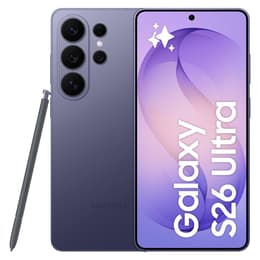
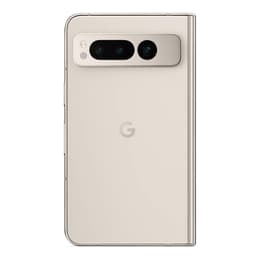
Galaxy S26 Ultra Vs Google Pixel Fold

  • 1-year minimum warranty
  • Free delivery on all orders
  • Free 30-day returns
Galaxy S26 Ultra
Starting at

Refurbished price:920.00

Versus €1,449.00 new

See options

Differences at a glance

The Samsung Galaxy S26 Ultra (2026) and the Google Pixel Fold (2023) represent two entirely different approaches to premium mobile hardware, pitting a traditional candy-bar powerhouse against a book-style foldable device. While both run on the Android operating system, they cater to distinct device categories and form factors. The primary differentiators lie in their physical design approach, where one prioritizes a traditional slate body with maximum integrated toolsets, while the other offers an expandable dual-screen layout.

Available Models

Colour

Storage (GB)

Scores

Durability

When evaluating the long-term utility of these two models, differences in release timing, software backing, and hardware resilience shape their expected practical lifespans. Users exploring a quality-assured refurbished option will find that both brands emphasize long-term support, though their launch years differ significantly.

  • Release timeline and software support: The Galaxy S26 Ultra arrived in early 2026 with an extended software update commitment spanning multiple years, whereas the Pixel Fold debuted in mid-2023 with a standard multi-year update window.
  • Hardware resilience and construction: The Galaxy S26 Ultra utilizes a rigid slate frame built to withstand daily drops, while the Pixel Fold relies on a complex folding hinge mechanism that requires more careful handling over years of continuous use.
  • Practical lifespan: The traditional slate build of the Samsung device generally offers a predictable long-term hardware lifespan, while the Google foldable provides unique multitasking longevity for users who adapt to dual-screen workflows.

Year of Release

2026

2023

Compatible with latest Update

Yes

Yes

OS

Android

Android

Foldable

No

Yes

Performance

Underneath their exteriors, these devices handle everyday workloads, memory management, and power consumption differently due to their varying generations of internal hardware. Both choices manage multitasking effectively, though processing capabilities reflect their release years.

  • Multitasking and system speed: The Galaxy S26 Ultra handles demanding applications, heavy background tasks, and intensive gaming smoothly without thermal throttling, while the Pixel Fold manages daily browsing, split-screen apps, and media streaming reliably using its generation-appropriate processor.
  • Battery behavior: The Galaxy S26 Ultra provides reliable all-day power efficiency for heavy use cases, whereas the Pixel Fold's larger inner screen configuration can draw more power during extended multi-window sessions, requiring mindful battery management.
  • Storage capacity: Both models offer generous storage configurations starting at high baselines, ensuring ample space for offline media, large application files, and extensive document libraries without frequent clearing.

Screen quality

Display technology is a primary point of divergence between these two models, directly influencing visual clarity, outdoor usability, and media consumption habits. One focuses on a single expansive slate panel, while the other introduces a transforming folding canvas.

  • Display technology and layout: The Galaxy S26 Ultra features a large, flat, vibrant OLED panel with deep blacks and high pixel density, whereas the Pixel Fold provides a standard outer screen that unfolds into a tablet-sized inner OLED display for expanded viewing.
  • Brightness and outdoor visibility: The Samsung model achieves high peak brightness levels for comfortable outdoor reading under direct sunlight, while the Google foldable maintains clear visibility indoors and moderate outdoor legibility.
  • Refresh rate and smoothness: Both devices support high refresh rates, ensuring fluid scrolling through web pages, smooth animations, and responsive touch feedback during daily navigation.

Resolution

1440 x 3120

1840 x 2208

Audiovisual

Photography and media capabilities vary significantly based on the lens arrays and acoustic engineering integrated into each frame. Both systems capture sharp everyday photos, but they approach specialized imaging and audio output through different hardware layouts.

  • Camera versatility: The Galaxy S26 Ultra includes a versatile multi-lens array featuring high-resolution main sensors and advanced zoom capabilities for distant subjects, while the Pixel Fold employs a balanced triple-lens system optimized for natural color reproduction and everyday snapshots.
  • Low-light and video performance: Both units handle low-light environments effectively using computational imaging, and both record stable, high-resolution video suitable for home videos or casual content creation.
  • Audio and media output: Stereo speakers on both models deliver clear sound for hands-free calls and casual video viewing, though neither replaces dedicated external speakers for immersive music listening.

Front camera

12.0

8 megapixels

Miscellaneous

Practical daily usability is shaped by physical dimensions, connectivity standards, and biometric security features embedded within the hardware design. Selecting an eco-friendly alternative through sustainable choices often involves weighing these ergonomic factors.

  • Dimensions and handling: The Galaxy S26 Ultra presents a large slate form factor that requires two-handed use for extended reach, whereas the Pixel Fold offers a compact folded shape that transforms into a wider tablet format when opened.
  • Security and sensors: Both devices incorporate responsive biometric authentication, utilizing fast facial recognition and secure fingerprint sensors for quick device unlocking and secure sign-ins.
  • Connectivity and ports: Modern 5G connectivity, rapid Wi-Fi standards, and reliable Bluetooth pairing come standard on both models, utilizing reversible USB-C ports for charging and wired data transfers.

Weight

214 g

283 g

Screen size (in)

6.9

7.6

Network

5G

5G

SIM card

Physical SIM + eSIM

Physical SIM + eSIM

Carrier compatibility

Unlocked

Unlocked

What the community thinks

The Samsung Galaxy S26 Ultra and the Google Pixel Fold serve very different user preferences within the modern smartphone landscape. Users prioritizing maximum processing headroom, advanced zoom photography, and a durable traditional slate design will find the Galaxy S26 Ultra well-suited to their daily routines. Conversely, users valuing a compact pocket profile that expands into a larger tablet-style screen for multitasking and reading will lean toward the Google Pixel Fold.

Web feedback highlights widespread praise for the Galaxy S26 Ultra's screen clarity and system speed, alongside occasional remarks regarding its large physical footprint. For the Pixel Fold, users frequently appreciate the multitasking versatility of the inner screen, though some note concerns regarding the weight and the visible crease on the folding display. Ultimately, the choice depends entirely on whether a traditional high-performance slate or an innovative folding layout best complements your workflow.