

Galaxy S25+ Vs Xiaomi 12T

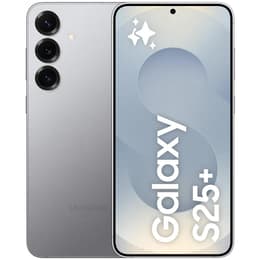
Galaxy S25+
Galaxy S25+
Starting at

Refurbished price:624.00

Versus €1,401.57 new

See options
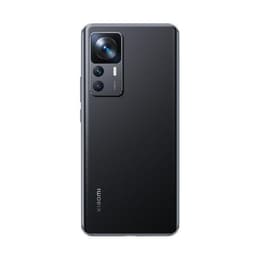
Xiaomi 12T
Xiaomi 12T
Starting at

Refurbished price:140.00

Versus €649.00 new

See options

Ratings

The Samsung Galaxy S25 Plus (released in February 2025) and the Xiaomi 12T (launched in October 2022) are Android smartphones designed for different user expectations and market segments. While both offer a comprehensive smartphone experience, the Galaxy S25 Plus represents a more recent flagship iteration with advanced features and extended software support, whereas the Xiaomi 12T focuses on delivering strong core performance and rapid charging capabilities from an earlier generation.

Scores

Durability

When considering the long-term usability of these devices, their release timelines and software support policies are key differentiators.

  • Release Timeline: The Galaxy S25 Plus, released in early 2025, benefits from being a newer device compared to the Xiaomi 12T, which launched in late 2022. This difference in age directly impacts their expected practical lifespan.
  • Software Support: Samsung offers an extensive seven years of Android OS upgrades and security updates for the Galaxy S25 Plus, meaning it is projected to receive updates until Android 22, likely in 2032. In contrast, the Xiaomi 12T was promised three major Android OS updates (up to Android 15) and four years of security updates, with support expected to conclude around October 2026.
  • Durability and Build: The Galaxy S25 Plus features Gorilla Glass Victus 2 on both the front and back, along with an aluminum frame and an IP68 rating for dust and water resistance, indicating a robust build. The Xiaomi 12T uses Gorilla Glass 5 on the front and a glass back with a plastic frame, and it lacks an official IP rating, though some sources mention IP53 for splash resistance.

Year of Release

2025

2022

Compatible with latest Update

Yes

Yes

OS

Android

Android

Foldable

No

No

Performance

The performance of a smartphone is crucial for daily tasks, app usage, and multitasking, and both devices approach this with different hardware generations.

  • Processing Power: The Galaxy S25 Plus is equipped with a current-generation processor, specifically optimized for Galaxy devices, which allows it to handle demanding applications, complex multitasking, and graphics-intensive gaming with smooth responsiveness. The Xiaomi 12T features a capable processor from its release era, providing efficient performance for everyday use and moderate gaming.
  • Storage and RAM: The Galaxy S25 Plus typically comes with 12GB of RAM and storage options of 256GB or 512GB, facilitating efficient multitasking and ample space for files and applications. The Xiaomi 12T offers 8GB of RAM with 128GB or 256GB storage configurations, which is suitable for most users but may offer less headroom for extensive multitasking or large media libraries compared to the S25 Plus.
  • System Responsiveness: Due to its newer and more powerful internal components, the Galaxy S25 Plus generally offers a more fluid and responsive user experience, particularly when navigating the interface, launching apps, or switching between multiple demanding tasks. The Xiaomi 12T provides a smooth experience for its class, though it may show its age in direct comparison with the latest flagship hardware.

Memory (GB)

12 GB

8 GB

Screen quality

The display is a primary interface for user interaction, and both phones offer vibrant viewing experiences with distinct characteristics.

  • Display Technology and Resolution: The Galaxy S25 Plus features a 6.7-inch Dynamic LTPO AMOLED 2X display with a QHD+ resolution (3120x1440 pixels), resulting in a very sharp image with approximately 513 pixels per inch. The Xiaomi 12T has a 6.67-inch CrystalRes AMOLED display with a resolution of 2712x1220 pixels, offering clear visuals at around 446 pixels per inch.
  • Brightness and Clarity: The Galaxy S25 Plus can achieve a peak brightness of up to 2600 nits, ensuring excellent visibility even in bright outdoor conditions. The Xiaomi 12T reaches a peak brightness of 900 nits, which provides good visibility in most lighting environments. Both displays offer vibrant colors and deep blacks characteristic of AMOLED technology.
  • Refresh Rate and Smoothness: Both devices feature a 120Hz adaptive refresh rate, which contributes to smooth scrolling and fluid animations. The Galaxy S25 Plus's LTPO technology allows its refresh rate to dynamically adjust from 1Hz to 120Hz, optimizing power consumption. The Xiaomi 12T also offers an adaptive refresh rate, adjusting between 30Hz, 60Hz, 90Hz, and 120Hz.

Resolution

1440 x 3120 pixels

1220 x 2712

Audiovisual

Camera capabilities are a significant factor for many users, and both smartphones provide versatile photography and videography tools.

  • Rear Camera System: The Galaxy S25 Plus is equipped with a triple rear camera setup, including a 50 MP main sensor with optical image stabilization (OIS), a 12 MP ultra-wide lens with a 120-degree field of view, and a 10 MP telephoto lens offering 3x optical zoom with OIS. The Xiaomi 12T features a triple camera system with a 108 MP main sensor with OIS, an 8 MP ultra-wide lens with a 120-degree field of view, and a 2 MP macro lens.
  • Photography Performance: The Galaxy S25 Plus benefits from advanced image processing and AI enhancements, contributing to detailed photos, improved low-light performance, and accurate color reproduction. The Xiaomi 12T's 108 MP main sensor is capable of capturing detailed images, and it includes features like Night Mode for low-light conditions.
  • Video Recording and Audio: The Galaxy S25 Plus supports video recording up to 8K resolution at 30 frames per second, offering high-resolution video capture. It also features stereo speakers with Dolby Atmos support for a rich audio experience. The Xiaomi 12T can record videos up to 4K at 30 frames per second. It also includes dual stereo speakers with Dolby Atmos for media consumption.

Front camera

12MP

20 megapixels

Miscellaneous

Beyond core features, several practical elements contribute to the overall user experience and device utility.

  • Connectivity and Ports: The Galaxy S25 Plus supports the latest connectivity standards, including 5G, Wi-Fi 7, and Bluetooth 5.4, ensuring fast and reliable wireless connections. It uses a USB-C port for charging and data transfer. The Xiaomi 12T supports 5G, Wi-Fi 6, and Bluetooth 5.3, along with NFC and an infrared (IR) blaster, and it also uses a USB-C port.
  • Biometrics and Design: Both devices incorporate in-display fingerprint sensors for secure unlocking. The Galaxy S25 Plus has a refined design with an aluminum frame and Gorilla Glass Victus 2, measuring 158.4 x 75.8 x 7.3mm and weighing 190g. The Xiaomi 12T has a glass front (Gorilla Glass 5) and back with a plastic frame, measuring 163.1 x 75.9 x 8.6mm and weighing 202g.
  • Battery and Charging: The Galaxy S25 Plus houses a 4900mAh battery with support for 45W wired and 15W wireless charging. The Xiaomi 12T features a larger 5000mAh battery and supports very fast 120W wired HyperCharge, with the charger included in the box, though it lacks wireless charging.

Weight

190 g

220 g

Screen size (in)

6.7

6.67

Network

5G

5G

SIM card

Physical SIM + eSIM

Dual Physical SIM

Carrier compatibility

Unlocked

Unlocked

Connector

USB-C

USB-C

The Samsung Galaxy S25 Plus and the Xiaomi 12T cater to different priorities, largely influenced by their respective release dates and target markets. Users often praise the Galaxy S25 Plus for its long-term software support, offering seven years of updates, which is a significant advantage for those who keep their devices for an extended period. Its advanced camera system, robust build quality, and high-resolution, bright display are also frequently highlighted as strong points.

On the other hand, the Xiaomi 12T is often recognized for its impressive 120W fast charging, allowing for very quick recharges, and its large battery capacity, which provides reliable all-day power. Its display is also noted for its clarity and smooth refresh rate, offering a strong visual experience for its category.

Users prioritizing maximum software longevity, cutting-edge camera features, and a premium, highly durable build may find the Galaxy S25 Plus well-suited to their needs. Its extended update policy ensures access to the latest Android features and security patches for many years. Conversely, users who value rapid charging, a large battery for extended use, and a capable overall performance without needing the absolute latest flagship specifications might lean towards the Xiaomi 12T. It offers a compelling package for daily use, especially for those who are frequently on the go and need quick power-ups.

Both devices, whether new or as quality-assured refurbished options, provide distinct advantages depending on individual user preferences and usage patterns.


See all articles

Our recent comparisons