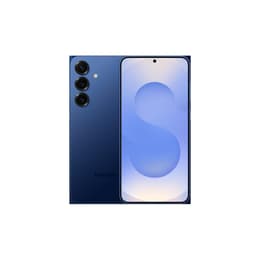



Galaxy S25+ Vs Google Pixel 7

Galaxy S25+
Galaxy S25+
Starting at

Refurbished price:624.00

Versus €1,401.57 new

See options
Google Pixel 7
Google Pixel 7
Starting at

Refurbished price:160.00

Versus €756.00 new

See options

Ratings

The Samsung Galaxy S25 Plus, released in early 2025, and the Google Pixel 7, launched in late 2022, represent different generations within the Android smartphone landscape. While both devices offer a premium smartphone experience running on the Android operating system, the Galaxy S25 Plus introduces more recent hardware advancements and extended software support, distinguishing it from the Pixel 7's established reputation for computational photography and a streamlined software experience.

Scores

Durability

The practical lifespan of a smartphone is significantly influenced by its release timeline and the manufacturer's commitment to software updates.

  • Release Timeline: The Galaxy S25 Plus was released in February 2025, making it a much newer device compared to the Google Pixel 7, which debuted in October 2022. This difference in launch dates directly impacts their remaining support cycles. [1, 8, 15]
  • Software Support: Samsung has committed to providing 7 years of OS and security updates for the Galaxy S25 series, meaning support for the S25 Plus is expected to continue until 2032. [1] The Google Pixel 7, on the other hand, receives 5 years of OS and security updates, with support extending until October 2027. [5, 21, 23, 41, 43]
  • Durability: Both devices feature an IP68 rating for dust and water resistance, indicating a similar level of protection against environmental elements. The Galaxy S25 Plus utilizes Gorilla Glass Victus 2 for both its front and back panels, while the Pixel 7 also uses Gorilla Glass Victus for screen protection. [1, 10, 15, 22, 30, 31, 38, 39]

Year of Release

2025

2022

Compatible with latest Update

Yes

Yes

OS

Android

Android

Foldable

No

No

Performance

Performance in modern smartphones is about more than just raw speed; it encompasses how smoothly applications run, how efficiently tasks are managed, and the overall responsiveness of the user interface.

  • Processing Power: The Galaxy S25 Plus is equipped with a current-generation processor, the Snapdragon 8 Elite, which is manufactured on a 3nm process. This allows for efficient handling of demanding applications, complex multitasking, and advanced AI features. [1, 2, 13, 25, 27, 32] The Google Pixel 7 features the Google Tensor G2, designed to optimize Google's AI and machine learning capabilities for a fluid user experience. [8, 12, 17, 19, 31]
  • Multitasking and Storage: The Galaxy S25 Plus comes with 12GB of RAM, providing ample capacity for running numerous applications simultaneously and switching between them without slowdowns. [1, 2, 4, 27, 29, 32] The Pixel 7 offers 8GB of RAM, which is sufficient for most daily tasks and moderate multitasking. [3, 8, 14, 15, 17, 31, 38, 42] Both devices offer internal storage options of 256GB and 512GB, with the Pixel 7 also having a 128GB option. [1, 2, 3, 8, 14, 15, 17, 27, 29, 31, 32, 38, 42]
  • Battery Behavior: The Galaxy S25 Plus houses a 4900 mAh battery, supporting 45W fast wired charging and 15W wireless charging. [2, 4, 10, 13, 27, 29] The Pixel 7 has a 4355 mAh battery, which, combined with its adaptive battery features, is designed to last through a full day of typical use. It also supports fast wired and wireless charging, along with reverse wireless charging. [8, 15, 31, 38, 42]

Memory (GB)

12 GB

8 GB

Screen quality

The display is a primary interface for smartphone interaction, and both devices offer vibrant viewing experiences with distinct characteristics.

  • Display Technology and Size: The Galaxy S25 Plus features a larger 6.7-inch Dynamic LTPO AMOLED 2X display, offering a more expansive viewing area. [1, 2, 4, 13, 24, 26, 27, 32, 35] The Google Pixel 7 has a 6.3-inch OLED display, providing a more compact form factor. [3, 8, 9, 14, 15, 18, 19, 38]
  • Resolution and Brightness: The S25 Plus boasts a QHD+ resolution (3120x1440 pixels) with a peak brightness of up to 2600 nits, delivering sharp visuals and excellent outdoor visibility. [1, 2, 13, 24, 26, 27, 32] The Pixel 7 offers an FHD+ resolution (2400x1080 pixels) and can reach a peak brightness of 1400 nits, which is bright enough for most outdoor conditions. [3, 9, 14, 18, 19, 38]
  • Refresh Rate and Smoothness: The Galaxy S25 Plus features an adaptive refresh rate of 1-120Hz, allowing for very smooth scrolling and animations while conserving battery life. [1, 13, 24, 27, 32] The Pixel 7 has a 90Hz refresh rate, which provides a smoother experience than standard 60Hz displays, though it is not as fluid as a 120Hz panel. [3, 9, 14, 15, 18, 19, 38]

Resolution

1440 x 3120 pixels

1080 x 2400

Audiovisual

Both smartphones prioritize advanced camera capabilities, leveraging a combination of hardware and computational photography to deliver high-quality images and videos.

  • Rear Camera Systems: The Galaxy S25 Plus is equipped with a versatile triple-camera setup, including a 50 MP wide-angle main sensor, a 12 MP ultra-wide camera, and a 10 MP telephoto lens with 3x optical zoom. [1, 2, 10, 25, 29, 32, 34] The Google Pixel 7 features a dual-camera system with a 50 MP wide-angle main camera and a 12 MP ultra-wide camera. [3, 7, 14, 15, 16, 17, 19, 31, 38, 42]
  • Photography Features: The S25 Plus benefits from Samsung's ProVisual Engine for enhanced image processing, aiming for improved object recognition and color reproduction, especially in varying lighting conditions. [1, 25, 34] The Pixel 7 is renowned for its computational photography features, including Magic Eraser for removing unwanted objects, Photo Unblur for sharpening images, and an advanced Night Sight mode for low-light performance. [3, 11, 14, 16, 20, 38]
  • Video Recording and Front Camera: Both devices offer high-quality video recording capabilities, with the S25 Plus supporting 8K at 30fps and the Pixel 7 supporting 4K at 30/60fps. [2, 16, 19, 31, 38, 42] For selfies and video calls, the Galaxy S25 Plus has a 12 MP front-facing camera, while the Pixel 7 features a 10.8 MP front camera. [1, 3, 10, 14, 17, 31, 38, 42]

Front camera

12MP

10.8 megapixels

Miscellaneous

Beyond core specifications, several practical elements contribute to the overall user experience and device utility.

  • Connectivity and Ports: The Galaxy S25 Plus supports the latest Wi-Fi 7 and Bluetooth 5.4 standards, along with 5G connectivity and USB Type-C 3.2 for data transfer and charging. It also includes Ultra-Wideband (UWB) technology. [1, 33, 36, 37] The Pixel 7 offers Wi-Fi 6E, Bluetooth 5.2, 5G (sub-6 / mmWave), and USB Type-C. [6, 12, 15, 19, 30, 31, 42, 44]
  • Biometric Security: Both smartphones incorporate under-display fingerprint sensors for secure unlocking. The Pixel 7 also offers face recognition. [1, 15, 30, 38, 42]
  • Design and Handling: The Galaxy S25 Plus has an Armor Aluminum frame and Gorilla Glass Victus 2, with dimensions of 158.4 x 75.8 x 7.3 mm and a weight of 190g. [1, 10, 22, 24, 39] The Pixel 7 features a polished aluminum frame and Gorilla Glass Victus, measuring 155.6 x 73.2 x 8.7 mm and weighing 197g. [3, 14, 15, 30, 31] The S25 Plus is slightly thinner and lighter despite its larger screen.

Weight

190 g

197 g

Screen size (in)

6.7

6.3

Network

5G

5G

SIM card

Physical SIM + eSIM

Physical SIM + eSIM

Carrier compatibility

Unlocked

Unlocked

The Samsung Galaxy S25 Plus and Google Pixel 7 cater to different user priorities, largely due to their respective release dates and design philosophies. The Galaxy S25 Plus, as a more recent release, offers cutting-edge hardware, including a more advanced display, a newer processor, and extended software support, making it a compelling choice for users seeking the latest technology and a longer update cycle. [1, 13, 22, 24, 27]

The Google Pixel 7, while older, remains a strong contender for its exceptional computational photography capabilities and a clean Android experience. Users often praise its camera's ability to produce stunning images with features like Magic Eraser and Photo Unblur, and its software-first approach is a significant draw. [3, 11, 14, 16, 20, 38] However, some users note its 90Hz display as a point of comparison against newer devices with 120Hz panels. [14, 18]

Users prioritizing a larger, brighter, and higher-resolution display with the smoothest possible refresh rate, coupled with the most current processing power and the longest software support, will find the Galaxy S25 Plus well-suited to their needs. Conversely, users who value a compact form factor, a highly optimized camera experience driven by artificial intelligence, and a pure Android interface may lean towards the Google Pixel 7. Both devices offer robust build quality and water resistance. For those considering either device, exploring quality-assured refurbished options can provide an eco-friendly alternative to extend the life cycle of these capable smartphones.


See all articles

Our recent comparisons