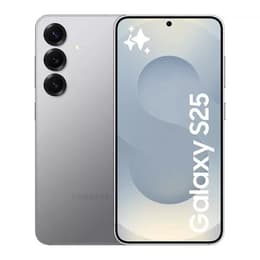
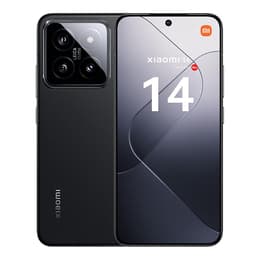


Galaxy S25 Vs Xiaomi 14

Galaxy S25
Galaxy S25
Starting at

Refurbished price:489.00

Versus €799.00 new

See options
Xiaomi 14
Xiaomi 14
Starting at

Refurbished price:384.00

Versus €1,099.00 new

See options

Ratings

The Samsung Galaxy S25, released in early 2025, and the Xiaomi 14, launched globally in early 2024, represent two distinct approaches to flagship smartphone design. While both devices offer premium experiences, they differentiate themselves through their display technologies, camera philosophies, and software support timelines. This comparison aims to provide a clear overview of their practical differences, helping users make an informed choice, especially when considering a quality-assured refurbished option.

Scores

Durability

When evaluating the long-term usability of a smartphone, factors like software support, physical durability, and ease of repair are key.

  • Software Longevity: The Galaxy S25 offers an extensive software support period, promising seven generations of Android OS upgrades and seven years of security updates from its release with Android 15. This means users can expect updates until approximately 2032. In contrast, the Xiaomi 14, running HyperOS based on Android 14, provides four years of Android OS updates and five years of security updates. This difference translates to a significantly longer period of official software support for the Galaxy S25.
  • Physical Durability: Both devices feature robust build materials and an IP68 rating for dust and water resistance, indicating they can withstand submersion in fresh water up to 1.5 meters for 30 minutes. The Galaxy S25 and S25+ utilize Gorilla Glass Victus 2 for both front and back protection, while the Xiaomi 14 also employs Gorilla Glass Victus for its front display.
  • Repairability: Repairability scores vary, with some sources giving the Galaxy S25 an 8.5 out of 10, noting accessible batteries with pull tabs and screens that can be removed without excessive component disassembly. However, iFixit gave the S25 Ultra a 5 out of 10, highlighting difficulties with screen removal. The Xiaomi 14 received an 8.0 out of 10 in repairability, also noting accessible batteries and screens, but mentioning the use of adhesive for the back cover.

Year of Release

2025

2023

Compatible with latest Update

Yes

Yes

OS

Android

Android

Foldable

No

No

Performance

Both the Galaxy S25 and Xiaomi 14 are equipped with current-generation processors designed for demanding tasks, but their configurations and real-world implications differ.

  • Processing Power: The Galaxy S25 is powered by the Snapdragon 8 Elite chipset, manufactured on a 3nm process. This processor is designed to handle intensive applications and multitasking smoothly, with a focus on efficient performance across all global variants. The Xiaomi 14 features the Snapdragon 8 Gen 3 Mobile Platform, also built on a 4nm process, which ensures a fast and fluid experience for gaming and productivity. Users of both devices report excellent performance with no significant lag or heating during demanding use.
  • Memory and Storage: The Galaxy S25 comes with 12GB of RAM across its lineup, with some higher-tier Ultra models offering 16GB. Storage options range from 128GB to 512GB for the base model. The Xiaomi 14 offers configurations with 8GB, 12GB, or 16GB of LPDDR5X RAM and UFS 4.0 storage options up to 1TB, providing ample space and fast data transfer speeds.
  • Battery Performance: The Galaxy S25 houses a 4000 mAh battery, with user reports indicating approximately 11 hours of usage on a single charge for moderate to heavy users. Charging speed is noted to take about 1.5 hours for a full charge. The Xiaomi 14 features a larger 4610 mAh battery, with some users reporting up to 1.5 days (43 hours) of usage. It also supports 90W wired fast charging, capable of a full charge in around 44 minutes, and 50W wireless charging. However, some Xiaomi 14 users have reported concerns about battery drain and standby time.

Memory (GB)

12 GB

16 GB

Screen quality

The visual experience on both smartphones is a highlight, with each offering vibrant and responsive displays tailored for different user preferences.

  • Display Technology and Clarity: The Galaxy S25 features a Dynamic LTPO AMOLED 2X display with a 120Hz adaptive refresh rate, providing smooth visuals and deep blacks. The base S25 model has a 6.2-inch screen with a 1080 x 2340 pixel resolution, resulting in a pixel density of 416 ppi. The Xiaomi 14 sports a 6.36-inch LTPO AMOLED (C8) display with a 2670 x 1200 resolution and a pixel density of 460 ppi, also offering an adaptive 1-120Hz refresh rate.
  • Brightness and Color: Both devices offer impressive brightness levels for outdoor visibility. The Galaxy S25 can reach up to 2600 nits of peak brightness. The Xiaomi 14 boasts an even higher peak brightness of 3000 nits, ensuring excellent legibility even in direct sunlight. The Xiaomi 14 also supports a 100% DCI-P3 color gamut and 12-bit color depth, delivering vibrant and accurate color reproduction.
  • Viewing Experience: The Galaxy S25 incorporates Samsung's HOP 3.0 LTPO technology, which enhances display efficiency and touch response. The Xiaomi 14's display is noted for its ultra-thin bezels, contributing to an immersive viewing experience. Both displays include an in-screen optical fingerprint sensor for secure unlocking.

Resolution

1080x2340

1200 x 2670

Audiovisual

Both the Galaxy S25 and Xiaomi 14 offer advanced camera systems, each with distinct strengths in photography and videography.

  • Rear Camera Systems: The Galaxy S25 and S25+ feature a versatile triple-camera setup, including a 50 MP wide-angle main camera, a 12 MP ultra-wide camera with a 120° field of view, and a 10 MP telephoto camera capable of 3x optical zoom. The Xiaomi 14 also comes with a triple 50 MP rear camera system, co-engineered with Leica, comprising a 50 MP main camera with a Light Fusion 900 sensor, a 50 MP ultra-wide lens with a 115° field of view, and a 50 MP telephoto lens offering 3.2x optical zoom.
  • Photography Performance: The Galaxy S25 is praised for its improved photo processing, delivering excellent detail and natural colors in daylight. Its low-light performance is good with the main camera, though some artificial color can be introduced in mixed lighting. User reviews suggest the S25's camera is generally dependable, with refined portrait mode. The Xiaomi 14's Leica-tuned cameras are known for capturing vibrant colors and good detail, performing well in various lighting conditions, including low light.
  • Video and Audio: The Galaxy S25 supports video recording up to 8K resolution at 30fps from its main camera and 4K at 60fps from secondary cameras, with good stabilization and HDR video recording. The Xiaomi 14 also offers 8K video recording at 24fps and includes features like a cinematic mode with a 2.39:1 aspect ratio and cinematic bokeh. Both devices feature stereo speakers, with the Xiaomi 14 supporting Dolby Atmos for an immersive audio experience.

Miscellaneous

Beyond core performance, several practical features contribute to the overall user experience of these devices.

  • Connectivity: Both the Galaxy S25 and Xiaomi 14 offer comprehensive connectivity options, including 5G support for fast mobile data, Wi-Fi 7 for advanced wireless networking, and Bluetooth 5.4 for efficient accessory pairing.
  • Ports and Sensors: Both smartphones utilize a USB Type-C port for charging and data transfer. They also integrate an under-display optical fingerprint sensor for biometric security. The Galaxy S25 series includes an ultrasonic in-screen fingerprint sensor.
  • Design and Handling: The Galaxy S25 (base model) has dimensions of 158.4 x 75.7 x 7.3 mm and weighs 190g, making it a relatively compact and comfortable device to hold. The Xiaomi 14 is slightly smaller and similar in weight, measuring 152.8 x 71.5 x 8.2 mm and weighing 193g, designed for comfortable one-handed use. Both devices feature premium build materials, with glass backs and aluminum frames.
  • Operating System Experience: The Galaxy S25 runs on Android 15 with Samsung's One UI, known for its customization options and smooth interface. The Xiaomi 14 operates on HyperOS, based on Android 14, which aims to deliver a smooth and user-friendly experience with improved multitasking.

Weight

162 g

188 g

Screen size (in)

6.2

6.36

Network

5G

5G

SIM card

Physical SIM + eSIM

Dual Physical SIM

Carrier compatibility

Unlocked

Unlocked

User sentiment for both the Galaxy S25 and Xiaomi 14 highlights their respective strengths and areas for consideration. For the Galaxy S25, common praise points include its comfortable, lightweight design, the vibrant and bright display, and the promise of seven years of software updates, which is a significant advantage for long-term use. Users appreciate its smooth performance and refined camera, especially in daylight. Criticisms often revolve around the battery life, which some heavy users find requires more frequent charging, and the charging speed not matching some competitors.

The Xiaomi 14 receives commendation for its powerful processor, excellent gaming performance, and impressive battery life for many users, often lasting up to 1.5 days. Its Leica-tuned camera system is also a strong point, delivering good results across various conditions. However, some users have expressed concerns about inconsistent battery drain and standby time.

Ultimately, users prioritizing extended software support and a slightly more compact form factor with a dependable camera system may find the Galaxy S25 well-suited to their needs. Conversely, those who value faster charging, potentially longer battery life (depending on usage patterns), and a camera system with Leica's photographic characteristics might lean towards the Xiaomi 14. Both devices offer a premium experience, and exploring quality-assured refurbished options for either model can provide an eco-friendly and practical way to acquire these advanced smartphones.

See all articles

Our recent comparisons






