

Galaxy S25 Vs OnePlus 10 Pro

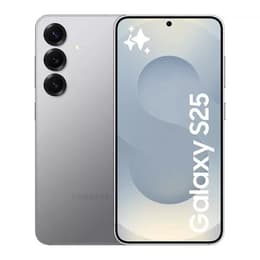
Galaxy S25
Galaxy S25
Starting at

Refurbished price:483.00

Versus €910.00 new

See options
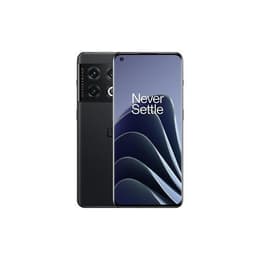
OnePlus 10 Pro
OnePlus 10 Pro
Starting at

Refurbished price:228.00

Versus €999.00 new

See options

Ratings

The Samsung Galaxy S25, a smartphone released in early 2025, represents a more recent iteration in the Android flagship landscape. In contrast, the OnePlus 10 Pro, launched in early 2022, was a prominent device of its generation. While both operate on the Android platform, the generational difference means the Galaxy S25 incorporates newer hardware and extended software support, distinguishing it from the OnePlus 10 Pro.

Scores

Durability

The practical lifespan of these devices is significantly influenced by their release dates and the manufacturers' support policies.

  • Release Timeline: The Galaxy S25 was released in February 2025, making it a much newer device compared to the OnePlus 10 Pro, which launched in early 2022.
  • OS Support Duration: Samsung promises seven years of operating system upgrades and security updates for the Galaxy S25 series, extending its support until approximately 2032. The OnePlus 10 Pro typically receives three major OS updates and four years of security updates, meaning its official software support cycle is nearing its conclusion by 2026.
  • Durability Features: The Galaxy S25 features Gorilla Glass Victus 2 on both its front and back, along with an aluminum frame and an IP68 rating for dust and water resistance. The OnePlus 10 Pro uses Gorilla Glass Victus on the front and Gorilla Glass 5 on the back. While some carrier-specific versions of the OnePlus 10 Pro in the US have an IP68 rating, other global variants do not officially carry this certification, though they are structurally similar.

Year of Release

2025

2022

OS

Android

Android

Foldable

No

No

Performance

Performance is a key area where the difference in release dates between these two devices becomes apparent, impacting their responsiveness and capability with demanding applications.

  • Processor Capabilities: The Galaxy S25 is equipped with a current-generation processor, enabling exceptionally smooth app loading, seamless multitasking, and fluid navigation even with intensive applications. The OnePlus 10 Pro, featuring a processor from 2022, handles general tasks well but may exhibit slower app launches and less consistent performance in very demanding scenarios compared to the newer device.
  • Memory and Storage: The Galaxy S25 comes with 12GB of RAM as standard, offering ample capacity for multitasking and running numerous applications simultaneously. Storage options for the S25 include 128GB, 256GB, and 512GB. The OnePlus 10 Pro is available with either 8GB or 12GB of RAM and storage configurations of 128GB or 256GB.
  • Battery Behavior: The Galaxy S25 has a 4000 mAh battery, supporting 25W wired and 15W wireless charging. The OnePlus 10 Pro features a larger 5000 mAh battery and supports very fast 80W wired charging (65W in North America) and 50W wireless charging, allowing for quicker power replenishment.

Memory (GB)

12 GB

8 GB

Screen quality

Both smartphones offer high-quality display experiences, though the Galaxy S25 benefits from newer panel technology and higher peak brightness.

  • Display Technology and Clarity: The Galaxy S25 features a 6.2-inch Dynamic LTPO AMOLED 2X display, known for deep blacks, vibrant colors, and efficient power consumption. The OnePlus 10 Pro has a 6.7-inch Fluid AMOLED display with LTPO technology, also providing rich colors and smooth visuals. Both offer high resolutions, ensuring sharp and clear visuals for text and media.
  • Brightness and Refresh Rate: The Galaxy S25 can reach a peak brightness of up to 2600 nits, making it highly visible outdoors in bright conditions. The OnePlus 10 Pro offers a peak brightness of up to 1300 nits. Both devices feature a 120Hz refresh rate, contributing to smooth scrolling and responsive interactions.
  • Screen Size and Viewing: The Galaxy S25 provides a compact 6.2-inch display, while the OnePlus 10 Pro offers a larger 6.7-inch screen, which can enhance the immersive experience for media consumption and gaming.

Resolution

1080x2340

1440 x 3216

Screen type

Dynamic LTPO AMOLED 2X

LTPO2 Fluid AMOLED

Audiovisual

The camera systems of these devices reflect the advancements in smartphone photography over their respective release periods.

  • Main Camera Performance: The Galaxy S25 features a triple rear camera system with a 50 MP main wide-angle sensor, a 12 MP ultra-wide, and a 10 MP telephoto lens with 3x optical zoom. It offers strong low-light capabilities and detailed image capture. The OnePlus 10 Pro also has a triple rear camera setup, including a 48 MP main wide-angle sensor, a 50 MP ultra-wide, and an 8 MP telephoto lens with 3.3x optical zoom, tuned with Hasselblad for color processing.
  • Photography Features: The Galaxy S25 benefits from newer computational photography algorithms and enhanced optical image stabilization, providing versatility across various shooting scenarios. The OnePlus 10 Pro's camera system was well-regarded at its launch, offering good performance for everyday photography.
  • Video Recording and Front Camera: For video, the Galaxy S25 supports recording up to 8K resolution at 30 frames per second and 4K at 60 frames per second. Its front-facing camera is 12 MP. The OnePlus 10 Pro records video up to 8K at 24 frames per second and 4K at 30 frames per second, and features a 32 MP front camera.

Miscellaneous

Beyond core specifications, several practical elements contribute to the overall user experience of these smartphones.

  • Connectivity and Ports: The Galaxy S25 supports the latest Wi-Fi 7 standard and Bluetooth 5.4, alongside 5G connectivity. It features a USB-C port. The OnePlus 10 Pro supports Wi-Fi 6 and Bluetooth 5.2, also with 5G capabilities, and includes a USB-C port.
  • Biometrics and Sensors: Both devices incorporate an in-screen fingerprint sensor for secure unlocking. The Galaxy S25 also includes a range of sensors such as an accelerometer, barometer, gyro sensor, and geomagnetic sensor.
  • Design and Handling: The Galaxy S25 has dimensions of 146.9 x 70.5 x 7.2 mm and weighs 162 grams, offering a relatively compact and lightweight design. The OnePlus 10 Pro is slightly larger and heavier at 163 x 73.9 x 8.55 mm and 200.5 grams. Both phones feature stereo speakers for media consumption.

Weight

162 g

201 g

Screen size (in)

6.2

6.7

Network

5G

5G

SIM card

Physical SIM + eSIM

Physical SIM

Carrier compatibility

Unlocked

Unlocked

User feedback for the Samsung Galaxy S25 often highlights its extended software support, powerful performance, and bright display as key advantages. Some discussions mention its compact size as a preference for one-handed use. For the OnePlus 10 Pro, users frequently praise its rapid charging capabilities and the vibrant, high-resolution display. Common points of discussion for the OnePlus 10 Pro include its camera performance, which was strong for its release year, and the varying IP rating depending on the region of purchase.

Users prioritizing long-term software updates and a more compact form factor with a very bright display may find the Galaxy S25 well-suited to their needs. Those who value extremely fast charging and a larger, high-resolution screen, and are comfortable with a device from an earlier generation, might lean towards the OnePlus 10 Pro. Both devices offer a robust Android experience, and considering a quality-assured refurbished option can be an eco-friendly alternative for either model, allowing consumers to make informed and sustainable choices.


See all articles

Our recent comparisons