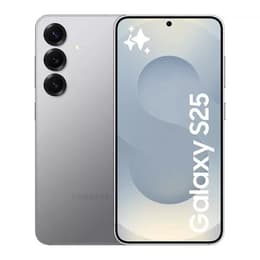
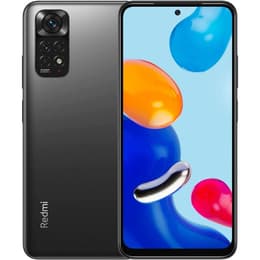


Galaxy S25 Vs Xiaomi Redmi Note 11

Galaxy S25
Galaxy S25
Starting at

Refurbished price:489.60

Versus €910.00 new

See options
Xiaomi Redmi Note 11
Starting at

Refurbished price:108.00

Versus €249.99 new

See options

Ratings

The Samsung Galaxy S25, released in early 2025, represents a modern flagship smartphone, while the Xiaomi Redmi Note 11, launched in early 2022, is positioned as a more accessible device. These two Android-based smartphones cater to different user expectations, primarily differing in their performance capabilities, camera systems, and long-term software support.

Scores

Durability

The practical lifespan and software longevity vary significantly between these two devices, largely due to their release timelines and manufacturer support policies.

  • Release Timeline and OS Support: The Galaxy S25, released in February 2025, benefits from Samsung's commitment to providing seven years of Android OS upgrades and seven years of security updates, extending its support until 2032. It launched with Android 15. In contrast, the Redmi Note 11, launched in January 2022 with Android 11, has reached its end-of-support (EOS) status as of February 2025, meaning it no longer receives official software or security updates.
  • Software Longevity Expectations: Users of the Galaxy S25 can expect their device to remain current with the latest Android features and security patches for an extended period, ensuring compatibility with new applications and protection against vulnerabilities. The Redmi Note 11, having ceased official updates, may face increasing compatibility issues with newer applications and potential security risks over time.
  • Repairability: The Galaxy S25 series generally shows improved repairability compared to older Samsung flagships, with the base S25 model scoring around 8.5 out of 10 in some assessments, indicating a relatively good ease of repair for components like the battery and screen. The Redmi Note 11 (4G variant) has a repairability score of 6.5 out of 10, suggesting a moderate level of repair accessibility.

Year of Release

2025

2022

OS

Android

Android

Foldable

No

No

Performance

The performance characteristics of the Galaxy S25 and the Redmi Note 11 reflect their different market segments, impacting how smoothly they handle various tasks.

  • Processor Capabilities: The Galaxy S25 is equipped with a current-generation flagship processor, designed to deliver robust performance for demanding applications, intensive multitasking, and advanced gaming. This results in quick app loading times and seamless transitions. The Redmi Note 11 features a mid-range processor that capably handles everyday tasks such as web browsing, social media, and light gaming, providing a generally smooth user experience for less intensive usage.
  • Multitasking and Storage: The Galaxy S25 typically comes with 12GB of RAM and utilizes faster UFS 4.0 storage, contributing to superior multitasking capabilities and quicker data access. The Redmi Note 11 offers 4GB or 6GB of RAM and UFS 2.2 storage, which is suitable for moderate multitasking but may show limitations when running many applications simultaneously or handling large files. It also offers expandable storage via a microSD card, a feature not present on the Galaxy S25.
  • Battery Behavior: The Galaxy S25 houses a 4000mAh battery, providing sufficient power for a full day of typical use, with fast wired and wireless charging capabilities. The Redmi Note 11 features a larger 5000mAh battery, often translating to extended usage times between charges, and supports 33W fast wired charging, though it lacks wireless charging.

Memory (GB)

12 GB

4 GB

Screen quality

The visual experience on both devices is shaped by their display technologies and specifications, catering to different preferences for clarity, brightness, and smoothness.

  • Display Technology and Clarity: The Galaxy S25 features a Dynamic AMOLED 2X display, offering vibrant colors, deep blacks, and high contrast, with a Full HD+ resolution (2340x1080 pixels) that provides sharp and detailed visuals. The Redmi Note 11 uses an AMOLED display with a Full HD+ resolution (1080x2400 pixels), delivering good color reproduction and clarity for media consumption and daily use.
  • Brightness and Refresh Rate: The Galaxy S25's display can reach significantly higher peak brightness levels, making it highly visible even in bright outdoor conditions, and features an adaptive 120Hz refresh rate for exceptionally smooth scrolling and responsiveness. The Redmi Note 11 offers a peak brightness of up to 1000 nits, which is adequate for most outdoor scenarios, and a 90Hz refresh rate, providing a smoother experience than standard 60Hz displays.
  • Screen Size and Protection: The Galaxy S25 typically has a 6.2-inch display, offering a compact form factor for easier one-handed use. The Redmi Note 11 features a slightly larger 6.43-inch display, providing a more expansive viewing area. The Galaxy S25 is protected by Corning Gorilla Glass Victus2 or Armor, offering enhanced durability, while the Redmi Note 11 uses Corning Gorilla Glass 3.

Resolution

1080x2340

1080 x 2400

Screen type

Dynamic LTPO AMOLED 2X

AMOLED

Audiovisual

The camera systems on the Galaxy S25 and Redmi Note 11 are designed with different photographic priorities, influencing their performance across various shooting conditions.

  • Camera System Capabilities: The Galaxy S25 is equipped with a versatile triple-camera setup, including a 50MP wide lens, a 10MP telephoto lens, and a 12MP ultra-wide lens, complemented by advanced image processing for detailed and high-quality photos across different focal lengths. The Redmi Note 11 features a quad-camera system with a 50MP primary sensor, an 8MP ultra-wide, and two 2MP sensors for macro and depth, offering flexibility for various shot types.
  • Photography Performance: The Galaxy S25 excels in low-light conditions and offers advanced features for capturing intricate details and vibrant colors, benefiting from its flagship-level sensors and computational photography. The Redmi Note 11 performs well in good lighting, producing clear and detailed images, but its low-light performance is more modest compared to higher-end devices.
  • Video and Audio Experience: The Galaxy S25 supports high-resolution video recording with advanced stabilization and features, along with clear microphone quality for calls and recordings, and a rich media consumption experience through its speakers. The Redmi Note 11 provides capable video recording for everyday moments and offers a decent audio experience for calls and media playback.

Miscellaneous

Beyond core features, several practical elements differentiate the Galaxy S25 and Redmi Note 11, impacting daily usability and overall device interaction.

  • Connectivity and Ports: The Galaxy S25 supports 5G connectivity, offering faster mobile data speeds, and features a USB-C port for charging and data transfer. The Redmi Note 11 supports 4G networks and includes both a USB-C port and a 3.5mm headphone jack, providing more options for audio connectivity.
  • Sensors and Biometrics: Both devices include essential sensors like accelerometers, gyroscopes, and proximity sensors. The Galaxy S25 typically features advanced biometric security such as an in-display fingerprint sensor and facial recognition. The Redmi Note 11 incorporates a side-mounted fingerprint sensor for secure unlocking.
  • Build Materials and Handling: The Galaxy S25 utilizes premium materials like Armor Aluminium and Gorilla Glass Victus2, contributing to a more robust and refined feel, with an IP68 rating for significant water and dust resistance. It weighs around 162g. The Redmi Note 11 has a lighter build at 179g and offers a comfortable grip, though its materials and water resistance (typically IP53) are designed for general daily use rather than extreme conditions.

Weight

162 g

179 g

Screen size (in)

6.2

6.43

Network

5G

4G

SIM card

Physical SIM + eSIM

Dual Physical SIM

Carrier compatibility

Unlocked

Unlocked

Users often praise the Samsung Galaxy S25 for its cutting-edge performance, advanced camera capabilities, and the assurance of long-term software support, making it a device that remains relevant for many years. Common sentiments highlight its vibrant display and overall premium user experience. Some criticisms might revolve around its battery capacity compared to larger models in its series, though it still offers a full day of use for many.

The Xiaomi Redmi Note 11 is frequently lauded by users for its reliable battery life and its bright AMOLED display, providing a solid experience for everyday tasks. However, a recurring concern among users is the cessation of official software updates, which can impact security and access to new features over time.

Users prioritizing a device with the latest technology, extensive software longevity, and a highly capable camera system for diverse photography needs may find the Galaxy S25 better suited to their requirements. Its robust build and high-performance capabilities cater to those who demand a premium smartphone experience that will endure for years. Conversely, users seeking a dependable smartphone for essential daily functions, with a focus on extended battery life and a good display for media consumption, might lean towards the Redmi Note 11. It offers a practical and straightforward experience for those who do not require the absolute latest features or long-term software updates.

For those considering either device, exploring quality-assured refurbished options can provide an eco-friendly alternative, extending the life cycle of these electronics and offering a sustainable choice.


See all articles

Our recent comparisons






