

Galaxy S25 Ultra Vs Xiaomi Redmi Note 13 Pro

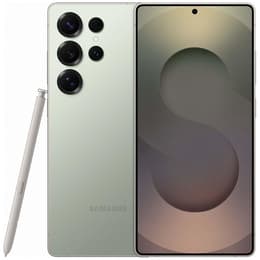
Galaxy S25 Ultra
Galaxy S25 Ultra
Starting at

Refurbished price:735.00

Versus €1,408.78 new

See options
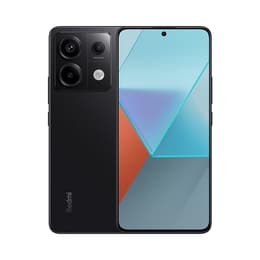
Xiaomi Redmi Note 13 Pro
Starting at

Refurbished price:179.00

Versus €349.00 new

See options

Ratings

The Samsung Galaxy S25 Ultra, a flagship smartphone released in early 2025, represents the pinnacle of mobile technology, offering advanced features and a premium user experience. In contrast, the Xiaomi Redmi Note 13 Pro 5G, launched in early 2024, positions itself as a capable mid-range device designed to deliver strong performance and features at a more accessible level. While both run on the Android operating system, the Galaxy S25 Ultra typically features Samsung's One UI, known for its extensive customization, whereas the Redmi Note 13 Pro 5G operates with Xiaomi's HyperOS (or MIUI at launch), which offers a distinct interface and feature set.

Scores

Durability

When considering the long-term usability of these devices, their release timelines and software support are key factors. The Galaxy S25 Ultra, being a 2025 release, benefits from a newer starting point for software updates and is expected to receive major Android operating system upgrades and security patches for a longer duration compared to the Redmi Note 13 Pro 5G, which launched in 2024. This extended support means the Galaxy S25 Ultra will remain current with the latest features and security enhancements for a more prolonged period.

  • Software Longevity: The Galaxy S25 Ultra is anticipated to receive a longer period of major Android OS updates and security patches, typically extending its software lifespan by an additional year or more compared to the Redmi Note 13 Pro 5G, which generally receives around three years of OS updates and four years of security updates.
  • Repairability: The Galaxy S25 Ultra (based on its predecessor, the S24 Ultra) generally achieves a high repairability score, often around 9 out of 10, with components like the battery being relatively easy to replace due to pull tabs. The Redmi Note 13 Pro 5G, while designed with some repairability in mind, typically scores lower, around 6.5 out of 10, with adhesive used for the back cover and battery, and screen replacement often requiring more extensive disassembly.
  • Practical Lifespan: Users can expect the Galaxy S25 Ultra to offer a practical lifespan of five to six years or more, maintaining strong performance and software relevance. The Redmi Note 13 Pro 5G is likely to provide a robust experience for three to four years, after which software updates may become less frequent.

Year of Release

2025

2023

Compatible with latest Update

Yes

Yes

OS

Android

Android

Foldable

No

No

Performance

The performance capabilities of these two smartphones cater to different user demands, primarily driven by their respective processors and system optimizations.

  • Processor Capabilities: The Galaxy S25 Ultra is equipped with a high-end, current-generation processor designed for demanding tasks, offering lightning-fast performance, enhanced multitasking, and optimized gaming experiences with efficient thermal management. The Redmi Note 13 Pro 5G features a capable mid-range processor that handles everyday applications and general multitasking smoothly, providing a responsive experience for most users.
  • System Responsiveness: Users of the Galaxy S25 Ultra will experience exceptionally fluid navigation, rapid app loading, and seamless transitions, even with multiple intensive applications running simultaneously. The Redmi Note 13 Pro 5G offers a generally smooth and responsive user interface, suitable for typical daily usage and moderate gaming.
  • Storage and RAM: The Galaxy S25 Ultra typically offers generous RAM configurations, often starting at 12GB, paired with fast internal storage options up to 1TB, ensuring ample space and quick data access for power users. The Redmi Note 13 Pro 5G comes with various configurations, commonly featuring 8GB or 12GB of RAM and internal storage options up to 512GB, which is sufficient for most users' needs.

Memory (GB)

12 GB

8 GB

Screen quality

The visual experience on both devices is a highlight, though they employ different display technologies and specifications to achieve their clarity and vibrancy.

  • Display Technology and Clarity: The Galaxy S25 Ultra features a Dynamic AMOLED 2X display, offering exceptional color accuracy, deep blacks, and high contrast, making content appear vibrant and lifelike. The Redmi Note 13 Pro 5G utilizes an AMOLED panel, which also delivers rich colors and good contrast, providing a satisfying viewing experience for media consumption and daily use.
  • Brightness and Refresh Rate: The Galaxy S25 Ultra boasts a high peak brightness of up to 2600 nits, ensuring excellent visibility even in direct sunlight, and a 120Hz adaptive refresh rate for smooth scrolling and fluid animations. The Redmi Note 13 Pro 5G offers a peak brightness of up to 1800 nits (or 1300/1200 nits depending on the source), which is bright enough for comfortable outdoor use, and a 120Hz refresh rate for a smooth visual experience.
  • Screen Size and Protection: With a large 6.9-inch display, the Galaxy S25 Ultra provides an expansive canvas for productivity and entertainment, protected by advanced Gorilla Glass Armor or Glass Armor 2, along with an anti-reflective coating. The Redmi Note 13 Pro 5G features a 6.67-inch display, offering a substantial viewing area, and is protected by Gorilla Glass Victus, providing good resistance against scratches and drops.

Resolution

1080 x 2340 pixels

1220 x 2712

Audiovisual

Both smartphones offer robust camera systems, but they are designed with different photographic priorities and capabilities.

  • Camera System Capabilities: The Galaxy S25 Ultra features a versatile quad-camera setup, including a high-resolution primary sensor, a dedicated ultrawide lens, and multiple telephoto lenses (e.g., 3x and 5x optical zoom), allowing for exceptional flexibility in capturing subjects at various distances. The Redmi Note 13 Pro 5G comes with a triple-camera system, highlighted by a 200MP main sensor with optical image stabilization (OIS), an 8MP ultrawide, and a 2MP macro lens.
  • Photography Performance: The Galaxy S25 Ultra excels in producing detailed images with natural colors and strong dynamic range across various lighting conditions, including improved low-light performance with its Night mode. The Redmi Note 13 Pro 5G captures excellent photos in good daylight, with its 200MP sensor delivering impressive detail, and offers decent low-light performance with its dedicated night mode.
  • Video and Audio: The Galaxy S25 Ultra supports high-resolution video recording, including 8K at 30 frames per second, with advanced stabilization and clear audio capture. The Redmi Note 13 Pro 5G can record 4K video at 30 frames per second with its main camera, and 1080p video at 30/60 frames per second with its front camera, offering good detail and decent stabilization. Both devices feature stereo speakers, with the Redmi Note 13 Pro 5G specifically mentioning Dolby Atmos support for an immersive audio experience.

Front camera

8K@24/30fps

16 megapixels

Miscellaneous

Beyond core performance and display, several practical elements differentiate these two smartphones, impacting daily convenience and user interaction.

  • Connectivity Options: The Galaxy S25 Ultra supports the latest wireless standards, including advanced 5G capabilities, Wi-Fi 7 (expected), and a modern Bluetooth version, ensuring fast and reliable connections. The Redmi Note 13 Pro 5G offers 5G connectivity, Wi-Fi 6, and Bluetooth 5.2, providing solid and efficient wireless performance for most users.
  • Port Types and Sensors: The Galaxy S25 Ultra typically features a USB-C port for charging and data transfer, along with advanced biometric security like an ultrasonic in-display fingerprint sensor and facial recognition. It also integrates the S Pen stylus for enhanced productivity. The Redmi Note 13 Pro 5G includes a USB-C port, a 3.5mm headphone jack, and an in-screen optical fingerprint sensor for secure unlocking. It also features an IR blaster, allowing it to function as a universal remote.
  • Build Materials and Handling: The Galaxy S25 Ultra is constructed with premium materials such as a titanium frame and advanced Gorilla Glass protection, offering a robust and high-end feel, along with an IP68 rating for dust and water resistance. The Redmi Note 13 Pro 5G features a glass front and back with a plastic frame, providing a comfortable in-hand feel and an IP54 rating for splash and dust resistance.

Weight

2 g

187 g

Screen size (in)

6.9

6.67

Network

5G

5G

SIM card

Physical SIM + eSIM

Dual Physical SIM

Carrier compatibility

Unlocked

Unlocked

The Samsung Galaxy S25 Ultra and the Xiaomi Redmi Note 13 Pro 5G cater to distinct segments of the smartphone market, each with its own set of strengths and considerations. Users frequently praise the Galaxy S25 Ultra for its exceptional camera versatility, particularly its advanced zoom capabilities and consistent image quality across various conditions. Its long-lasting battery life and powerful performance for demanding applications are also commonly highlighted as significant advantages. Some criticisms, however, occasionally point to its size and the complexity of its software interface for new users.

The Redmi Note 13 Pro 5G receives commendation for its impressive 200MP main camera, vibrant AMOLED display with high refresh rate, and excellent battery endurance coupled with fast charging. Users often appreciate its overall value proposition, delivering a premium feel without being a top-tier flagship. Common concerns sometimes revolve around the performance of its auxiliary cameras (ultrawide and macro) and the potential for a less consistent software update experience compared to flagship devices.

Users prioritizing the absolute latest in mobile technology, a highly versatile camera system with advanced zoom, and extended software support will find the Galaxy S25 Ultra well-suited to their needs. Its robust build and integrated S Pen also appeal to those seeking a comprehensive, premium device for productivity and creative tasks. Conversely, users who prioritize a strong main camera, a high-quality display, and reliable all-day battery life for everyday use, while seeking a more budget-conscious option, may lean toward the Redmi Note 13 Pro 5G. It offers a compelling balance of features for general use, media consumption, and casual photography.

For those looking to make an eco-friendly choice, considering a quality-assured refurbished option for either device can provide access to these technologies while supporting sustainable consumption.


See all articles

Our recent comparisons