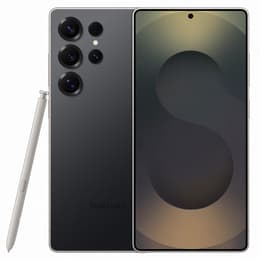



Galaxy S25 Ultra Vs Xiaomi Redmi Note 12 Pro

Galaxy S25 Ultra
Galaxy S25 Ultra
Starting at

Refurbished price:735.00

Versus €1,408.78 new

See options
Xiaomi Redmi Note 12 Pro
Starting at

Refurbished price:110.00

Versus €399.00 new

See options

Ratings

The Samsung Galaxy S25 Ultra, released in early 2025, and the Xiaomi Redmi Note 12 Pro, launched in late 2022, represent distinct offerings in the smartphone market. While both devices operate on the Android platform, the Galaxy S25 Ultra introduces significant advancements in processing power, camera technology, and overall feature set, reflecting its newer generation and premium positioning. The Redmi Note 12 Pro, on the other hand, focuses on delivering a balanced experience for everyday use.

Scores

Durability

The expected lifespan and software support differ considerably between these two devices, primarily due to their respective release timelines and manufacturer policies.

  • Release Timeline and Age: The Galaxy S25 Ultra, being a 2025 release, benefits from the latest hardware and software foundations. The Redmi Note 12 Pro, released in 2022, is already a few years into its lifecycle.
  • OS Support Duration: Samsung has committed to providing 7 years of OS and security updates for the Galaxy S25 series, extending support until approximately 2032. This offers a long period of software relevance and security. The Redmi Note 12 Pro, launched with Android 12, will receive fewer major Android version updates and security patches compared to the Galaxy S25 Ultra, meaning its practical software longevity will be shorter.
  • Durability Features: The Galaxy S25 Ultra features Corning Gorilla Armor 2 protection for its display and a titanium frame, along with an IP68 rating for water and dust resistance. While some durability tests suggest a slight trade-off in scratch resistance for improved drop resistance compared to its predecessor, it remains a robust device. The Redmi Note 12 Pro utilizes Gorilla Glass 5 for screen protection and typically offers an IP53 rating, providing basic splash and dust resistance.

Year of Release

2025

2022

Compatible with latest Update

Yes

No

OS

Android

Android

Foldable

No

No

Performance

Performance is a key area where the generational gap between these two smartphones becomes evident, impacting how smoothly they handle various tasks.

  • Processor Capabilities: The Galaxy S25 Ultra is equipped with a current-generation processor designed for demanding applications, intensive multitasking, and advanced on-device artificial intelligence features. This allows for exceptionally fluid navigation, rapid app loading, and sustained high performance during graphically intensive gaming sessions. The Redmi Note 12 Pro features a mid-range processor that capably handles everyday tasks such as web browsing, social media, and casual gaming. While it provides a responsive user experience for general use, it may show limitations with the most demanding applications or extensive multitasking.
  • Multitasking and Responsiveness: The Galaxy S25 Ultra typically comes with 12GB of RAM, ensuring smooth transitions between numerous open applications and efficient background process management. The Redmi Note 12 Pro offers various RAM configurations, including 6GB, 8GB, and 12GB, which are sufficient for typical multitasking, though the higher RAM options will provide a more consistent experience with multiple apps.
  • Storage Options: The Galaxy S25 Ultra provides ample storage starting from 256GB, with options extending to 512GB and 1TB, catering to users with large media libraries or extensive app collections. The Redmi Note 12 Pro offers 128GB and 256GB storage variants, which are suitable for most users but may require more careful management for those with significant storage needs.

Memory (GB)

12 GB

8 GB

Screen quality

The display is a primary interface for smartphone interaction, and both devices offer capable screens with notable differences in technology and visual experience.

  • Display Technology and Resolution: The Galaxy S25 Ultra features a 6.9-inch Dynamic LTPO AMOLED 2X display with a sharp 3120 x 1440 (QHD+) resolution, delivering exceptional detail and clarity. The Redmi Note 12 Pro comes with a 6.67-inch AMOLED display with a 2400 x 1080 (FHD+) resolution, providing vibrant colors and good sharpness for its class.
  • Brightness and Outdoor Visibility: The Galaxy S25 Ultra boasts a peak brightness of up to 2600 nits, ensuring excellent visibility even in direct sunlight and enhancing HDR content. The Redmi Note 12 Pro reaches a peak brightness of up to 1200 nits, which is generally sufficient for outdoor use, though it may be less comfortable in very bright conditions.
  • Refresh Rate and Smoothness: Both phones offer a 120Hz refresh rate for smooth scrolling and responsive interactions. The Galaxy S25 Ultra's LTPO technology allows for an adaptive refresh rate, scaling from 1Hz to 120Hz to optimize power consumption based on content. The Redmi Note 12 Pro also provides a 120Hz refresh rate, contributing to a fluid visual experience.

Resolution

1080 x 2340 pixels

1080 x 2400

Audiovisual

The camera systems on these two smartphones cater to different user expectations, with the Galaxy S25 Ultra offering a more comprehensive and advanced photography and videography suite.

  • Rear Camera System: The Galaxy S25 Ultra features a versatile quad-camera setup, including a 200 MP main sensor, a 50 MP ultrawide lens, a 10 MP telephoto lens with 3x optical zoom, and a 50 MP periscope telephoto lens with 5x optical zoom. This configuration allows for exceptional detail, wide-angle shots, and significant optical zoom capabilities. The Redmi Note 12 Pro is equipped with a triple-camera system, typically featuring a 50 MP main sensor with optical image stabilization, an 8 MP ultrawide lens, and a 2 MP macro lens. This setup is capable of capturing good quality everyday photos and decent wide-angle shots.
  • Low-Light and Video Performance: The Galaxy S25 Ultra benefits from advanced image processing and larger sensors, contributing to strong low-light performance and detailed video recording up to 8K at 30 frames per second, with features like Super Steady video and 10-bit HDR. The Redmi Note 12 Pro offers capable low-light photography with its main sensor and supports video recording up to 4K resolution.
  • Front Camera and Audio: The Galaxy S25 Ultra includes a 12 MP front-facing camera, suitable for high-quality selfies and video calls. The Redmi Note 12 Pro has a 16 MP front camera, providing clear images for selfies. Both devices offer stereo speakers for an enhanced media consumption experience, though the Galaxy S25 Ultra's audio is tuned by AKG.

Front camera

8K@24/30fps

16 megapixels

Miscellaneous

Beyond core performance and display, several practical elements contribute to the overall user experience and differentiate these two smartphones.

  • Connectivity and Ports: The Galaxy S25 Ultra supports the latest connectivity standards, including 5G and Wi-Fi 7, along with Bluetooth 5.4, ensuring fast and reliable wireless connections. It features a USB Type-C port for charging and data transfer. The Redmi Note 12 Pro also supports 5G and Wi-Fi 6, with Bluetooth 5.2, offering modern connectivity. It includes a USB Type-C port and retains a 3.5mm headphone jack, which is a notable convenience for many users.
  • Biometric Security and Design: The Galaxy S25 Ultra incorporates an ultrasonic in-screen fingerprint sensor for secure and convenient unlocking, alongside facial recognition. Its design features a titanium frame and a premium build. The Redmi Note 12 Pro typically uses a side-mounted fingerprint sensor for biometric authentication. Its design is generally sleek, with a focus on a comfortable in-hand feel.
  • Dimensions and Weight: The Galaxy S25 Ultra measures 162.8 x 77.6 x 8.2 mm and weighs 218g, reflecting its large display and premium construction. The Redmi Note 12 Pro is slightly more compact and lighter at 162.9 x 76 x 7.9 mm and 187g.
  • Unique Features: The Galaxy S25 Ultra integrates the S Pen, offering enhanced productivity and creative capabilities. It also features a suite of advanced Galaxy AI functionalities.

Weight

2 g

187 g

Screen size (in)

6.9

6.67

Network

5G

5G

SIM card

Physical SIM + eSIM

Dual Physical SIM

Carrier compatibility

Unlocked

Unlocked

Connector

USB-C

USB-C

Choosing between the Samsung Galaxy S25 Ultra and the Xiaomi Redmi Note 12 Pro involves weighing priorities between cutting-edge technology and a capable, more accessible experience. Users frequently praise the Galaxy S25 Ultra for its exceptional camera system, particularly its versatile zoom capabilities and advanced AI features that enhance photography and overall device interaction. Its powerful processor and vibrant, high-resolution display are also consistently highlighted for delivering a premium and fluid user experience, especially for demanding tasks and media consumption. Some discussions note its robust build quality and extended software support as significant advantages for long-term ownership.

The Redmi Note 12 Pro is often commended by users for its bright AMOLED display and smooth 120Hz refresh rate, providing an enjoyable viewing experience for everyday content. Its battery life and fast charging capabilities are also frequently mentioned as practical benefits for daily use. Common feedback suggests it offers a solid overall package for its segment, particularly for users who appreciate the inclusion of a 3.5mm headphone jack.

Users prioritizing the latest advancements in mobile technology, including a highly sophisticated camera system, top-tier performance for intensive applications, and a long commitment to software updates, will find the Samsung Galaxy S25 Ultra well-suited to their needs. Conversely, users seeking a reliable smartphone for daily tasks, media consumption, and casual photography, without requiring the absolute latest features or extreme performance, may lean towards the Xiaomi Redmi Note 12 Pro. Both devices, whether new or as a quality-assured refurbished option, offer distinct advantages depending on individual user priorities.


See all articles

Our recent comparisons