

Galaxy S25 Ultra Vs Google Pixel 8 Pro

Galaxy S25 Ultra
Galaxy S25 Ultra
Starting at

Refurbished price:735.00

Versus €1,408.78 new

See options
Google Pixel 8 Pro
Google Pixel 8 Pro
Starting at

Refurbished price:293.00

Versus €1,099.00 new

See options

Ratings

The Samsung Galaxy S25 Ultra, released in early 2025, and the Google Pixel 8 Pro, launched in late 2023, represent two distinct approaches to high-end Android smartphones. While both devices offer premium experiences, they differentiate themselves through their core strengths in performance, camera systems, and overall user interface philosophy. Both operate on the Android platform, yet each provides a unique software experience tailored by their respective manufacturers.

Scores

Durability

When considering the long-term usability of a smartphone, factors like software support and physical resilience are key. The Galaxy S25 Ultra and the Google Pixel 8 Pro both offer substantial longevity, though their release timelines create a natural difference in their remaining support periods.

  • Software Support: The Google Pixel 8 Pro was launched with a commitment to seven years of operating system upgrades, security updates, and feature drops, extending its support well into 2030. The Samsung Galaxy S25 Ultra, following its predecessor's policy, also offers seven years of software and security updates, meaning it will receive support through 2032.
  • Build Materials: Both devices feature robust construction. The Pixel 8 Pro utilizes Corning Gorilla Glass Victus 2 for its front and back, paired with an aluminum frame. The Galaxy S25 Ultra incorporates a titanium frame and Corning Gorilla Armor 2 for enhanced durability. Both are rated IP68 for water and dust resistance.
  • Repairability: The Galaxy S25 Ultra, similar to the S24 Ultra, is designed with a relatively high repairability score, with many components being accessible for service. The Pixel 8 Pro, while offering some repairability, has been noted to have a moderately lower score due to components like the screen and battery requiring more intricate disassembly.

Year of Release

2025

2023

Compatible with latest Update

Yes

Yes

Foldable

No

No

Performance

The performance capabilities of these devices cater to different priorities, with the Galaxy S25 Ultra focusing on raw power and the Pixel 8 Pro emphasizing intelligent, AI-driven efficiency.

  • Processing Power: The Galaxy S25 Ultra is equipped with a current-generation processor, such as the Qualcomm Snapdragon 8 Elite or an equivalent Exynos chip, designed for demanding tasks and high-performance gaming. The Pixel 8 Pro features Google's Tensor G3 chip, which is optimized for artificial intelligence tasks and provides a smooth, responsive experience for everyday use and AI-centric features.
  • Multitasking and Storage: Both phones offer ample RAM, typically 12GB, with the Galaxy S25 Ultra also available in a 16GB configuration, supporting extensive multitasking. Storage options are generous on both, ranging up to 1TB, with the S25 Ultra potentially offering up to 2TB in some configurations.
  • Battery Behavior: The Galaxy S25 Ultra typically offers extended battery endurance, often lasting beyond a full day even with heavy usage, thanks to its 5000 mAh battery and efficient components. The Pixel 8 Pro, with its 5050 mAh battery, generally provides all-day power for most users, though intensive tasks may require more frequent charging.

Memory (GB)

12 GB

12 GB

Screen quality

Both the Galaxy S25 Ultra and the Google Pixel 8 Pro feature high-quality displays that deliver vibrant visuals, though there are differences in their specifications and viewing experiences.

  • Display Technology and Clarity: The Galaxy S25 Ultra features a 6.9-inch Dynamic AMOLED 2X display, offering sharp QHD+ resolution (1440 x 3120 pixels) for detailed imagery. The Pixel 8 Pro comes with a 6.7-inch LTPO OLED display, known as 'Super Actua,' providing a clear WQHD+ resolution (1344 x 2992 pixels).
  • Brightness and Smoothness: The S25 Ultra's display can reach a peak brightness of up to 2600 nits, ensuring excellent visibility even in bright outdoor conditions. The Pixel 8 Pro offers a peak brightness of up to 2400 nits, also providing strong outdoor legibility. Both devices feature adaptive refresh rates up to 120Hz, contributing to smooth scrolling and fluid animations.
  • Viewing Experience: The S25 Ultra's slightly larger screen size offers a more expansive canvas for media consumption and productivity, complemented by its advanced display protection. The Pixel 8 Pro's display provides a rich and immersive viewing experience, with accurate color reproduction and deep blacks.

Resolution

1080 x 2340 pixels

1344 x 2992

Audiovisual

The camera systems on the Galaxy S25 Ultra and the Google Pixel 8 Pro are both highly capable, yet they excel in different aspects of mobile photography and videography.

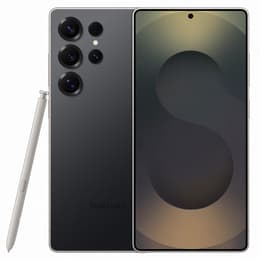
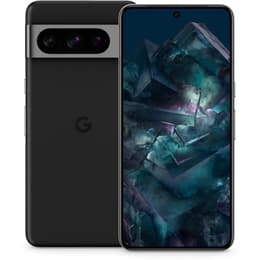
  • Rear Camera Systems: The Galaxy S25 Ultra boasts a versatile quad-camera setup, including a 200MP main sensor, a 50MP ultrawide lens, a 50MP periscope telephoto lens with 5x optical zoom, and a 10MP telephoto lens with 3x optical zoom. This configuration provides extensive zoom capabilities and high-resolution detail. The Pixel 8 Pro features a triple-camera system with a 50MP main sensor, a 48MP ultrawide lens, and a 48MP telephoto lens with 5x optical zoom.
  • Photography Performance: The S25 Ultra is known for its detailed images, particularly with its advanced zoom features, making it suitable for capturing distant subjects. The Pixel 8 Pro leverages its computational photography and AI enhancements to deliver consistent, natural-looking photos, excelling in challenging lighting conditions and producing reliable results across various scenarios.
  • Video and Audio: Both devices offer high-quality video recording with effective stabilization. The S25 Ultra supports 8K video recording. For audio, both phones include stereo speakers, providing a good experience for media playback and calls.

Front camera

8K@24/30fps

10.5 megapixels

Miscellaneous

Beyond their core features, both the Galaxy S25 Ultra and the Google Pixel 8 Pro offer a range of additional functionalities and design elements that contribute to their overall user experience.

  • Connectivity and Ports: Both devices support 5G connectivity and the latest Wi-Fi 7 standard, ensuring fast and reliable wireless communication. They both feature a USB-C port for charging and data transfer, with the S25 Ultra potentially supporting a newer, faster USB standard.
  • Biometric Security and Unique Features: The Galaxy S25 Ultra incorporates an ultrasonic under-display fingerprint sensor and face recognition for secure unlocking. A notable distinguishing feature is the integrated S Pen, offering enhanced productivity and creative input. The Pixel 8 Pro also includes an under-display fingerprint sensor and face unlock, alongside a unique temperature sensor.
  • Design and Handling: The S25 Ultra is a larger device, typically featuring a 6.9-inch display, which may appeal to users who prefer a more expansive screen. Its design includes a durable titanium frame. The Pixel 8 Pro, with its 6.7-inch display, offers a slightly more compact form factor while still providing a substantial screen.

Weight

2 g

213 g

Screen size (in)

6.9

6.7

Network

5G

5G

SIM card

Physical SIM + eSIM

Physical SIM + eSIM

Carrier compatibility

Unlocked

Unlocked

The choice between the Samsung Galaxy S25 Ultra and the Google Pixel 8 Pro ultimately depends on individual user priorities and preferences. User feedback for the Pixel 8 Pro often highlights its exceptional camera consistency, clean Android software experience, and advanced AI features as strong points. Some users, however, have noted that its raw performance might not match the absolute top tier for intensive gaming, and battery life for very heavy users could sometimes require mid-day charging.

For the Galaxy S25 Ultra, building on the reputation of its predecessors, common praise centers on its expansive and vibrant display, the versatility of its multi-lens camera system with impressive zoom capabilities, the integrated S Pen for productivity, and its robust raw performance for demanding applications. Potential considerations for some users might include its larger size and weight, and Samsung's customized software interface, which some prefer over a more stock Android experience.

Users prioritizing a streamlined software experience, consistent computational photography, and long-term software support may find the Google Pixel 8 Pro well-suited to their needs. Conversely, individuals who require maximum performance, extensive camera versatility with advanced zoom, a large display for media and productivity, and the unique functionality of an integrated stylus will likely lean towards the Samsung Galaxy S25 Ultra. Both devices offer compelling features, and considering a quality-assured refurbished option for either model can provide an eco-friendly alternative for those seeking premium technology.


See all articles

Our recent comparisons