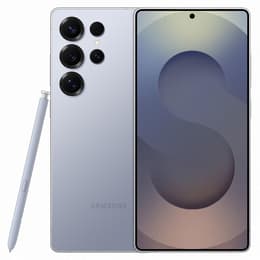



Galaxy S25 Ultra Vs Google Pixel 7 Pro

Galaxy S25 Ultra
Galaxy S25 Ultra
Starting at

Refurbished price:735.00

Versus €1,408.78 new

See options
Google Pixel 7 Pro
Google Pixel 7 Pro
Starting at

Refurbished price:201.00

Versus €640.98 new

See options

Ratings

The Samsung Galaxy S25 Ultra, released in February 2025, and the Google Pixel 7 Pro, launched in October 2022, represent distinct approaches to the premium smartphone experience. While both devices offer advanced camera systems and high-quality displays, the Galaxy S25 Ultra introduces a more recent generation of internal components and an integrated stylus, whereas the Pixel 7 Pro emphasizes a streamlined software experience and computational photography. Both operate on the Android platform, but their software philosophies and update timelines differ.

Scores

Durability

Considering their respective release dates, the Galaxy S25 Ultra and the Pixel 7 Pro offer different timelines for software support and overall practical lifespan.

  • Release Timeline: The Galaxy S25 Ultra, being a 2025 release, benefits from a newer starting point for its software support cycle compared to the Pixel 7 Pro, which was released in late 2022.
  • OS Support Duration: Samsung typically provides extensive software support for its flagship devices, with the S25 Ultra expected to receive up to seven major Android operating system upgrades and security updates, extending its support until around 2032. The Pixel 7 Pro, while offering a clean Android experience, is guaranteed five years of software support from its release, which includes three years of OS updates (until October 2025) and five years of security updates (until October 2027).
  • Build and Protection: Both devices feature premium glass and metal constructions, contributing to their durability. The S25 Ultra utilizes Corning Gorilla Armor 2 for its display and back panel protection, along with a titanium frame. The Pixel 7 Pro uses Corning Gorilla Glass Victus for its display. Both carry an IP68 rating for dust and water resistance, indicating protection against immersion in water.

Year of Release

2025

2022

Compatible with latest Update

Yes

Yes

OS

Android

Android

Foldable

No

No

Performance

Performance differences between these two devices stem primarily from their respective processors and the age gap in their hardware, impacting how they handle demanding tasks and everyday usage.

  • Processing Power: The Galaxy S25 Ultra is equipped with a more recent generation processor, enabling it to handle demanding applications, intensive multitasking, and advanced AI features with greater efficiency and speed. The Pixel 7 Pro, powered by its custom-designed processor, delivers a smooth and responsive experience for daily tasks and leverages its chip for advanced computational photography and on-device AI.
  • Multitasking and Storage: Both devices offer ample RAM, with the Galaxy S25 Ultra typically featuring 12GB or 16GB, and the Pixel 7 Pro coming with 12GB. This allows for efficient app switching and background processes. Storage options are generous on both, ranging from 256GB up to 1TB for the S25 Ultra, and 128GB to 512GB for the Pixel 7 Pro.
  • Battery Behavior: Both phones house a 5000 mAh battery. The Galaxy S25 Ultra supports faster wired charging at 45W and 25W wireless charging, along with reverse wireless charging. The Pixel 7 Pro supports 30W wired fast charging and 15W wireless charging. User experiences with the Pixel 7 Pro's battery life have been mixed, with some reporting shorter screen-on times under heavy use.

Memory (GB)

12 GB

12 GB

Screen quality

Both smartphones feature high-quality displays, but they differ in peak brightness, size, and specific protective technologies.

  • Display Technology and Clarity: The Galaxy S25 Ultra features a 6.9-inch Dynamic LTPO AMOLED 2X display, while the Pixel 7 Pro has a 6.7-inch LTPO AMOLED panel. Both offer a sharp QHD+ resolution (3120x1440 pixels), resulting in crisp visuals for text and images.
  • Brightness and Smoothness: The S25 Ultra boasts a significantly higher peak brightness of up to 2600 nits, enhancing visibility in bright outdoor conditions and improving HDR content viewing. The Pixel 7 Pro also offers a bright display suitable for various lighting, with peak brightness reaching around 1500-1620 nits. Both phones feature a 120Hz adaptive refresh rate, providing smooth scrolling and responsive interactions.
  • Screen Design and Protection: The Galaxy S25 Ultra's display is protected by Corning Gorilla Armor 2, which offers enhanced durability and anti-reflective properties. The Pixel 7 Pro uses Corning Gorilla Glass Victus and features curved display edges.

Resolution

1080 x 2340 pixels

1440 x 3120

Audiovisual

Both devices are recognized for their camera capabilities, though they approach photography with different hardware and software philosophies.

  • Rear Camera Systems: The Galaxy S25 Ultra features a versatile quad-camera setup, including a 200MP main sensor, a 50MP ultrawide lens, a 10MP telephoto lens with 3x optical zoom, and a 50MP periscope telephoto lens with 5x optical zoom. This provides extensive flexibility for various photographic scenarios. The Pixel 7 Pro offers a triple-camera system with a 50MP main sensor, a 12MP ultrawide lens with autofocus, and a 48MP telephoto lens capable of 5x optical zoom.
  • Photography and Video Features: The S25 Ultra's high-megapixel sensors and advanced zoom capabilities allow for capturing highly detailed images and offer significant cropping flexibility. It supports 8K video recording. The Pixel 7 Pro excels in computational photography, leveraging its processor to produce consistently good photos, especially in challenging lighting conditions, and offers features like Magic Eraser. It records video at up to 4K resolution.
  • Front Camera and Audio: Both phones feature capable front-facing cameras for selfies and video calls; the S25 Ultra has a 12MP sensor, and the Pixel 7 Pro has a 10.8MP sensor. Both devices include stereo speakers, with the S25 Ultra's audio tuned by AKG.

Front camera

8K@24/30fps

10.8 megapixels

Miscellaneous

Beyond core specifications, several practical elements contribute to the overall user experience and differentiate these two devices.

  • Connectivity and Ports: The Galaxy S25 Ultra supports the latest Wi-Fi 7 standard, offering potentially faster and more reliable wireless connections, alongside 5G. The Pixel 7 Pro supports Wi-Fi 6E and 5G. Both utilize a USB-C port for charging and data transfer, and neither includes a traditional 3.5mm headphone jack.
  • Unique Features and Sensors: A key differentiator for the S25 Ultra is its integrated S Pen, which supports various productivity and creative tasks like note-taking, drawing, and AI-powered selections, though its Bluetooth functionality for remote control has been removed. Both phones feature under-display fingerprint sensors for secure unlocking. The S25 Ultra also incorporates Samsung's Galaxy AI features.
  • Physical Design and Handling: The S25 Ultra has dimensions of 162.8 x 77.6 x 8.2 mm and weighs 218g, featuring a titanium frame and rounded corners. The Pixel 7 Pro measures 162.9 x 76.6 x 8.9 mm and weighs 212g, with an aluminum frame. The S25 Ultra's slightly larger display and integrated S Pen contribute to its overall form factor.

Weight

2 g

212 g

Screen size (in)

6.9

6.7

Network

5G

5G

SIM card

Physical SIM + eSIM

Physical SIM + eSIM

Carrier compatibility

Unlocked

Unlocked

The Samsung Galaxy S25 Ultra and the Google Pixel 7 Pro cater to different user priorities, largely influenced by their release timelines and core strengths. Users often praise the Galaxy S25 Ultra for its cutting-edge hardware, including its powerful processor, versatile quad-camera system with extensive zoom capabilities, and the unique productivity features offered by the integrated S Pen. Its exceptionally bright display and extended software support are also frequently highlighted as significant advantages. Some users, however, have noted concerns regarding the S Pen's reduced Bluetooth functionality and certain display characteristics like PWM dimming and 8-bit panels.

The Google Pixel 7 Pro is widely lauded for its exceptional computational photography, delivering consistent and high-quality images with minimal effort. Its clean Android experience, timely software updates, and on-device AI capabilities are also strong points for many users. Common criticisms from the user community often revolve around its battery life, which some find to be inconsistent or shorter than desired, and the curved edges of its display, which can sometimes lead to accidental touches or reflections.

Users prioritizing the latest in mobile technology, a highly versatile camera system with advanced zoom, and the unique functionality of a built-in stylus will find the Galaxy S25 Ultra well-suited to their needs. Its longer software support also makes it a compelling choice for those who keep their devices for many years. Conversely, users who value a streamlined Android experience, consistent computational photography, and a device that integrates deeply with Google's AI services may lean toward the Pixel 7 Pro. When considering either of these devices, exploring quality-assured refurbished options can provide an eco-friendly alternative for a sustainable choice.


See all articles

Our recent comparisons