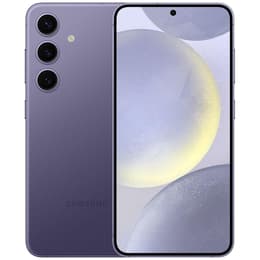
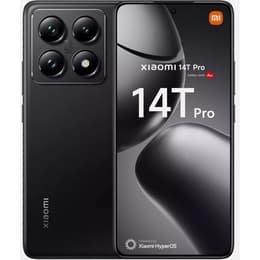


Galaxy S24 Vs Xiaomi 14T Pro

Galaxy S24
Galaxy S24
Starting at

Refurbished price:323.00

Versus €956.40 new

See options
Xiaomi 14T Pro
Xiaomi 14T Pro
Starting at

Refurbished price:395.00

Versus €1,500.00 new

See options

Ratings

The Samsung Galaxy S24, released in January 2024, and the Xiaomi 14T Pro, launched in September 2024, are both contemporary Android smartphones designed to offer a comprehensive mobile experience. While both devices provide robust performance and advanced features, they differentiate themselves through their approach to software longevity, display characteristics, and charging capabilities. Both operate on the Android platform, each featuring their manufacturer's custom user interface.

Scores

Durability

When considering the long-term usability of these devices, their release timelines and software support policies are key factors.

  • Release Timeline: The Galaxy S24 was introduced in January 2024, while the Xiaomi 14T Pro followed with a global launch in September 2024. This gives the Galaxy S24 a slight head start in its lifecycle.
  • Software Longevity: Samsung has committed to an extensive seven years of OS and security updates for the Galaxy S24, extending its support into 2031. In contrast, the Xiaomi 14T Pro is expected to receive four major OS upgrades and five years of security patches. Users prioritizing the longest possible software support will find the Galaxy S24 offers a significantly extended update period.
  • Physical Durability: Both devices feature an IP68 rating for dust and water resistance, indicating a high level of protection against environmental elements. The Galaxy S24 incorporates Gorilla Glass Victus 2 for its display and back, alongside an Armor Aluminum 2 frame, contributing to its structural integrity. The Xiaomi 14T Pro utilizes a scratch/drop-resistant glass on the front, likely Gorilla Glass 5, and an aluminum frame.

Year of Release

2024

2024

Compatible with latest Update

Yes

Yes

OS

Android

Android

Foldable

No

No

Performance

Both smartphones are equipped with powerful internal components designed to handle demanding applications and multitasking efficiently.

  • Processing Power: The Galaxy S24 is powered by a high-end processor, either the Snapdragon 8 Gen 3 for Galaxy in some regions or the Exynos 2400 in others, enabling smooth operation across various tasks. The Xiaomi 14T Pro features the MediaTek Dimensity 9300+ processor, which also delivers strong performance for gaming and intensive applications. Both devices are capable of running current-generation games and complex software without significant slowdowns.
  • Memory and Storage: The base Galaxy S24 typically comes with 8GB of RAM, with storage options ranging from 128GB to 512GB, utilizing UFS 4.0 for higher capacities. The Xiaomi 14T Pro offers more generous RAM configurations, starting at 12GB and going up to 16GB, paired with UFS 4.0 storage options up to 1TB. Users who frequently juggle many applications or require extensive local storage might find the Xiaomi 14T Pro's larger memory and storage options more accommodating.
  • Battery and Charging: The Galaxy S24 is equipped with a 4000 mAh battery, supporting 25W wired fast charging and 15W wireless charging. The Xiaomi 14T Pro features a larger 5000 mAh battery and significantly faster charging capabilities, including 120W wired fast charging and 50W wireless charging. For users prioritizing rapid power replenishment, the Xiaomi 14T Pro offers a distinct advantage.

Memory (GB)

8 GB

12 GB

Screen quality

The visual experience on both devices is delivered through high-quality displays, though with some notable differences in size, resolution, and brightness.

  • Display Technology and Size: The Galaxy S24 features a 6.2-inch Dynamic AMOLED 2X display, offering vibrant colors and deep blacks. The Xiaomi 14T Pro provides a larger 6.67-inch AMOLED display, which translates to a more expansive viewing area.
  • Resolution and Clarity: The Galaxy S24 has an FHD+ resolution of 2340 x 1080 pixels. The Xiaomi 14T Pro offers a slightly higher resolution of 1220 x 2712 pixels, resulting in a sharper image with a pixel density of 446 PPI.
  • Brightness and Refresh Rate: Both displays support high refresh rates for smooth scrolling and responsiveness. The Galaxy S24 features an adaptive 120Hz refresh rate and can reach a peak brightness of 2600 nits. The Xiaomi 14T Pro boasts an even higher 144Hz refresh rate and an impressive peak brightness of 4000 nits, which can enhance outdoor visibility and HDR content viewing.

Resolution

1080 x 2340

1220 x 2712

Screen type

Dynamic LTPO AMOLED 2X

AMOLED

Audiovisual

Both smartphones offer versatile camera systems designed to capture a range of photographic and videographic content.

  • Rear Camera Systems: The Galaxy S24 is equipped with a triple rear camera setup, including a 50MP main sensor with optical image stabilization (OIS), a 10MP telephoto lens offering 3x optical zoom, and a 12MP ultrawide lens. The Xiaomi 14T Pro also features a triple rear camera system, co-engineered with Leica, comprising a 50MP main sensor with OIS, a 50MP telephoto lens with 2.6x optical zoom, and a 12MP ultrawide lens.
  • Photography Performance: Both devices are capable of producing detailed and vibrant images in various lighting conditions. The Galaxy S24's telephoto lens provides a slightly longer optical zoom. The Xiaomi 14T Pro benefits from Leica's color science and image processing, which can appeal to users who prefer a specific photographic style.
  • Front Camera and Video Recording: For selfies and video calls, the Galaxy S24 has a 12MP front camera. The Xiaomi 14T Pro features a higher-resolution 32MP front camera. Both phones support 8K video recording, with the Galaxy S24 recording at 30 frames per second (fps) and the Xiaomi 14T Pro at 24 or 30 fps.

Main camera

50 megapixels

50 megapixels

Front camera

12 megapixels

32 megapixels

Miscellaneous

Beyond core specifications, several practical elements contribute to the overall user experience and device utility.

  • Connectivity Standards: The Galaxy S24 supports 5G, Wi-Fi 6E, and Bluetooth 5.3. The Xiaomi 14T Pro offers more recent connectivity standards, including 5G, Wi-Fi 7, and Bluetooth 5.4, potentially providing faster wireless speeds and improved efficiency with compatible accessories.
  • Physical Design and Handling: The Galaxy S24 presents a more compact and lighter form factor, measuring 147 x 70.6 x 7.6 mm and weighing 167g, which can be more comfortable for one-handed use. The Xiaomi 14T Pro is larger and heavier at 160.4 x 75.1 x 8.39 mm and 209g, offering a more substantial feel and a larger screen.
  • Ports and Biometrics: Both devices feature a USB-C port for charging and data transfer. The Galaxy S24 uses an ultrasonic in-screen fingerprint sensor for secure unlocking. The Xiaomi 14T Pro employs an optical under-display fingerprint sensor.

Weight

167 g

209 g

Screen size (in)

6.2

6.67

Network

5G

5G

SIM card

Dual Physical SIM + eSIM

Dual Physical SIM

Carrier compatibility

Unlocked

Unlocked

The Samsung Galaxy S24 and Xiaomi 14T Pro each present a compelling package, catering to slightly different user priorities. User feedback for the Galaxy S24 often praises its long-term software support commitment, offering updates for seven years, and its refined, compact design. Some common criticisms have included its comparatively slower charging speeds and regional variations in processor.

The Xiaomi 14T Pro, on the other hand, frequently receives commendation for its exceptionally fast charging capabilities, its large and bright display, and its robust performance for demanding tasks. Potential concerns for some users might include its shorter software update window compared to the S24 and its larger, heavier build.

Users prioritizing extended software longevity, a more compact form factor, and a consistently refined user experience may find the Galaxy S24 to be a more suitable choice. Conversely, those who value rapid battery replenishment, a larger and brighter display for media consumption, and potentially higher raw performance for intensive gaming or applications might lean towards the Xiaomi 14T Pro. Both devices represent strong contenders in the smartphone market, and considering a quality-assured refurbished option for either model can be an eco-friendly alternative for making an informed choice.


See all articles

Our recent comparisons