


Compare models

Galaxy S24 Vs iPhone Air

  • 1-year minimum warranty
  • Free delivery on all orders
  • Free 30-day returns
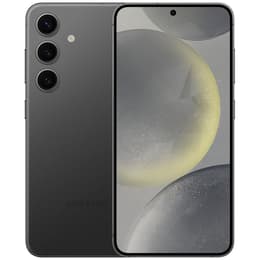
Galaxy S24
Starting at

Refurbished price:€341.00

Versus €956.40 new

See options
iPhone Air
Starting at

Refurbished price:€693.00

Versus €1,339.00 new

See options

Differences at a glance

The Samsung Galaxy S24 (2024) and the Apple iPhone Air (2025) represent two distinct philosophies in modern smartphone design, balancing compact practicality against ultra-thin innovation. While the Galaxy S24 focuses on a traditional, pocket-friendly flagship format powered by Android, the iPhone Air prioritizes an exceptionally slender profile running on Apple's iOS ecosystem. Both devices cater to users seeking high-end performance, though their distinct physical builds and operating systems set them apart.

Available Models

Colour

Storage

Scores

Durability

When examining longevity and durability, both smartphones are engineered to receive long-term software support, though they originate from different release years.

  • Software Support and Updates: The Galaxy S24 benefits from a multi-year update commitment typical of modern Android flagships, while the iPhone Air enters the market with Apple's extended iOS update lifecycle, ensuring security patches and system upgrades for years.
  • Build Integrity and Repairs: The Galaxy S24 utilizes an aluminum frame and reinforced glass, whereas the iPhone Air employs a titanium structure with advanced surface protection, both offering standard water and dust resistance for daily wear and tear.
  • Expected Lifespan: Both models provide robust component quality suited for multi-year daily use, making quality-assured refurbished options a sustainable choice for environmentally conscious buyers looking for extended hardware longevity.

Year of Release

2024

2025

Compatible with latest Update

Yes

Yes

OS

Android

iOS

Foldable

No

No

Performance

Underneath their exteriors, both devices deliver swift day-to-day operation, handling multitasking, demanding applications, and system navigation smoothly.

  • Storage and Multitasking: The Galaxy S24 offers flexible storage configurations paired with efficient memory allocation, while the iPhone Air equips ample high-speed memory to maintain rapid app switching and background processes.
  • Processor Capability: Both handsets handle resource-heavy mobile games and complex productivity tasks effortlessly, maintaining stable system responsiveness during extended use sessions.
  • Battery Behavior: The Galaxy S24's compact cell manages a full day of standard use, whereas the iPhone Air's slender enclosure houses a specialized battery capacity that satisfies typical daily routines, though heavy users of either device may require a midday top-up.

Screen quality

Display characteristics differ significantly in physical dimensions and panel technology, impacting media consumption and outdoor visibility.

  • Display Technology: The Galaxy S24 features a vibrant OLED screen with deep contrast, while the iPhone Air incorporates a larger Super Retina XDR OLED panel providing expansive viewing areas.
  • Brightness and Clarity: Both screens reach high peak brightness levels for clear legibility under direct sunlight, supported by sharp pixel densities that render text and images crisp.
  • Refresh Rate and Smoothness: Both models utilize adaptive refresh rates scaling up to 120Hz, ensuring fluid scrolling through web pages and smooth animation transitions throughout the interface.

Resolution

1080 x 2340

2736x1260

Screen type

Dynamic LTPO AMOLED 2X

Super Retina XDR

Audiovisual

The camera systems and media outputs reflect differing design priorities, balancing multi-lens versatility against streamlined minimalism.

  • Camera System Setup: The Galaxy S24 features a flexible multi-lens rear array including a primary wide sensor, ultra-wide lens, and a telephoto option for optical zoom, whereas the iPhone Air streamlines photography with a single high-resolution wide lens.
  • Photography and Low-Light Performance: Both devices capture detailed everyday shots and handle low-light environments effectively using advanced computational imaging, though the Galaxy S24 provides greater framing versatility via its dedicated zoom lens.
  • Audio and Video Output: The iPhone Air delivers high-definition video recording alongside clear microphone pickup, while the Galaxy S24 balances stereo speaker output for well-rounded media playback during video calls and streaming.

Main camera

50 megapixels

48 megapixels

Front camera

12 megapixels

18 megapixels

Miscellaneous

Practical everyday elements such as connectivity standards, physical dimensions, and security features shape the overall handling experience.

  • Connectivity and Ports: Both models support rapid 5G networks, advanced Wi-Fi standards, and Bluetooth, utilizing universal USB-C ports for data transfer and wired charging.
  • Security and Authentication: The Galaxy S24 utilizes an in-display fingerprint sensor alongside facial recognition, while the iPhone Air relies on secure facial mapping technology.
  • Physical Dimensions and Handling: The Galaxy S24 provides a traditional, easily manageable footprint in the hand, whereas the iPhone Air stands out with its exceptionally thin and lightweight chassis designed for minimal pocket bulk.

Weight

167 g

165 g

Screen size (in)

6.2

6.5

Network

5G

5G

SIM card

Dual Physical SIM + eSIM

eSIM

Carrier compatibility

Unlocked

Unlocked

Connector

USB-C

USB-C

What the community thinks

User discussions across community forums highlight distinct preferences for each device based on physical form factor and operating system loyalty. Owners of the Galaxy S24 frequently praise its compact ergonomics, versatile multi-lens camera array, and reliable daily battery endurance. Conversely, discussions surrounding the iPhone Air center on appreciation for its remarkably slender profile, large display estate, and seamless integration within the iOS ecosystem, though some users note the limitations of a single rear camera and a mono speaker configuration.

When deciding between the two, users prioritizing a traditional pocket-sized footprint, multi-lens photographic versatility, and the Android environment may lean toward the Galaxy S24. Meanwhile, users prioritizing an ultra-lightweight, exceptionally thin build paired with a larger viewing area and Apple's software experience will find the iPhone Air better suited to their preferences. For consumers seeking sustainable choices, exploring quality-assured refurbished models provides an eco-friendly alternative to acquire either device without compromising on functional longevity.








