


Galaxy S24 Vs Google Pixel 9 Pro

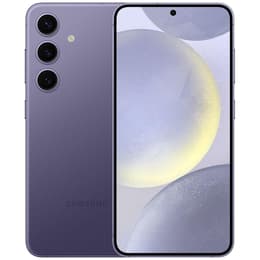
Galaxy S24
Galaxy S24
Starting at

Refurbished price:323.00

Versus €956.40 new

See options
Google Pixel 9 Pro
Google Pixel 9 Pro
Starting at

Refurbished price:484.00

Versus €1,099.00 new

See options

Ratings

The Samsung Galaxy S24 (released January 2024) and the Google Pixel 9 Pro (released September 2024) represent two distinct approaches to the premium smartphone experience, both running on the Android operating system. While the Galaxy S24 offers a refined design and a comprehensive feature set, the Pixel 9 Pro emphasizes advanced computational photography and deep integration of artificial intelligence. This comparison will explore their core differences to help users determine which device best suits their needs.

Scores

Durability

Both the Samsung Galaxy S24 and the Google Pixel 9 Pro are designed for extended software support, offering users a long practical lifespan for their devices.

  • Software Longevity: The Samsung Galaxy S24 is committed to providing seven years of operating system and security updates, potentially extending its support up to Android 21. Similarly, the Google Pixel 9 Pro also offers seven years of OS and security updates, with support expected until Android 22. This extended support ensures both devices remain current with the latest features and security protocols for a considerable period.
  • Release Timeline: The Galaxy S24 was released in January 2024, making it slightly older than the Pixel 9 Pro, which launched in September 2024. This difference in release means the Pixel 9 Pro will receive its final software update approximately eight months later than the Galaxy S24.
  • Durability Features: The Galaxy S24 features Gorilla Glass protection for its display and an IP68 rating for dust and water resistance. While specific durability details for the Pixel 9 Pro's materials are less detailed, both devices are built to withstand daily use.

Year of Release

2024

2024

Compatible with latest Update

Yes

Yes

OS

Android

Android

Foldable

No

No

Performance

The performance of both devices is driven by their respective flagship processors, impacting how smoothly they handle demanding applications and multitasking.

  • Processing Power: The Samsung Galaxy S24 utilizes an octa-core processor, which includes the Snapdragon 8 Gen 3 for Galaxy in some regions and an Exynos variant in others. User feedback indicates that the Snapdragon variant delivers strong performance, while the Exynos version can sometimes experience heating and battery drain during intensive tasks like gaming. The Google Pixel 9 Pro is powered by the Tensor G4, designed with a focus on optimizing AI-driven tasks and overall system efficiency.
  • Multitasking and Responsiveness: The Pixel 9 Pro comes with 16GB of RAM, offering substantial capacity for running numerous applications simultaneously and switching between them fluidly. The Galaxy S24 typically features 8GB of RAM, which is sufficient for most daily tasks but may show limitations when handling a very high number of active background processes compared to the Pixel.
  • Storage Options: Both devices offer a range of internal storage capacities. The Galaxy S24 is available with 128GB, 256GB, or 512GB of storage, though the 128GB model may use a slightly slower storage technology (UFS 3.1) compared to the faster UFS 4.0 found in higher capacities. The Pixel 9 Pro provides more expansive options, including 128GB, 256GB, 512GB, and a 1TB variant.

Memory (GB)

8 GB

16 GB

Screen quality

Both smartphones offer high-quality displays, but they differ in size, resolution, and peak brightness, influencing the overall visual experience.

  • Display Technology and Clarity: The Samsung Galaxy S24 features a 6.2-inch Dynamic AMOLED 2X display with FHD+ resolution, providing vibrant colors and deep blacks. The Google Pixel 9 Pro has a 6.3-inch Super Actua OLED display with a higher resolution of 2856 x 1280 pixels, resulting in a slightly sharper image with a pixel density of 495 ppi.
  • Brightness and Outdoor Visibility: The Galaxy S24 can reach a peak brightness of 2600 nits, offering good visibility in various lighting conditions. The Pixel 9 Pro surpasses this with a peak brightness of 3000 nits for HDR content, which can provide an even clearer viewing experience in bright outdoor environments.
  • Refresh Rate and Smoothness: Both devices feature an adaptive 120Hz refresh rate. This technology allows the screen to adjust its refresh rate dynamically, from as low as 1Hz, to conserve battery life when displaying static content, while providing smooth scrolling and responsiveness during active use.

Resolution

1080 x 2340

1280 x 2856

Screen type

Dynamic LTPO AMOLED 2X

LTPO OLED

Audiovisual

Both the Galaxy S24 and Pixel 9 Pro offer capable camera systems, but they prioritize different aspects of photography and video capture.

  • Rear Camera Systems: The Samsung Galaxy S24 is equipped with a triple rear camera setup: a 50MP main sensor, a 12MP ultrawide lens, and a 10MP telephoto lens with 3x optical zoom. The Google Pixel 9 Pro also features a triple rear camera system, including a 50MP main sensor, a 48MP ultrawide lens with Macro Focus, and a 48MP telephoto lens offering 5x optical zoom and up to 30x Super Res Zoom. The Pixel's ultrawide camera also features autofocus, which the Galaxy S24's ultrawide lacks.
  • Photography Performance: The Galaxy S24 generally produces bright, colorful images with good exposure in favorable lighting. However, some users note that its low-light performance can fall behind top-tier competitors. The Pixel 9 Pro, building on Google's reputation for computational photography, offers significant improvements in camera software and hardware, particularly for low-light conditions, and includes AI-centric features like Night Sight Video and enhanced Magic Editor capabilities.
  • Video Recording and Front Camera: The Galaxy S24 supports video recording up to 4K at 120fps for slow motion and features a 12MP front camera with autofocus. The Pixel 9 Pro can enhance videos up to 8K resolution with Video Boost and includes a higher-resolution 42MP front camera, designed for sharper and brighter selfies, even in challenging lighting.

Main camera

50 megapixels

50 megapixels

Front camera

12 megapixels

42 megapixels

Miscellaneous

Beyond core performance and camera capabilities, several practical features differentiate the user experience of these two devices.

  • Connectivity and Special Features: Both phones support 5G connectivity. The Pixel 9 Pro introduces Satellite SOS, allowing users in the US to share their location without cellular or Wi-Fi, a service free for the first two years. The Galaxy S24 offers dual-SIM capabilities.
  • Physical Design and Handling: The Galaxy S24 measures 147.00 x 70.60 x 7.60mm and weighs 168g, making it a more compact and lighter device. The Pixel 9 Pro is slightly larger and heavier at 152.8 x 72 x 8.5 mm and 199g. The Pixel 9 Pro also features a redesigned, pill-shaped camera array on its rear.
  • Biometrics and Ports: Both devices likely feature modern biometric security, such as in-display fingerprint sensors. While specific port details for the Pixel 9 Pro were not explicitly detailed in the search results, the Galaxy S24 uses a USB-C port.

Weight

167 g

199 g

Screen size (in)

6.2

6.3

Network

5G

5G

SIM card

Dual Physical SIM + eSIM

Physical SIM + eSIM

Carrier compatibility

Unlocked

Unlocked

Connector

USB-C

USB-C

Choosing between the Samsung Galaxy S24 and the Google Pixel 9 Pro depends largely on individual priorities. Both are robust Android smartphones offering extensive software support, ensuring longevity and access to future updates.

Users who prioritize a slightly more compact and lighter device with a proven, comprehensive feature set and strong overall performance for everyday tasks may find the Samsung Galaxy S24 well-suited to their needs. Its display offers excellent brightness, and its camera system is capable in good lighting conditions, with a reliable autofocus front camera. Some users have noted that the Exynos variant of the S24 can experience heating during prolonged heavy use, and its ultrawide camera lacks autofocus.

Conversely, users who place a high value on cutting-edge computational photography, advanced AI features, and a higher resolution display with superior peak brightness will likely lean towards the Google Pixel 9 Pro. Its larger RAM capacity also provides more headroom for intensive multitasking. The Pixel 9 Pro's camera system, with its higher resolution ultrawide and telephoto lenses, and enhanced AI processing, is particularly strong in challenging lighting and offers unique creative tools.

Ultimately, both devices offer a premium smartphone experience. For those considering a sustainable choice, opting for a quality-assured refurbished version of either the Galaxy S24 or Pixel 9 Pro can provide an eco-friendly alternative without compromising on performance or features.


See all articles

Our recent comparisons