

Galaxy A13 Vs iPhone 13 mini

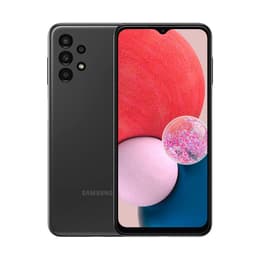
Galaxy A13
Galaxy A13
Starting at

Refurbished price:97.00

Versus €249.00 new

See options
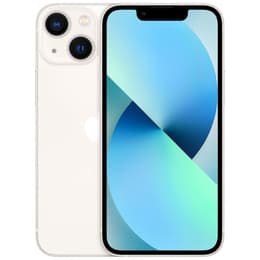
iPhone 13 mini
iPhone 13 mini
Starting at

Refurbished price:239.00

Versus €829.00 new

See options

Ratings

The Samsung Galaxy A13, released in March 2022, and the iPhone 13 Mini, launched in September 2021, represent distinct approaches to smartphone design and functionality. While the Galaxy A13 offers a larger display and an Android operating system, the iPhone 13 Mini provides a compact form factor powered by Apple's iOS. These devices cater to different user preferences, primarily differing in their size, operating system ecosystem, and performance capabilities.

Scores

Durability

When considering the long-term usability of a smartphone, factors like software support and physical resilience are key. The Galaxy A13 and iPhone 13 Mini offer varying expectations in these areas.

  • Software Longevity: The iPhone 13 Mini, running on iOS, typically receives major software updates for approximately 5-6 years from its release, extending its functional lifespan for users who prioritize the latest features and security. The Galaxy A13, an Android device, generally receives about two major Android OS updates and around four years of security updates, which is a standard duration for its category.
  • Physical Durability: The iPhone 13 Mini features a Ceramic Shield front cover and an IP68 rating for water and dust resistance, indicating a high level of protection against environmental elements and accidental spills. The Galaxy A13 utilizes Corning Gorilla Glass 5 for screen protection, offering a good level of scratch and drop resistance, but it does not carry an official IP rating for water and dust ingress.
  • Practical Lifespan: Users seeking the longest possible software support and robust environmental protection may find the iPhone 13 Mini more aligned with their needs. For those who upgrade more frequently or prioritize a larger screen at a different performance tier, the Galaxy A13 offers a solid practical lifespan within its ecosystem.

Year of Release

2022

2021

Compatible with latest Update

No

Yes

OS

Android

iOS

Foldable

No

No

Performance

The performance of a smartphone is crucial for daily tasks, from navigating apps to managing multiple activities simultaneously. The Galaxy A13 and iPhone 13 Mini deliver different levels of responsiveness and capability.

  • System Responsiveness: The iPhone 13 Mini is equipped with a powerful current-generation processor, enabling smooth operation, rapid app loading, and efficient multitasking even with demanding applications. In contrast, the Galaxy A13's processor, while capable for everyday use, has been noted to exhibit slower performance, with occasional delays in app transitions and less fluid experiences in graphically intensive tasks.
  • Storage and Memory: The iPhone 13 Mini starts with 128GB of internal storage and is available in configurations up to 512GB, providing ample space for applications, photos, and videos without the option for expansion. It includes 4GB of RAM, which contributes to its smooth multitasking. The Galaxy A13 offers more flexible storage options, ranging from 32GB to 128GB, and crucially, supports expandable storage via a microSD card up to 1TB. It comes with 3GB, 4GB, or 6GB of RAM depending on the configuration.
  • Battery Behavior: The Galaxy A13 features a substantial 5000mAh battery, which typically provides more than a full day of use for most users, and can extend to two days with lighter usage. The iPhone 13 Mini, with its 2438mAh battery, offers improved battery life compared to its predecessor, providing up to 17 hours of video playback, though heavy users might find themselves charging it more frequently than the Galaxy A13.

Memory (GB)

4 GB

4 GB

Screen quality

The display is a primary interface for any smartphone, and the visual experience can vary significantly between different technologies and specifications.

  • Display Technology and Clarity: The iPhone 13 Mini features a 5.4-inch Super Retina XDR OLED display, which delivers deep blacks, vibrant colors, and excellent contrast, providing a sharp and immersive viewing experience with a resolution of 2340 x 1080 pixels at 476 pixels per inch (ppi). The Galaxy A13 comes with a larger 6.6-inch PLS TFT LCD display, offering a resolution of 2408 x 1080 pixels. While it provides a clear picture, LCD technology generally produces less vibrant colors and shallower blacks compared to OLED.
  • Brightness and Refresh Rate: The iPhone 13 Mini's display can reach up to 800 nits of typical brightness and 1200 nits for HDR content, ensuring good visibility even in bright outdoor conditions. Both devices feature a standard 60Hz refresh rate, meaning the screen updates 60 times per second. This provides a smooth experience for general navigation, though it does not offer the enhanced fluidity seen on devices with higher refresh rates.
  • Screen Size and Viewing Experience: The iPhone 13 Mini's compact 5.4-inch screen is ideal for one-handed use and portability, appealing to users who prefer a smaller device. The Galaxy A13's larger 6.6-inch display offers more screen real estate, which can be beneficial for media consumption, reading, and productivity tasks, providing a more expansive viewing experience.

Resolution

1080 x 2408

1080 x 2340

Screen type

PLS LCD

Super Retina XDR OLED

Audiovisual

Camera capabilities are a significant consideration for many users, and both devices offer different strengths in capturing photos and videos.

  • Rear Camera Systems: The iPhone 13 Mini features a dual 12MP camera system, comprising a wide-angle lens with sensor-shift optical image stabilization and an ultrawide-angle lens. This setup is known for producing high-quality images with good detail, accurate colors, and strong low-light performance. The Galaxy A13 boasts a quad-camera array, including a 50MP main sensor, a 5MP ultrawide, a 2MP macro, and a 2MP depth sensor. While the 50MP main camera can capture decent images in good lighting, the additional macro and depth sensors are often considered less impactful for overall image quality, and the ultrawide camera may produce lower detail in challenging light.
  • Photography and Video Features: The iPhone 13 Mini excels in video recording, offering up to 4K resolution at 60 frames per second with HDR Dolby Vision, and includes a Cinematic mode for professional-looking depth-of-field effects. Its low-light photography is also a strong point. The Galaxy A13 records video at up to 1080p at 30 frames per second. Both devices include a front-facing camera for selfies and video calls; the iPhone 13 Mini has a 12MP TrueDepth camera with features like Night mode and Cinematic mode, while the Galaxy A13 has an 8MP selfie camera.
  • Audio Experience: The iPhone 13 Mini provides a clear and balanced audio output for media consumption and calls. The Galaxy A13 includes a loudspeaker with Dolby Atmos support, which can enhance the audio experience for some users.

Main camera

50 megapixels

12 megapixels

Front camera

8 megapixels

12 megapixels

Miscellaneous

Beyond core performance and display, several practical features contribute to the overall user experience and daily convenience.

  • Connectivity and Ports: The iPhone 13 Mini supports 5G connectivity, Wi-Fi 6, and Bluetooth 5.0, offering fast wireless speeds and efficient connections. It uses Apple's proprietary Lightning port for charging and data transfer. The Galaxy A13 also supports 4G LTE (with a 5G variant available in some regions), Wi-Fi 5, and Bluetooth 5.0. It features a more universally adopted USB-C 2.0 port and retains a 3.5mm headphone jack, which is absent on the iPhone 13 Mini.
  • Biometrics and Sensors: The iPhone 13 Mini relies on Face ID for secure facial recognition and unlocking. It also includes a range of sensors such as an accelerometer, gyroscope, proximity sensor, compass, and barometer. The Galaxy A13 features a side-mounted fingerprint sensor for biometric authentication, along with an accelerometer, ambient light sensor, and proximity sensor.
  • Design and Handling: The iPhone 13 Mini is notably compact and lightweight, measuring 131.5 x 64.2 x 7.65 mm and weighing 141g, making it ideal for one-handed use and easy portability. It features an aluminum frame and a glass back. The Galaxy A13 is larger and heavier at 165.1 x 76.4 x 8.8 mm and 195g, with a plastic build.

Weight

195 g

140 g

Screen size (in)

6.6

5.4

Network

4G

5G

SIM card

Dual Physical SIM

Physical SIM + eSIM

Carrier compatibility

Unlocked

Unlocked

The Samsung Galaxy A13 and iPhone 13 Mini cater to distinct user needs, each with its own set of advantages. User feedback for the iPhone 13 Mini often highlights its exceptional performance in a remarkably compact form factor, making it a favorite for those who prefer a smaller device without compromising on speed or camera quality. Its long software support and robust build are also frequently praised. Criticisms typically revolve around its battery life, which, while improved over its predecessor, may still require more frequent charging for heavy users compared to larger smartphones.

The Galaxy A13 is often lauded for its impressive battery life, capable of lasting well over a day, and its expansive display, which is well-suited for media consumption. The inclusion of expandable storage is another significant advantage for users who need ample space for files and media. However, common criticisms point to its less powerful processor, which can lead to a less fluid user experience, and the variable quality of its secondary camera lenses.

Users prioritizing a highly portable device with top-tier performance, a premium camera system, and extended software updates will find the iPhone 13 Mini well-suited to their needs. Conversely, individuals who value a larger screen, exceptional battery longevity, and the flexibility of expandable storage, and who are content with a more modest performance level, may lean towards the Galaxy A13. Both devices offer compelling options, and considering a quality-assured refurbished option for either model can provide an eco-friendly alternative for making an informed choice.


See all articles

Our recent comparisons