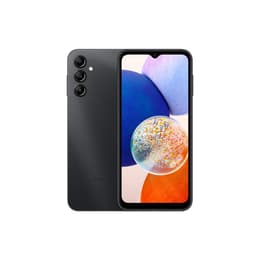
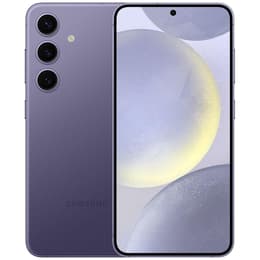


Galaxy A14 Vs Galaxy S24

Galaxy A14
Galaxy A14
Starting at

Refurbished price:97.00

Versus €269.00 new

See options
Galaxy S24
Galaxy S24
Starting at

Refurbished price:323.00

Versus €956.40 new

See options

Ratings

The Samsung Galaxy A14 (released in early 2023) and the Samsung Galaxy S24 (released in early 2024) are Android smartphones from Samsung, targeting different segments of the market. While both devices run on the Android operating system with Samsung's One UI, the Galaxy S24 offers a more advanced user experience with a focus on high-end performance, superior display technology, and extended software support, distinguishing it significantly from the more accessible Galaxy A14.

Scores

Durability

The longevity of a smartphone is influenced by its release timeline, software support, and physical durability.

  • Release Timeline and Age: The Galaxy A14 was released in early 2023, making it a year older than the Galaxy S24, which launched in early 2024. This difference in release directly impacts the duration of future software support.
  • OS Support Duration: The Galaxy A14, launched with Android 13, is expected to receive two major OS updates and four years of security updates, extending its software support until approximately 2027. In contrast, the Galaxy S24, released with Android 14, is promised an extensive seven years of OS upgrades and seven years of security updates, potentially through Android 21. This commitment provides a significantly longer period of up-to-date software and security for the S24.
  • Repairability: The Galaxy S24 has demonstrated a high repairability score in teardowns, often rated around 9 out of 10. Its design allows for relatively easy access to internal components and features a pull tab for battery replacement, though screen replacement can be challenging without causing damage. Information regarding the specific repairability score for the Galaxy A14 is less prominent, but as a more budget-oriented device, its construction might not prioritize modularity for easy repairs to the same extent as a flagship.

Year of Release

2023

2024

Compatible with latest Update

No

Yes

OS

Android

Android

Foldable

No

No

Performance

Performance aspects like storage, battery behavior, and processing power significantly differentiate these two devices.

  • Storage Options: The Galaxy A14 typically offers 64GB or 128GB of internal storage, with the added flexibility of expandable memory via a microSD card. The Galaxy S24 provides more generous internal storage options, starting from 128GB and going up to 512GB, utilizing faster UFS 3.1 or UFS 4.0 storage technologies, but it does not offer expandable storage.
  • Battery Behavior: The Galaxy A14 is equipped with a 5000 mAh battery, which users report can last up to two days with moderate usage and a full day with heavy use. It supports 15W wired charging, taking approximately two hours for a full charge. The Galaxy S24 features a 4000 mAh battery, which, despite its smaller capacity, is optimized for efficiency. Users generally experience a full day of battery life with moderate to heavy usage, with some tests indicating over 13 hours of web browsing. It supports 25W wired charging and 15W wireless charging.
  • Processor Capabilities: The Galaxy A14 is powered by a mid-range processor, which delivers solid performance for everyday tasks but may exhibit some lags and stutters when handling demanding applications or extensive multitasking. The Galaxy S24, on the other hand, features a current-generation processor designed for high performance, ensuring demanding apps and graphics-intensive games run smoothly with efficient thermal management. This results in a noticeably more responsive and fluid user experience across all tasks.

Memory (GB)

4 GB

8 GB

Screen quality

The visual experience on these devices varies significantly due to differences in display technology, resolution, and brightness.

  • Display Technology and Resolution: The Galaxy A14 features a 6.6-inch PLS LCD display with Full HD+ resolution (1080 x 2408 pixels). This technology provides clear visuals suitable for general use. The Galaxy S24 boasts a 6.2-inch Dynamic AMOLED 2X display with Full HD+ resolution (2340 x 1080 pixels), offering deeper blacks, more vibrant colors, and superior contrast compared to an LCD panel.
  • Brightness Levels: The Galaxy A14's display is generally considered vibrant but can be challenging to view comfortably in direct sunlight. The Galaxy S24's display offers a significantly higher peak brightness of 2600 nits, ensuring excellent readability and clarity even in bright outdoor conditions.
  • Refresh Rate and Smoothness: The 5G variant of the Galaxy A14 offers a 90Hz refresh rate, providing a smoother scrolling experience than standard 60Hz displays. The Galaxy S24 features an adaptive refresh rate that can dynamically adjust from 1Hz to 120Hz. This not only provides exceptionally smooth scrolling and responsiveness but also contributes to battery efficiency by lowering the refresh rate when high speeds are not needed.

Resolution

1080 x 2408

1080 x 2340

Screen type

PLS LCD

Dynamic LTPO AMOLED 2X

Audiovisual

The camera systems on the Galaxy A14 and Galaxy S24 cater to different photography needs and expectations.

  • Camera System Capabilities: The Galaxy A14 typically features a triple rear camera setup, including a 50MP main sensor, a 2MP macro lens, and a 2MP depth sensor. Some variants may include a 5MP ultrawide lens. The front camera is 13MP. The Galaxy S24 offers a more versatile triple camera system with a 50MP wide-angle main sensor with optical image stabilization (OIS), a 10MP telephoto lens with 3x optical zoom and OIS, and a 12MP ultrawide lens. It also has a 12MP front camera.
  • Photography Performance: The Galaxy A14 performs well in bright daylight, capturing decent detail and offering good background blur in portrait shots. However, it struggles in low-light conditions and lacks a dedicated night mode. The Galaxy S24 delivers strong photography performance across various lighting conditions, including improved low-light capabilities, thanks to its advanced sensors and image processing. Its telephoto lens allows for clear zoomed-in shots.
  • Video Recording Quality: Both the front and rear cameras on the Galaxy A14 are limited to 1080p video recording at 30 frames per second (fps) and lack optical image stabilization. The Galaxy S24 supports up to 8K video recording at 30fps, offering significantly higher detail and more advanced video features, including better stabilization.

Main camera

50 megapixels

50 megapixels

Front camera

13 megapixels

12 megapixels

Miscellaneous

Beyond core features, connectivity, physical design, and additional functionalities contribute to the overall user experience.

  • Connectivity Options: Both devices support 5G connectivity (for the 5G variant of A14), Wi-Fi, and Bluetooth. The Galaxy A14 supports Wi-Fi 802.11 a/b/g/n/ac (2.4+5GHz) and Bluetooth 5.1 or 5.2. The Galaxy S24 features more advanced connectivity with Wi-Fi 6 (ax) and Bluetooth 5.3, offering faster and more stable wireless connections.
  • Port Types and Sensors: The Galaxy A14 includes a USB Type-C port (USB 2.0) and retains a 3.5mm headphone jack, along with a side-mounted fingerprint sensor. The Galaxy S24 features a faster USB Type-C port (USB 3.2) but omits the 3.5mm headphone jack. It incorporates an ultrasonic in-screen fingerprint sensor and offers advanced facial recognition.
  • Weight, Dimensions, and Build Materials: The Galaxy A14 has dimensions of approximately 167.7 x 78 x 9.1 mm and weighs around 201g, featuring a plastic back and sides with a glass front. The Galaxy S24 is more compact and lighter, measuring about 70.6 x 147 x 7.6 mm and weighing 168g. It features a more premium build with a glass rear (Corning Gorilla Glass Victus 2) and an aluminum frame, offering IP68 dust and water resistance.

Weight

201 g

167 g

Screen size (in)

6.6

6.2

Network

4G

5G

SIM card

Dual Physical SIM

Dual Physical SIM + eSIM

Carrier compatibility

Unlocked

Unlocked

User feedback for the Galaxy A14 often highlights its strong battery life and decent camera performance in good lighting conditions as key advantages, making it a practical choice for everyday communication and media consumption. However, some users note that its performance can feel sluggish with multiple applications open or during more demanding tasks. The display, while large and vibrant, may not offer optimal visibility in very bright environments.

The Galaxy S24 receives praise for its consistent high performance, excellent battery optimization that typically lasts a full day even with moderate to heavy use, and its capable camera system. Users appreciate the vibrant and bright display, which offers a smooth viewing experience. Some common observations include the 1080p display resolution, which some users feel could be higher for a flagship device, and the 25W charging speed, which is not the fastest available.

Users prioritizing extended software support, a premium build, and high-end performance for demanding applications and photography will find the Galaxy S24 well-suited to their needs. Its advanced display and robust camera system cater to those who value a superior multimedia and imaging experience. Conversely, users seeking a device for essential smartphone functions, long battery life, and expandable storage, without the need for top-tier processing power or advanced camera features, may find the Galaxy A14 to be a more practical option. Both devices offer a quality-assured refurbished option, providing an eco-friendly alternative for consumers.


See all articles

Our recent comparisons