

Galaxy S23 Vs Xiaomi 14T Pro

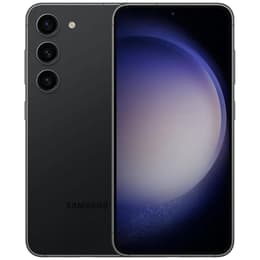
Galaxy S23
Galaxy S23
Starting at

Refurbished price:240.00

Versus €959.00 new

See options
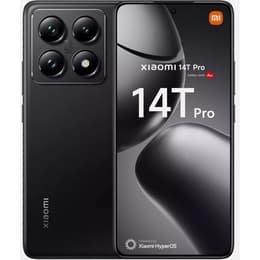
Xiaomi 14T Pro
Xiaomi 14T Pro
Starting at

Refurbished price:372.00

Versus €799.00 new

See options

Ratings

The Samsung Galaxy S23, released in February 2023, and the Xiaomi 14T Pro, launched in September 2024, are both advanced smartphones offering distinct experiences. While the Galaxy S23 emphasizes a compact design with refined performance, the Xiaomi 14T Pro focuses on a larger display, rapid charging, and a robust camera system. Both devices operate on the Android platform, with their respective custom user interfaces, One UI for Samsung and HyperOS for Xiaomi, shaping the software experience.

Scores

Durability

When considering the long-term usability of these devices, their release timelines and software support policies are key differentiators.

  • Release Timeline: The Galaxy S23 was introduced in early 2023, making it an older model compared to the Xiaomi 14T Pro, which arrived in late 2024. This age difference inherently impacts their remaining support cycles.
  • Software Longevity: The Galaxy S23 is committed to receiving four generations of Android OS upgrades and five years of security updates, extending its support until approximately 2028. The Xiaomi 14T Pro, being newer, is also promised four years of Android updates and five years of security patches, with support expected to continue until September 2029.
  • Repairability: The Galaxy S23 features Gorilla Glass Victus 2 on both its front and back, along with an aluminum frame, contributing to its physical resilience. User reports and teardowns indicate improved repairability for the S23 series, including easier battery access compared to previous Samsung models. The Xiaomi 14T Pro also boasts an IP68 rating for dust and water resistance and a metal frame. Repair assessments for the Xiaomi 14T Pro suggest a good level of repairability.

Year of Release

2023

2024

Compatible with latest Update

Yes

Yes

OS

Android

Android

Foldable

No

No

Performance

Both smartphones deliver capable performance for daily tasks and demanding applications, though they approach it with different hardware configurations.

  • Processing Power: The Galaxy S23 is equipped with a processor designed for efficient performance, handling demanding apps and multitasking smoothly. The Xiaomi 14T Pro features a current-generation processor that provides impressive gaming and multitasking capabilities.
  • Memory and Storage: The Galaxy S23 typically comes with 8GB of RAM, with storage options ranging from 128GB to 512GB. The 128GB variant uses UFS 3.1 storage, while larger capacities benefit from the faster UFS 4.0 standard. The Xiaomi 14T Pro offers more generous memory configurations, often starting at 12GB of RAM and extending to 16GB, paired with UFS 4.0 storage options up to 1TB.
  • Battery Behavior: The Galaxy S23 houses a 3900 mAh battery, which generally provides a full day of use for moderate users. It supports 25W wired and 15W wireless charging. The Xiaomi 14T Pro features a larger 5000 mAh battery, often reported to last up to two days with moderate usage. It supports significantly faster 120W wired charging and 50W wireless charging, allowing for very quick recharges.

Memory (GB)

8 GB

16 GB

Screen quality

The visual experience on both devices is vibrant and clear, though they differ in size and specific display characteristics.

  • Display Technology and Size: The Galaxy S23 features a 6.1-inch Dynamic AMOLED 2X display, offering deep blacks and vibrant colors in a more compact form factor. The Xiaomi 14T Pro presents a larger 6.67-inch AMOLED display, providing an expansive viewing area.
  • Resolution and Clarity: The Galaxy S23 has a Full HD+ resolution (1080x2340 pixels), delivering sharp images and text. The Xiaomi 14T Pro offers a slightly higher 1.5K resolution (2712x1220 pixels), contributing to enhanced detail on its larger screen.
  • Brightness and Refresh Rate: Both phones offer high brightness levels for good outdoor visibility, with the Galaxy S23 reaching a peak of 1750 nits and the Xiaomi 14T Pro boasting an impressive peak brightness of 4000 nits. Both devices feature a smooth 120Hz refresh rate, ensuring fluid scrolling and responsiveness, with the Xiaomi 14T Pro capable of up to 144Hz.

Resolution

1080 x 2340

1220 x 2712

Screen type

Dynamic AMOLED 2X

AMOLED

Audiovisual

Both smartphones offer capable camera systems, but with different strengths and partnerships influencing their photographic output.

  • Rear Camera System: The Galaxy S23 includes a versatile triple-camera setup with a 50MP main sensor with optical image stabilization (OIS), a 10MP telephoto lens offering 3x optical zoom, and a 12MP ultrawide lens. The Xiaomi 14T Pro features a Leica-tuned triple camera system, comprising a 50MP main sensor with OIS, a 50MP telephoto lens with 2.6x optical zoom, and a 12MP ultrawide lens.
  • Photography Performance: The Galaxy S23 is noted for producing pleasing photos in various lighting conditions, with good detail and vibrant colors, particularly excelling in night photography and zoom capabilities within its segment. The Xiaomi 14T Pro, benefiting from its Leica collaboration, is praised for exceptional camera results, offering good color science and versatile shooting options.
  • Video Recording and Front Camera: Both devices support high-resolution video recording, with the Galaxy S23 capable of 8K at 24/30fps. The Xiaomi 14T Pro also offers 8K video recording. For selfies, the Galaxy S23 has a 12MP front camera, while the Xiaomi 14T Pro features a higher-resolution 32MP front camera.

Main camera

50 megapixels

50 megapixels

Front camera

12 megapixels

32 megapixels

Miscellaneous

Beyond core performance, several practical features and design elements contribute to the overall user experience of these devices.

  • Connectivity and Ports: Both phones support modern connectivity standards, including 5G and advanced Wi-Fi. The Galaxy S23 supports Wi-Fi 6E and Bluetooth 5.3, while the Xiaomi 14T Pro offers Wi-Fi 7 and Bluetooth 5.4. Both utilize a USB Type-C port for charging and data transfer. Neither device includes a 3.5mm headphone jack.
  • Biometric Security: The Galaxy S23 features an ultrasonic in-display fingerprint sensor and supports face recognition. The Xiaomi 14T Pro also includes an in-display fingerprint sensor and face unlock capabilities.
  • Design and Build: The Galaxy S23 has dimensions of 146.3 x 70.9 x 7.6 mm and weighs 168g, offering a compact and lightweight feel. It features a glass front and back with Gorilla Glass Victus 2 protection and an aluminum frame. The Xiaomi 14T Pro is larger and heavier, with dimensions of 160.4 x 75.1 x 8.39 mm and a weight of 209g. It also features a metal frame and an IP68 rating for dust and water resistance.

Weight

167 g

209 g

Screen size (in)

6.1

6.67

Network

5G

5G

SIM card

Physical SIM + eSIM

Dual Physical SIM

Carrier compatibility

Unlocked

Unlocked

The Samsung Galaxy S23 and Xiaomi 14T Pro cater to slightly different user preferences, each bringing a compelling set of features to the table. Users often praise the Galaxy S23 for its compact size, consistent camera performance, and reliable software experience. Some common criticisms have historically revolved around its battery capacity, though many users find it sufficient for a full day of moderate use.

The Xiaomi 14T Pro, on the other hand, frequently receives acclaim for its large, bright display, exceptionally fast charging speeds, and the quality of its Leica-tuned camera system. While its larger size might not appeal to all, its robust battery life and rapid charging are significant advantages for heavy users.

Users prioritizing a more compact device with a refined software experience and strong overall camera performance may prefer the Samsung Galaxy S23. Conversely, those who value a larger, brighter display, extended battery life, and industry-leading fast charging, coupled with a versatile camera system, may find the Xiaomi 14T Pro better suited to their needs. Both devices represent solid choices in the Android smartphone market, and considering a quality-assured refurbished option can be an eco-friendly alternative for either model.


See all articles

Our recent comparisons