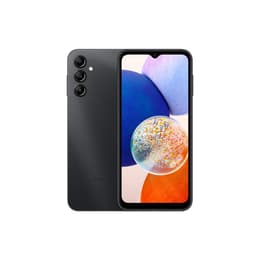
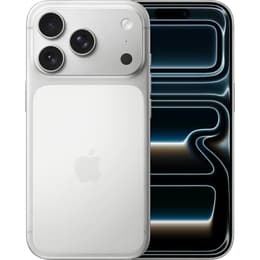


Galaxy A14 Vs iPhone 17 Pro

Galaxy A14
Galaxy A14
Starting at

Refurbished price:97.00

Versus €269.00 new

See options
iPhone 17 Pro
iPhone 17 Pro
Starting at

Refurbished price:1,064.00

Versus €1,339.00 new

See options

Ratings

The Samsung Galaxy A14, released in early 2023, and the Apple iPhone 17 Pro, launched in late 2025, represent distinct segments of the smartphone market. While the Galaxy A14 operates on the Android ecosystem, offering a user-friendly experience with a focus on essential features, the iPhone 17 Pro runs on Apple's iOS, delivering a premium, high-performance experience with advanced capabilities. The primary differentiators lie in their core processing power, display technology, and sophisticated camera systems, catering to different user priorities.

Scores

Durability

The longevity of a smartphone is influenced by its initial release and the manufacturer's commitment to software updates and repairability.

  • Release Timeline: The Galaxy A14 was introduced in January 2023, making it a device that has been on the market for some time. The iPhone 17 Pro, released in September 2025, benefits from being a much newer model.
  • Software Support: The Galaxy A14 is expected to receive two major Android OS upgrades, bringing it up to Android 15, and four years of security updates, extending its security support until 2027. [8, 10, 37] In contrast, Apple typically provides major iOS updates for iPhones for approximately five to seven years, with security patches often extending even longer, potentially up to a decade. [7, 32, 33] This means the iPhone 17 Pro will likely receive software support for a significantly longer period.
  • Build and Repairability: The Galaxy A14 features a plastic polycarbonate back and frame, with no official water or dust resistance rating. [10, 26] The iPhone 17 Pro, however, boasts a unibody aluminum chassis with Ceramic Shield 2 on both the front and back, offering enhanced scratch resistance and is rated IP68 for water and dust resistance, allowing submersion up to 6 meters for 30 minutes. [12, 13, 31] These material differences suggest a higher degree of inherent durability for the iPhone 17 Pro.

Year of Release

2023

2025

Compatible with latest Update

No

Yes

OS

Android

iOS

Foldable

No

No

Performance

Performance in smartphones is determined by the efficiency of their internal components, impacting everything from app responsiveness to multitasking capabilities.

  • Processing Power: The Galaxy A14 is equipped with an octa-core processor, such as the MediaTek Dimensity 700 or Exynos 1330, which provides good performance for everyday tasks like browsing, social media, and light gaming. [9, 16] Users may experience occasional minor lag with more demanding applications. [9] The iPhone 17 Pro features Apple's A19 Pro chip, which includes a 6-core CPU, a 6-core GPU with Neural Accelerators, and a 16-core Neural Engine. [4, 13] This advanced chip is designed for significantly faster sustained performance, ensuring smooth operation for intensive applications, advanced gaming, and professional-grade tasks. [4]
  • Multitasking and Storage: The Galaxy A14 offers various RAM configurations, including 4GB, 6GB, and 8GB, alongside 64GB or 128GB of internal storage, which is expandable via a microSD card up to 1TB. [2, 10, 16] The iPhone 17 Pro comes with 12GB of RAM and storage options starting at 256GB, with higher tiers up to 1TB, and 2TB for the Pro Max model, though its storage is not expandable. [4, 6, 11, 15] The larger RAM in the iPhone 17 Pro facilitates more seamless multitasking and handling of numerous open applications.
  • Battery Behavior: Both devices feature substantial battery capacities. The Galaxy A14 has a 5000mAh battery, providing about a full day of typical use, though heavy gaming might require more frequent charging. [9, 21] It supports 15W wired charging, taking approximately two hours for a full charge. [9, 10] The iPhone 17 Pro, with a battery capacity around 3988-4252 mAh, is noted for offering extended battery life, with up to 33 hours of video playback, and supports faster 30W wired charging and 25W MagSafe wireless charging. [4, 6, 11, 23]

Memory (GB)

4 GB

12 GB

Screen quality

The display is a primary interface for user interaction, and its quality significantly impacts the viewing experience.

  • Display Technology and Resolution: The Galaxy A14 features a 6.6-inch PLS LCD display with a resolution of 1080x2408 pixels, providing clear and sharp visuals for everyday content consumption. [2, 5, 17] The iPhone 17 Pro sports a 6.3-inch Super Retina XDR OLED display with a higher resolution of 2622x1206 pixels at 460 ppi. [13, 31] The OLED technology in the iPhone 17 Pro delivers deeper blacks, higher contrast, and more vibrant colors compared to the LCD panel of the Galaxy A14.
  • Brightness and Refresh Rate: The Galaxy A14 offers a 90Hz refresh rate on its 5G model, contributing to smoother scrolling than standard 60Hz displays, and a maximum brightness of around 518 nits. [2, 9] The iPhone 17 Pro features ProMotion technology, providing an adaptive refresh rate up to 120Hz for exceptionally fluid motion and responsiveness. [13, 31] Its display also reaches significantly higher brightness levels, with up to 3000 nits peak outdoor brightness and 1600 nits peak HDR brightness, making it much more visible in bright sunlight and enhancing HDR content. [13, 31]
  • Additional Display Features: The iPhone 17 Pro includes an Always-On display, True Tone for automatic white balance adjustment, and an anti-reflective coating for improved outdoor visibility. [13, 31] It also incorporates the Dynamic Island, an interactive area around the front camera and sensors. [13, 31] The Galaxy A14's display, while functional, does not include these advanced features. [17]

Resolution

1080 x 2408

2622x1206

Screen type

PLS LCD

Super Retina XDR

Audiovisual

Camera capabilities are a significant factor for many users, influencing how they capture and share moments.

  • Rear Camera System: The Galaxy A14 is equipped with a triple rear camera setup, including a 50MP main sensor, a 2MP macro lens, and a 2MP depth sensor. [2, 34] This configuration is suitable for general photography, with the main sensor performing decently in well-lit conditions. [34] The iPhone 17 Pro features a more advanced triple 48MP Pro Fusion camera system, encompassing main, ultra-wide, and telephoto lenses. [4, 13] Its main lens includes second-generation sensor-shift optical image stabilization, and the telephoto lens offers 4x-8x optical zoom, providing greater versatility and detail capture. [4, 13, 15]
  • Photography Performance: For everyday photography, the iPhone 17 Pro's larger sensors and advanced image processing, including an upgraded Photonic Engine, result in sharper images, better color accuracy, and improved detail, especially in challenging lighting conditions. [4] While the Galaxy A14's main camera can capture decent low-light photos using its Night Mode, its ultrawide lens struggles in such environments. [27, 34]
  • Video Recording and Front Camera: The Galaxy A14 records video at 1080p at 30 frames per second (fps) with both its rear and 13MP front camera. [27, 43] The iPhone 17 Pro offers significantly more advanced video capabilities, including 4K recording at various frame rates up to 120 fps, HDR video, ProRes video, Cinematic mode, and Action mode. [4, 15] It also supports professional video formats like ProRes RAW, Log 2, and Genlock. [4, 12] The iPhone 17 Pro's front camera is an 18MP or 24MP Center Stage camera with improved stabilization and features like dual capture, allowing simultaneous recording from front and back cameras. [4, 19, 23, 39]

Main camera

50 megapixels

48 megapixels

Front camera

13 megapixels

18 megapixels

Miscellaneous

Beyond core features, several practical elements contribute to the overall user experience and device utility.

  • Connectivity and Ports: The Galaxy A14 supports 5G connectivity, Wi-Fi 5 (802.11 a/b/g/n/ac), Bluetooth v5.20, NFC, and includes a USB Type-C port along with a 3.5mm headphone jack. [2, 10] The iPhone 17 Pro offers more advanced connectivity with 5G, Wi-Fi 7, and Bluetooth 6, powered by a new N1 chip, and features a USB-C port. [6, 12] It does not include a traditional headphone jack.
  • Biometric Security and Sensors: The Galaxy A14 features a side-mounted fingerprint sensor for secure unlocking. [2] The iPhone 17 Pro utilizes Face ID, Apple's facial recognition system, for secure authentication and unlocking. [4, 13] Both devices include standard sensors like accelerometers, ambient light sensors, and gyroscopes. [2]
  • Build Materials and Handling: The Galaxy A14 has a plastic back and frame, contributing to its lighter feel but offering less premium tactile feedback. [10] Its dimensions are 167.70 x 78.00 x 9.10mm, weighing 204g. [2] The iPhone 17 Pro features a unibody aluminum chassis with Ceramic Shield 2 on the front and back, providing a more robust and premium feel. [4, 12] Its dimensions are 150.0 × 71.9 × 8.75 mm, weighing 206g, making it slightly more compact and similar in weight despite its premium materials. [6]

Weight

201 g

206 g

Screen size (in)

6.6

6.3

Network

4G

5G

SIM card

Dual Physical SIM

Physical SIM + eSIM

Carrier compatibility

Unlocked

Unlocked

The Samsung Galaxy A14 and iPhone 17 Pro cater to distinct user needs and preferences. The Galaxy A14 is often praised by users for its reliable battery life and expandable storage, making it a practical choice for those who prioritize long usage times and the ability to store a large volume of media without relying on cloud services. Some users, however, note its display technology and camera performance as areas where it offers a more basic experience compared to higher-end devices.

Conversely, the iPhone 17 Pro receives acclaim for its exceptional performance, vibrant and bright OLED display, and highly advanced camera system, which includes professional-grade video capabilities. Users appreciate its long-term software support and robust build quality. Criticisms, when they arise, often relate to its non-expandable storage and the premium nature of its ecosystem.

Users prioritizing a device for everyday communication, media consumption, and basic photography, with a strong emphasis on battery longevity and storage flexibility, may find the Galaxy A14 well-suited to their needs. For individuals who require top-tier performance for demanding applications, professional-grade photography and videography, a superior display experience, and extended software support, the iPhone 17 Pro aligns more closely with those requirements. Both devices offer compelling features for their respective audiences, and considering a quality-assured refurbished option for either model can be a sustainable choice for informed consumers.


See all articles

Our recent comparisons



